
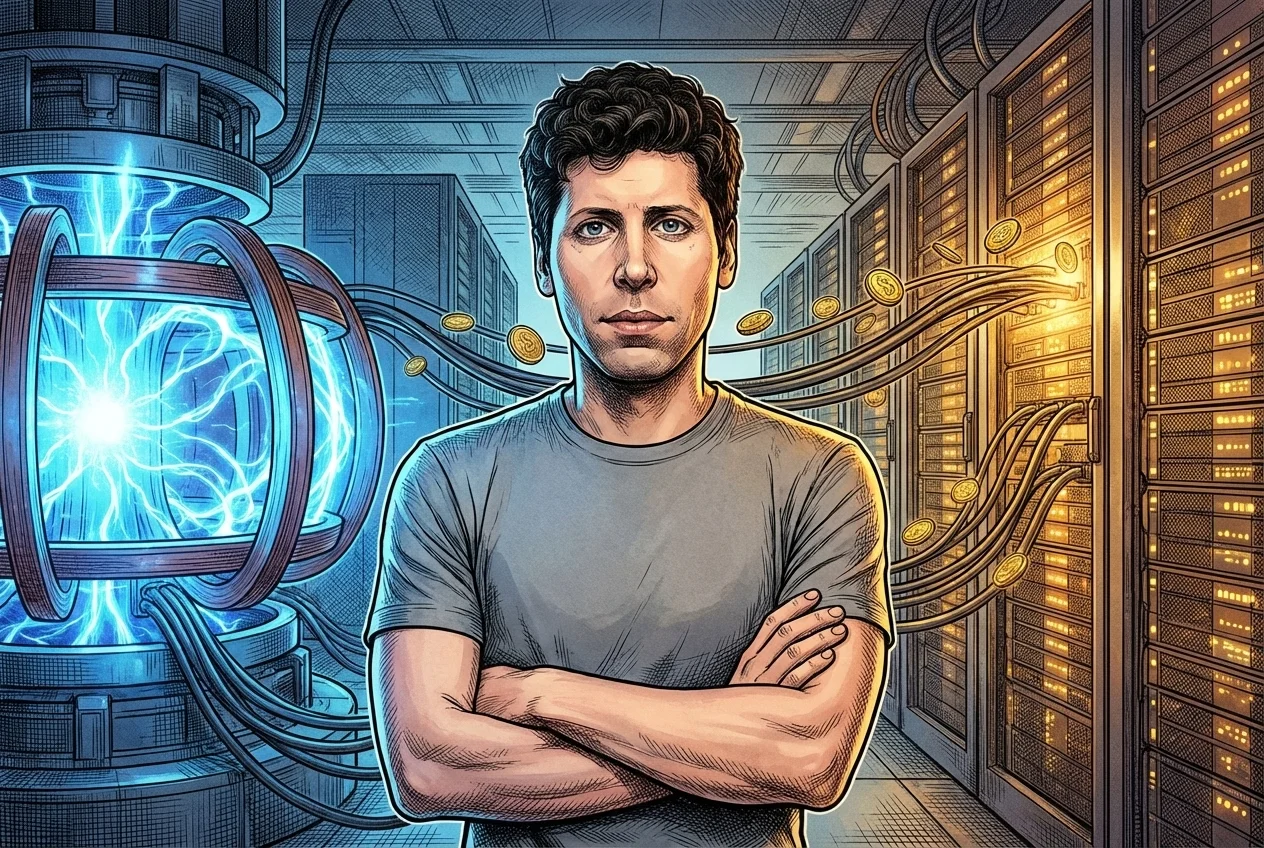
OpenAI CEO Sam Altman has resigned from the board of fusion startup Helion Energy, ending a board tenure that began in 2015. The reason: OpenAI is negotiating a massive power purchase agreement with Helion, making his dual board roles "unsustainable."
Altman posted on X that he retains his financial interest in Helion but will recuse himself from any transaction negotiations involving OpenAI. His personal bet on Helion is significant: a $375 million investment made in 2021. The financial incentive remains intact after leaving the board.
Power target: 5 GW by 2030, 50 GW by 2035
According to disclosed negotiation directions, OpenAI intends to purchase 12.5% of Helion's total capacity in two phases: 5 GW by 2030, scaling to 50 GW by 2035. For context, Taiwan's peak electricity demand is about 40 GW. OpenAI is effectively locking in the grid-scale power of an entire country from a fusion company that has yet to commercialize its technology.
Helion plans to activate its first fusion power plant by 2028. Fusion energy has long been described as a technology that is "always 20 years away" from commercialization. Whether Helion can meet that timeline remains a major open question in the industry.
Same playbook as Oklo
This is Altman's second time running a similar playbook linking energy investments to OpenAI's operations. Last year, Altman resigned as chairman of Oklo, a small modular fission reactor startup. The resignation reason was nearly identical: to allow Oklo to freely negotiate partnerships with AI companies, including OpenAI itself.
The pattern is clear: Altman invests personal capital in an energy startup, leverages his OpenAI CEO role to bring massive power demand, steps down from the board as a formal conflict-of-interest gesture, and then has OpenAI buy electricity from those companies. Critics argue the resignation and recusal declaration are mere formalities, as the financial ties are never severed.