
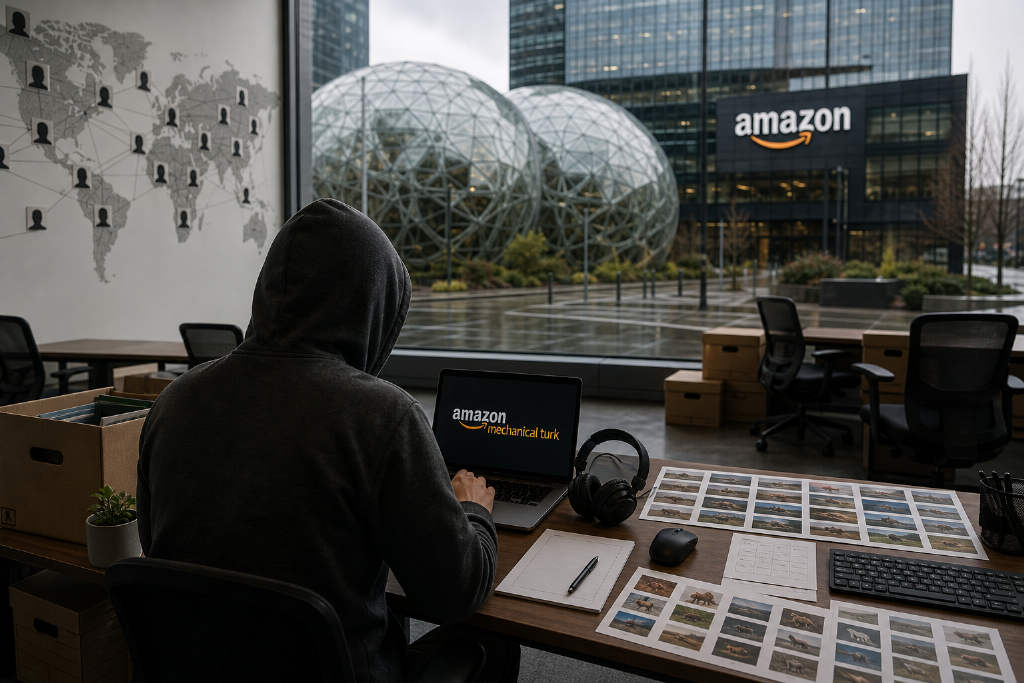
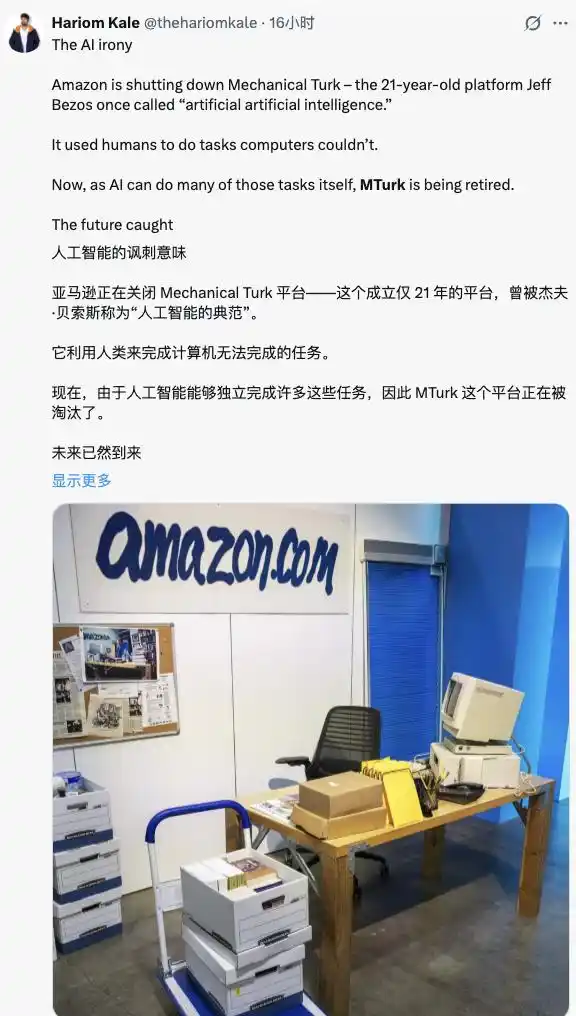
Amazon said its crowdsourcing platform Mechanical Turk, or MTurk, will shut down on Sept. 30 this year, closing a service that became part of the labor backbone behind early AI data work.

At its height, the platform had more than 500,000 workers performing online microtasks such as image review, classification, transcription and moderation. Over time, that distributed human workforce helped support projects that would become central to the modern deep learning era, including ImageNet.
How MTurk worked
Mechanical Turk launched in 2005. The original idea was simple: some tasks were difficult for computers but easy for humans, so those jobs could be split into very small units and handed to people online.
Those units were called HITs, short for Human Intelligence Tasks. If a company had 10,000 images to classify, MTurk could turn that job into 10,000 separate tasks and distribute them at the same time. The model did not make one person faster. It let large groups work in parallel across the internet.

The name itself came from the 18th-century “Mechanical Turk,” a famous chess-playing machine that appeared automated but was later found to have a hidden human operator inside. Amazon used that reference for a service that looked computational on the surface while relying on people behind the screen.
Jeff Bezos once described it as “artificial artificial intelligence.” After the concept proved useful, MTurk grew from an internal Amazon tool into a global marketplace for outsourced digital labor.
By 2011, the platform had more than 500,000 workers in 190 countries. As participation expanded, so did the range of tasks: image filtering, speech transcription, text classification, data cleaning, sentiment judgment and content review all became common workloads.
Why it mattered to ImageNet
Around 2006, Fei-Fei Li, then newly teaching at Princeton, set out to build a much larger visual dataset for machines. At the time, many computer vision datasets contained only thousands or tens of thousands of images, which limited how much a model could learn about the variety of objects in the real world.
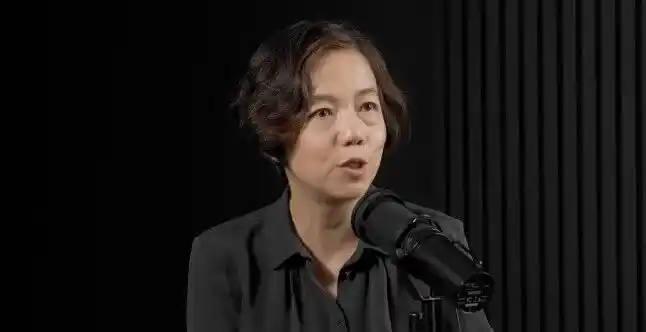
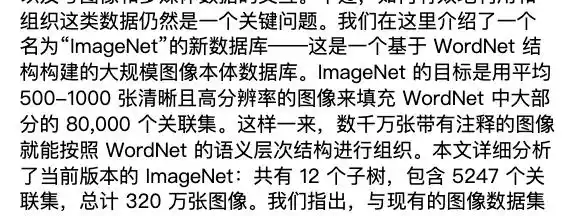
That effort became ImageNet. Built on the structure of WordNet, the dataset organized the world into concepts and attached large numbers of real images to each one.
Finding images was only part of the job. Search engines such as Google, Yahoo and Flickr could return huge volumes of candidate images, but many were irrelevant or incorrect. Humans still had to verify them one by one. The candidate pool that ImageNet later had to process exceeded 160 million images, turning labor into the central bottleneck.
That was when Li’s team turned to Amazon Mechanical Turk. The group broke image screening into microtasks and distributed them to workers on the platform. A large AI infrastructure project was reduced to countless ordinary clicks.

The 2009 ImageNet paper said the dataset already contained 5,247 concepts and 3.2 million curated images. In a later retrospective, the ImageNet team said 49,000 MTurk workers from 167 countries contributed to the project.
From ImageNet to the 2012 breakthrough
Once ImageNet was in place, the next stage moved quickly. The ImageNet competition started in 2010, giving researchers a common dataset and a common leaderboard.
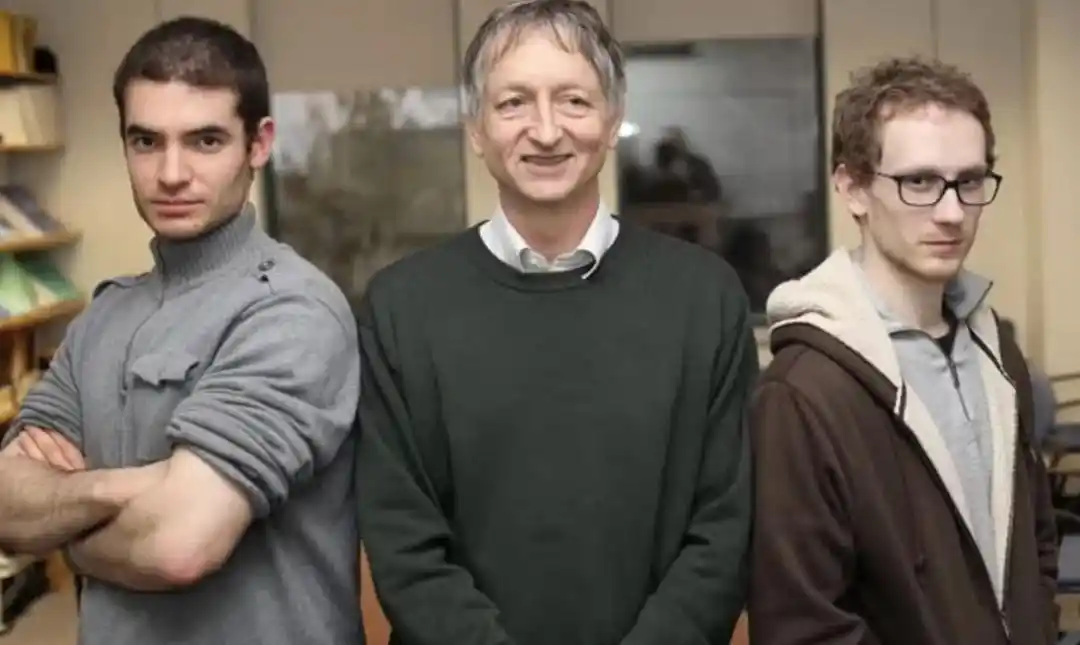
Two years later, Geoffrey Hinton of the University of Toronto and his students Alex Krizhevsky and Ilya Sutskever entered the ImageNet Large Scale Visual Recognition Challenge with a deep convolutional neural network. They pushed the 2012 Top-5 error rate down to about 15%, opening a clear gap over older methods.
That result gave the computer vision field a direct demonstration of what could happen when large datasets, GPU compute and deep neural networks came together. Krizhevsky became permanently associated with AlexNet. Sutskever later joined Google Brain, helped co-found OpenAI, served as its chief scientist and later founded SSI. Hinton went on to win the Turing Award and became widely recognized as one of the leading figures of deep learning. Li later returned to Stanford, co-led HAI and secured her place in the history of modern computer vision through ImageNet.
After that came VGG, GoogLeNet and ResNet. The ImageNet leaderboard kept falling, and deep learning spread from vision into speech and natural language processing before reaching today’s large-model era.
Why the platform is closing now
Amazon offered a brief explanation, saying it continuously evaluates its products and services and decided to discontinue MTurk.
CNBC previously cited Krista Pawloski of data worker advocacy group Turkopticon, who said MTurk had been in decline for years, with Amazon investing less while newer data-labeling platforms pulled away both workers and customers.
The economics of the work also changed. In 2005, asking a machine whether an image contained a dog was a difficult task. Today, that kind of judgment is basic work for multimodal models. Many of the tasks that once made MTurk valuable can now be automated.
Human labor is still needed, but the market shifted
The AI industry has not stopped needing people. What changed is the kind of people it needs. Frontier model development now leans more on programmers, doctors and lawyers to review code, evaluate answers and test reasoning and safety.
That shift helped newer platforms such as Scale AI, Mercor and Prolific gain ground by screening and managing more specialized workers for training and evaluation. By comparison, MTurk’s open, low-paid model of crowdsourcing looked increasingly out of step.
There was another twist. A 2023 study by Swiss researchers found that among surveyed MTurk workers, the share using AI models to complete text tasks reached as high as 46%. In practice, some buyers paying for human judgment may have received responses generated by tools such as ChatGPT.
An early AI infrastructure reaches its endpoint
MTurk’s trajectory mirrors a broader pattern in AI over the past two decades. In the early years, humans sat behind the machine, clicking through images one by one and helping assemble ImageNet, which in turn helped open the door to the deep learning era.
Later, AI systems trained on that data learned to classify images, process audio and generate text on their own. Twenty-one years after MTurk launched, the platform and many of the workers who once helped make machines look smart are leaving the stage.
This article cites MarsBit and references a CNBC report. The original article was from the WeChat account Quantum Position and credited to author Meng Yao.