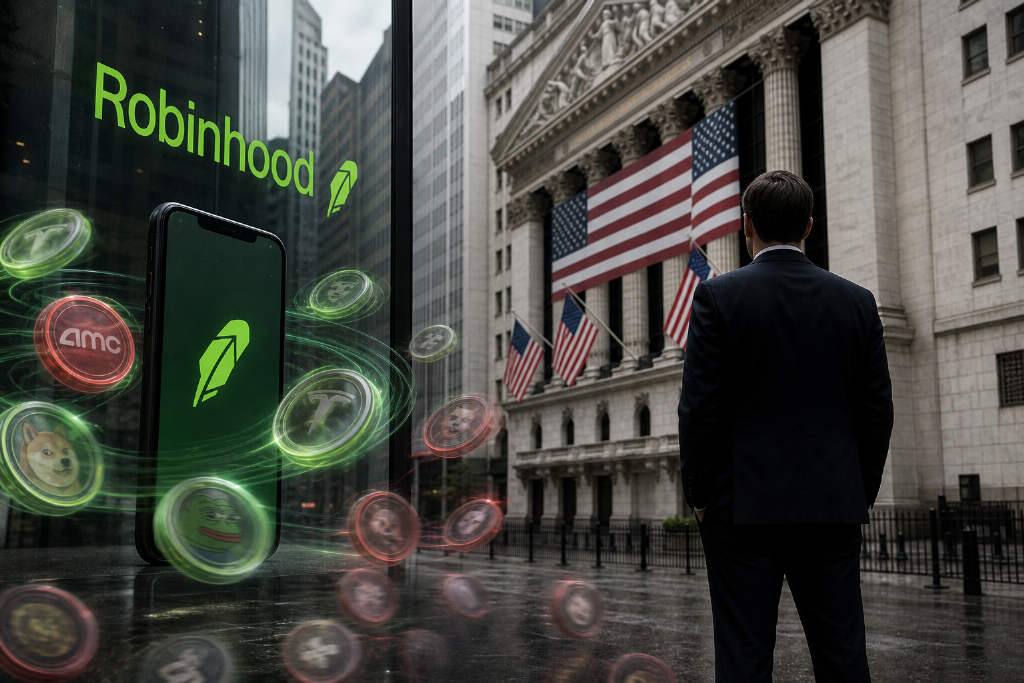
AMC CEO Slams Robinhood Over Offshore Stock Tokens, MEME Crashes Below $40M

AMC CEO Slams Robinhood Over Offshore Stock Tokens, MEME Crashes Below $40M

N
News Editor
2026-09-04 16:43:44
AMC CEO Adam Aron took to X to again criticize Robinhood for promoting offshore Stock Tokens on its U.S. website, accusing the company of evading securities laws. Aron directly called out Robinhood co-founder Vlad Tenev, stating that the practice violates U.S. securities law and undermines market integrity. Following the comments, the MEME token accelerated its decline, falling below $40 million in market cap to $38.82 million, according to GMGN.

BlockBeats reported on September 5 that AMC CEO Adam Aron again targeted Robinhood on X, sharply criticizing the platform for advertising offshore Stock Tokens on its U.S. website. Aron argued that Robinhood is effectively circumventing the spirit of securities laws and creating an unauthorized synthetic market.

"Playing fast and loose with U.S. securities law is not something that brings honor to Robinhood. It is also not something that adds integrity or credibility to the financial markets," Aron said directly to Robinhood co-founder Vlad Tenev. "You yourself admitted that under these circumstances, you are not complying with U.S. securities law, and therefore you cannot offer or sell these Jersey offshore tokens to U.S. persons. Yet your company is aggressively promoting them on your U.S. website."

Possibly influenced by the remarks, the MEME token accelerated its decline, falling below $40 million in market cap to a temporary value of $38.82 million, according to GMGN market data.

This article was originally published by Bit.Fan. For more cryptocurrency news and market insights, visit www.bit.fan.
1400

Disclaimer:

The market information, project data, and third-party content displayed on this platform are for industry information sharing only and do not constitute any form of investment advice or return commitment.

Cryptocurrency trading carries high risks. Users should fully assess their risk tolerance and make independent decisions. All profits, losses, and legal responsibilities are borne by the users themselves.