


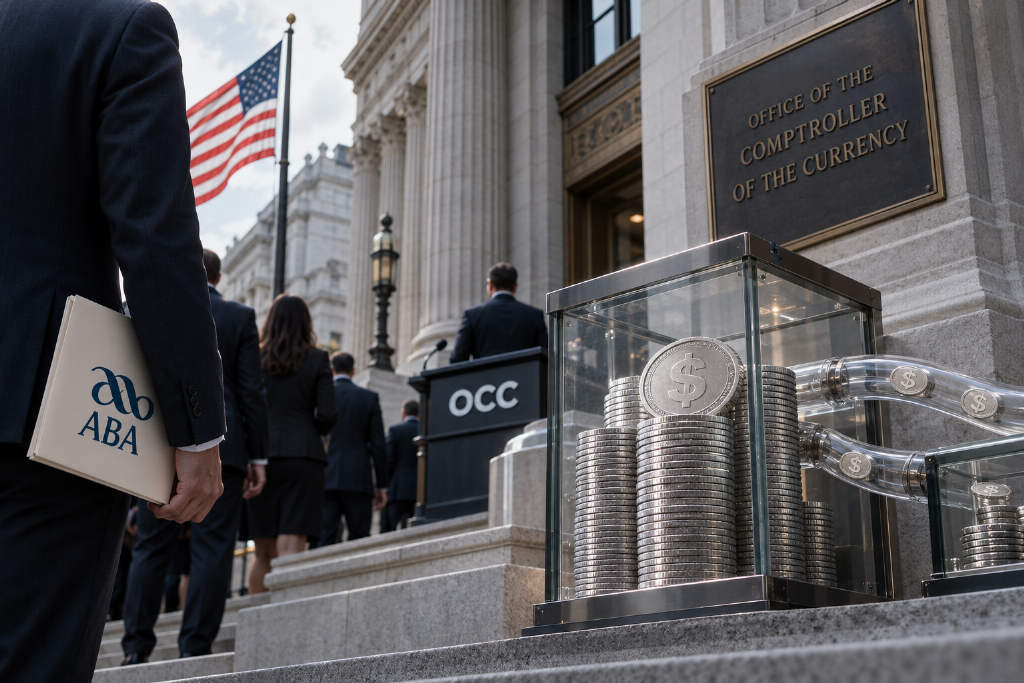
US banking advocacy groups are pushing back on the Office of the Comptroller of the Currency’s final rules for payment stablecoin issuance and custody under the GENIUS Act, arguing that the agency’s reading of the law cuts against what Congress intended.
In a Wednesday notice, the American Bankers Association said the OCC’s final rule included “several positive steps,” but kept up its criticism of the provisions tied to stablecoin yield. The regulator removed a proposed provision that would have created a presumption that certain third-party arrangements violated the law’s ban on yield payments.
ABA says the final rule weakens the original safeguards
“The final rule removes the OCC’s originally proposed safeguards that would have addressed indirect arrangements involving affiliates, exchanges and other distribution partners,” the ABA said.
The group said that, as a result, payment stablecoin issuers could offer economically equivalent yield while technically avoiding the statutory prohibition. It also said the OCC declined to adopt a broader presumption against arrangements designed to get around the ban.
Stablecoin rewards were one of the main issues debated by lawmakers and interest groups before and after Congress passed the GENIUS Act in July 2025. The issue is still under scrutiny as discussions continue around the Digital Asset Market Clarity Act, a crypto market structure bill that is now in limbo after a failed procedural vote in the Senate last month.
Industry groups split over the yield language
The Blockchain Association supported the change to the yield prohibition, saying the OCC “brought the final rule more closely in line with the statutory text.”
The Bank Policy Institute, another banking industry advocacy group, largely sided with the ABA. It said “the decision to omit the yield presumption replaces clarity with ambiguity and puts the banking system and its customers at risk of deposit flight.”
More GENIUS-related rules are still expected
The OCC finalized its rules ahead of the GENIUS Act’s implementation in January 2027. Other government departments are expected to release their own GENIUS-related stablecoin rules within their areas of authority, including the Federal Reserve and the Treasury.
Relatedly, the ABA and state banking groups have also pushed back on stablecoin yield provisions in the CLARITY Act.