
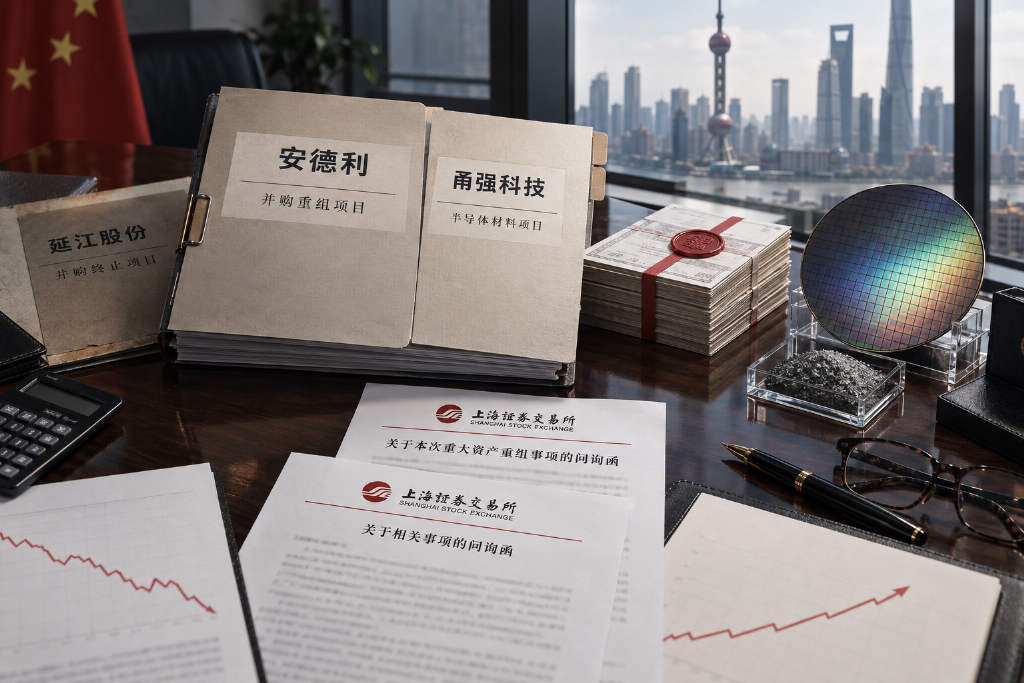
Andeli moved ahead quickly with a cross-sector acquisition, but the target’s failed sale earlier this year and back-to-back scrutiny from regulators have turned the nearly 800 million yuan transaction into a contested one.

On Sept. 18, Andeli disclosed two announcements at the same time. Its board approved a 793 million yuan cash purchase of a 62.06% stake in Ningbo Yongqiang Technology Co., Ltd. On the same day, the Shanghai Stock Exchange sent a regulatory work letter over the asset acquisition, involving the listed company, its directors, senior executives, controlling shareholder and actual controller. It was Andeli’s second regulatory letter in three months tied to the same deal.
Yongqiang Technology had only just seen another takeover attempt collapse in May. That earlier transaction, involving another listed company, fell apart over disagreements on valuation and performance commitment terms. Now Andeli, a company focused on concentrated juice production and processing, is trying to enter semiconductor materials through the acquisition. The contrast between the target’s losses and its aggressive profit commitments has become a central point of regulatory attention.
All-cash purchase values Yongqiang at about 1.278 billion yuan
Under the plan, Andeli will acquire 62.0611% of Yongqiang Technology through three asset purchase agreements for a combined 793 million yuan in cash. After closing, Yongqiang will become a controlled subsidiary and be included in Andeli’s consolidated financial statements. Based on the transaction price, the target’s overall valuation is about 1.278 billion yuan.
The company said the transaction does not constitute a major asset restructuring and does not need shareholder approval. Board approval is enough for it to take effect, removing a major procedural hurdle and allowing the deal to move fast.
For Andeli, whose core business is concentrated juice manufacturing and processing, the acquisition is a key step into semiconductor materials. The company said the purchase is meant to optimize its industrial footprint, cultivate a second growth curve and build a dual-engine structure of "juice as the main business plus electronic materials."
Yongqiang Technology focuses on high-speed, high-frequency integrated circuit materials and BT substrate interconnection materials. Its core products include copper clad laminates and prepregs. Downstream customers include PCB makers such as Victory Giant Technology and Shennan Circuits, while end customers reach server companies including Inspur Information and Sugon. The business sits in an upstream semiconductor materials segment that has drawn strong attention in China’s capital markets.
Andeli stepped in soon after Yanjiang abandoned its own bid
This was not Yongqiang Technology’s first attempt to sell itself to a listed company.
On May 18, Yanjiang Co., which mainly operates in nonwoven materials, formally announced the termination of its planned acquisition of 98.54% of Yongqiang Technology. According to Yanjiang’s disclosure, the parties went through multiple rounds of talks but failed to reach agreement on key terms including performance commitments and valuation. Given the limited effective time window and the difficulty of forming a workable plan, they decided to end the transaction. Under that earlier structure, Yanjiang had planned to use a combination of share issuance and cash, and the deal would have constituted a major asset restructuring.
Not long after that termination, Andeli moved in. On June 15, the company disclosed that it had signed a framework agreement with the sellers to acquire control of Yongqiang Technology for 600 million yuan to 800 million yuan. After the news came out, Andeli’s shares hit the daily limit for two consecutive trading days.
From Yanjiang’s termination in mid-May to Andeli’s framework agreement in mid-June, less than one month had passed. Compared with Yanjiang’s earlier "share issuance plus cash" structure, Andeli’s all-cash offer was seen by the market as a format that could be easier for the sellers to accept.
Second regulatory work letter in three months
The speed of the transaction was matched by the speed of regulatory attention.
On the day the formal agreements were signed, the Shanghai Stock Exchange issued another regulatory work letter. It was the second letter tied to the acquisition within three months. Back in June, after Andeli disclosed the framework agreement, the exchange had already sent its first regulatory letter, asking the company to explain the commercial rationale for a cross-sector acquisition, the valuation premium, the source of funds and the sustainability of the target’s profitability.
On June 23, Andeli published a reply to that first letter. The exchange’s decision to send another letter after the formal agreement was signed shows that regulatory concern over the risks in the transaction has not gone away.
Valuation, losses and performance commitments are all under scrutiny
The core issue is the set of sharp contrasts embedded in the deal.
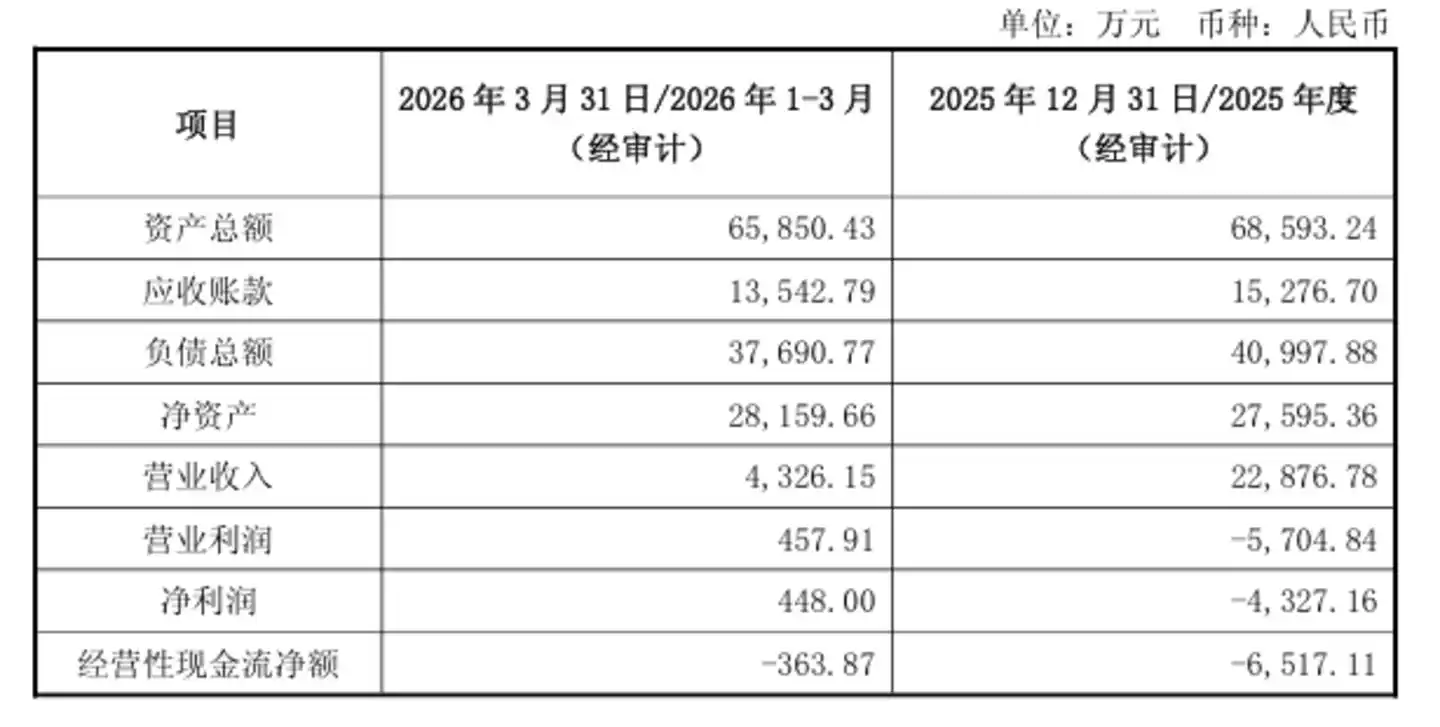
The first is the gap between the target’s financial profile and its valuation. Financial data show that Yongqiang Technology posted 229 million yuan in revenue in 2025 and a net loss of 43.27 million yuan. In the first quarter of 2026, it recorded 43.26 million yuan in revenue and 4.48 million yuan in net profit. Against those numbers, the implied valuation of about 1.278 billion yuan stands out. Valuation was also one of the main sticking points in Yanjiang’s failed acquisition attempt, which puts even more focus on whether the pricing in Andeli’s deal is reasonable.
The second contrast lies between the target’s history of losses and the steep profit commitments attached to the transaction. According to the announcement, the sellers committed that Yongqiang Technology’s non-recurring net profit for 2026, 2027 and 2028 will be no less than 23 million yuan, 42 million yuan and 70 million yuan, respectively, with a three-year cumulative total of at least 135 million yuan. That means moving from a full-year loss of more than 43 million yuan in 2025 to a profit commitment of 23 million yuan in 2026, then reaching 70 million yuan by 2028.
For a company that had been loss-making for years, that is a demanding path. The compensation clause sets an upper limit of 1.35 billion yuan, which appears substantial on paper, but whether it can be realized will still depend on the target’s actual operating performance.
Cross-sector integration risk remains a live issue
A deeper concern is the distance between the buyer’s existing business and the target’s industry. Andeli has spent years in the concentrated juice sector and does not have an established base of technology, talent or channels in electronic materials. This is a classic cross-sector acquisition.
The article notes that past A-share cases show traditional companies buying into hot sectors often run into difficult integration, unmet performance commitments and goodwill impairment. A number of consumer and manufacturing companies that crossed into semiconductors or new energy eventually ended up facing goodwill write-downs or sharp earnings reversals.
In the author’s view, Andeli’s acquisition is essentially an attempt by a traditional manufacturing company to find a second growth curve as its core business faces growth constraints. The all-cash structure and the speed of the negotiations reflect the urgency of that transition. But the failed prior sale, uncertainty around Yongqiang’s profitability and the challenge of integrating a business outside Andeli’s core expertise remain risks that cannot be ignored.
Two regulatory letters in three months serve both as pressure on disclosure and as a warning to the market. For investors, the more important issues now are whether the performance commitments can be met and how the business integration progresses after the acquisition closes.