
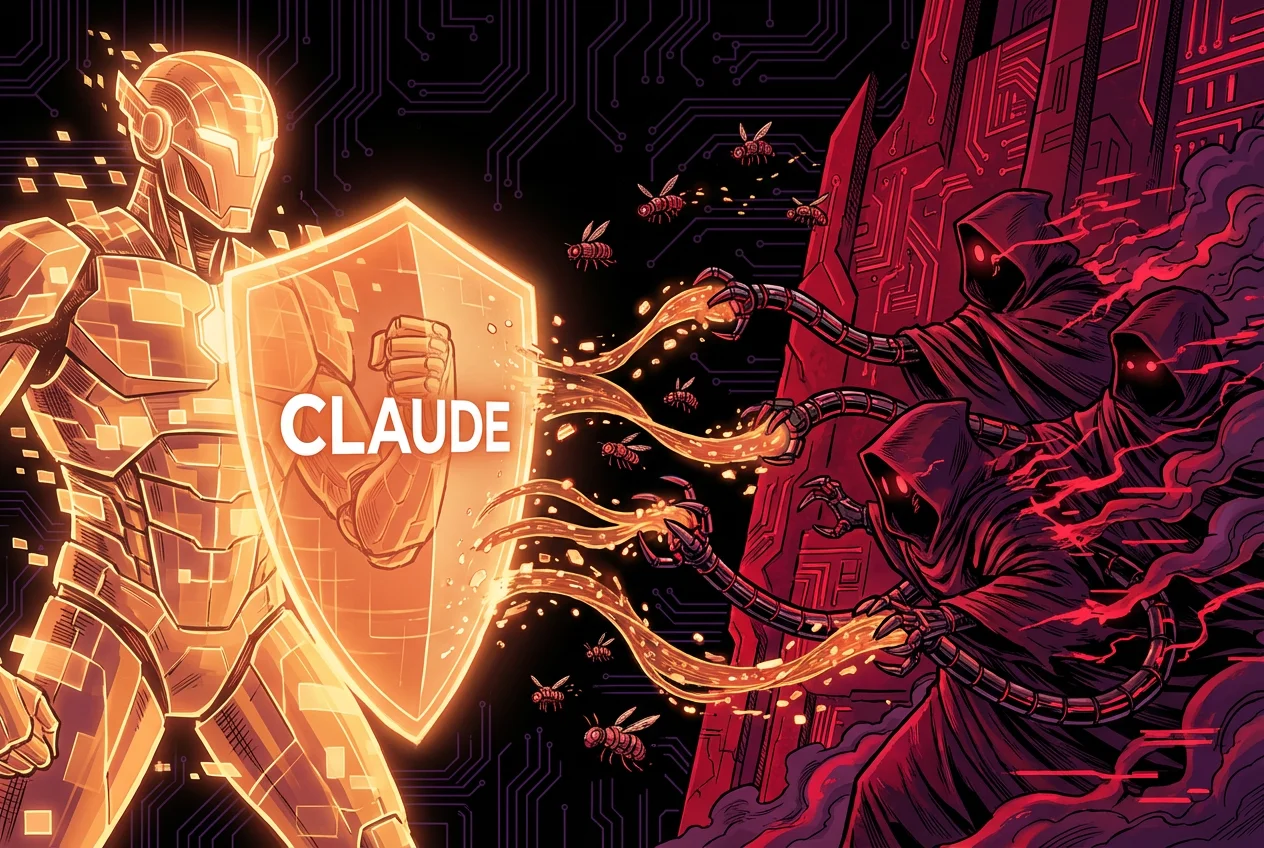
Anthropic, a US AI startup, published a blog post on Monday accusing three Chinese AI firms—DeepSeek, Moonshot AI, and MiniMax—of systematically abusing its Claude chatbot service. According to Anthropic, these companies created over 24,000 fraudulent accounts and sent more than 16 million queries to Claude, collecting responses to train and improve their own models.
Interaction Volumes Vary Widely: MiniMax Took 13 Million Queries
Anthropic detailed the interaction volumes: DeepSeek logged about 150,000 queries, Moonshot AI over 3.4 million queries, and MiniMax accumulated more than 13 million queries. The company stressed these were not routine user requests but organized, strategic, high-frequency queries targeting specific tasks to harvest reusable responses. None of the three accused firms has publicly responded.
Distillation: From Optimization Tool to Gray-Area Weapon
The technical core of the dispute is distillation. Anthropic acknowledged distillation has legitimate uses, such as building lightweight versions of a company's own products. However, when developers bypass their own research and directly query a competitor's cloud model en masse, using the outputs as training material, they can "build a directly competing product with minimal time and cost." Notably, OpenAI—a rival of Anthropic—also submitted a memorandum to US House members earlier this month, similarly naming DeepSeek for distilling its model capabilities. Two leading US AI firms pointing fingers at the same company signals the industry's tolerance for such practices has reached a breaking point.
DeepSeek Implicitly Admitted Learning from Other Models
In a research paper updated last September, DeepSeek claimed its flagship model V3 used only general web pages and e-books in later pre-training, not synthetic data. However, the paper added that some web content contained "a large number of answers generated by OpenAI models," meaning the model may have indirectly learned from other powerful models through public web text. Moonshot AI was more direct: its July technical report stated that its Kimi K2 model extensively used synthetic data during training, highlighting how distillation and synthetic data have become critical tools in modern large-model development.
Anthropic Elevates to National Security: AI Capabilities Could Leak into Military Systems
Amid the intensifying US-China tech race, Anthropic deliberately framed the issue as a national security concern. The company warned: "Foreign labs that extract capabilities from US models through distillation can deploy those capabilities—lacking comparable safety design and value alignment—into military, intelligence, and mass surveillance systems." With restricted access to advanced AI chips, how Chinese AI players produce products rivaling US models in a short time has been a persistent question. The parallel accusations from Anthropic and OpenAI now add evidence to the theory that heavy reliance on other models' outputs is at play. As synthetic data and distillation become routine in large-model development, the line between "reasonable reference" and "improper copying" will blur further, fueling debates over AI service terms, cross-border data flows, and national security reviews.