
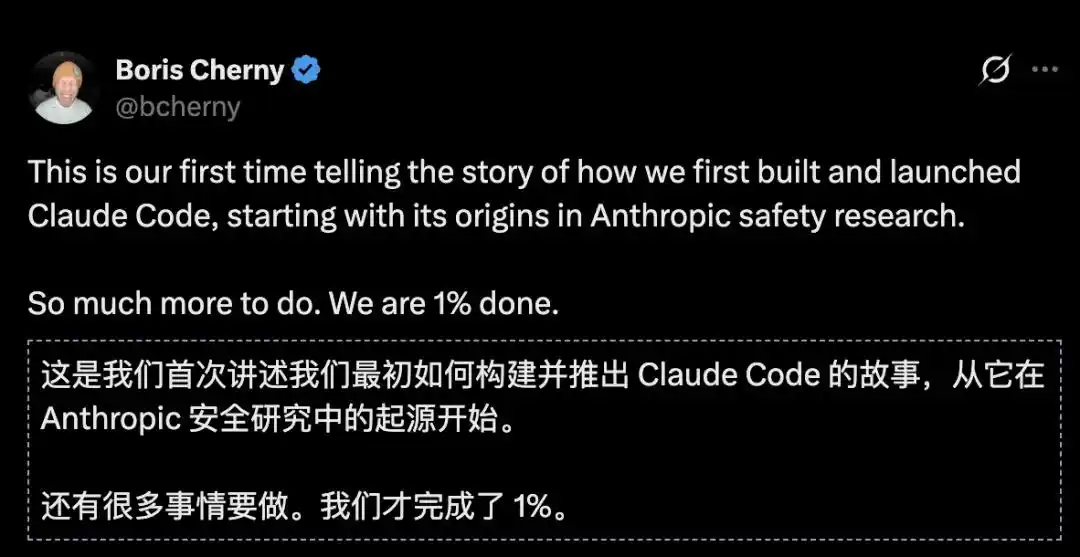
Anthropic has published a new official feature, The Making of Claude Code, offering its most detailed public timeline yet on how Claude Code evolved from an internal research effort into one of the company’s flagship developer products. According to the company’s account and remarks attributed to core contributor Boris Cherny, Claude Code did not begin as a straightforward productivity tool. Instead, it emerged from Anthropic’s internal work on alignment and safety, then gradually absorbed years of experimentation in coding, tool use, and autonomous task execution.
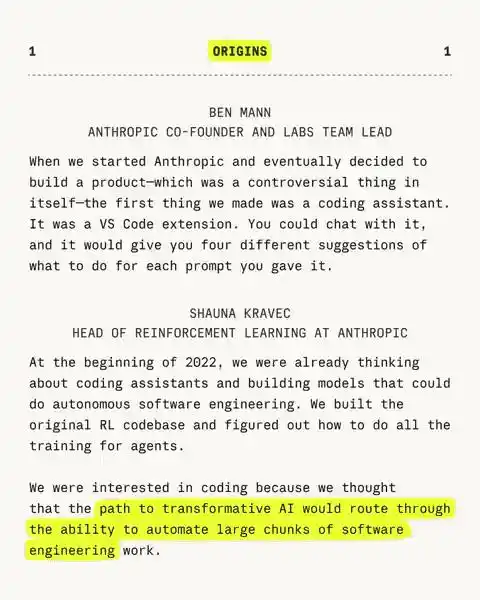
Cherny’s headline takeaway was intentionally restrained: despite the product’s impact, he said Claude Code is only “1% done.” That framing is significant because it suggests Anthropic sees the current product less as a finished coding assistant and more as an early interface for broader agentic software engineering systems still under development.
Early work started in 2021 with coding assistance and autonomy research
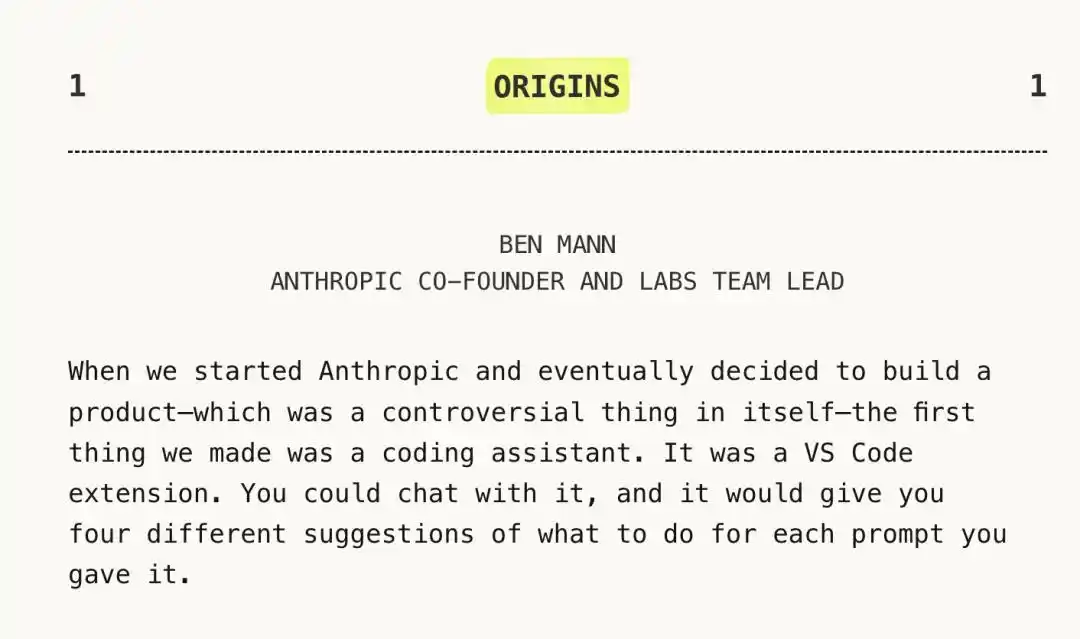
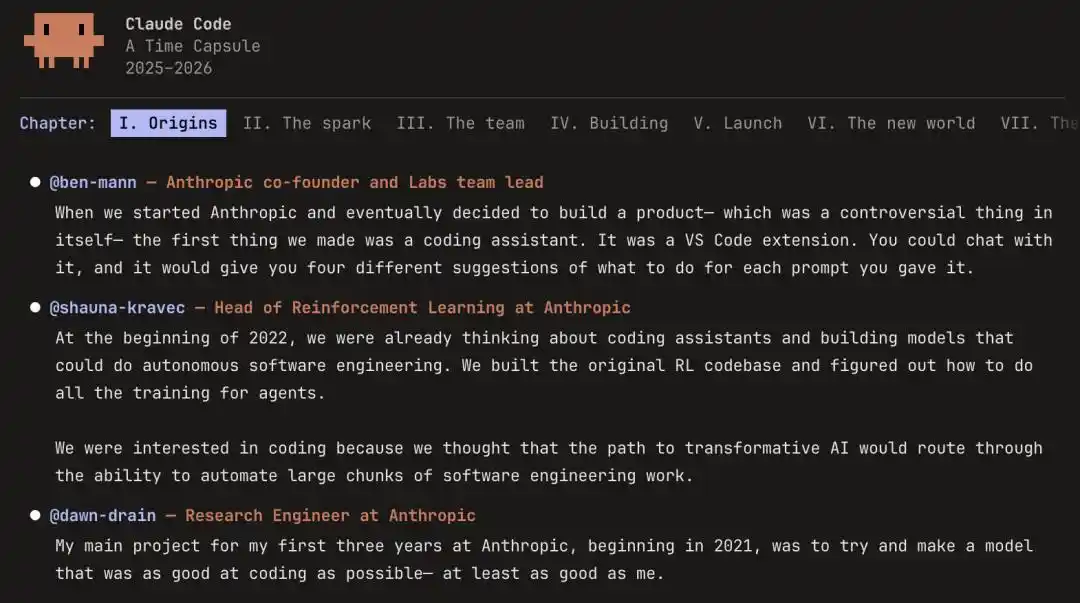
Anthropic traces the story back to 2021. Ben Mann, co-founder of Anthropic and head of the Labs team, said that once the company decided it would eventually build products, one of the first things it created was a programming assistant. At roughly the same time, research engineer Dawn Drain was working on improving model coding ability to the point where it could at least match her own baseline. In parallel, Shauna Kravec’s reinforcement learning team was already pushing toward a more ambitious goal: autonomous software engineering rather than a chat-style helper.
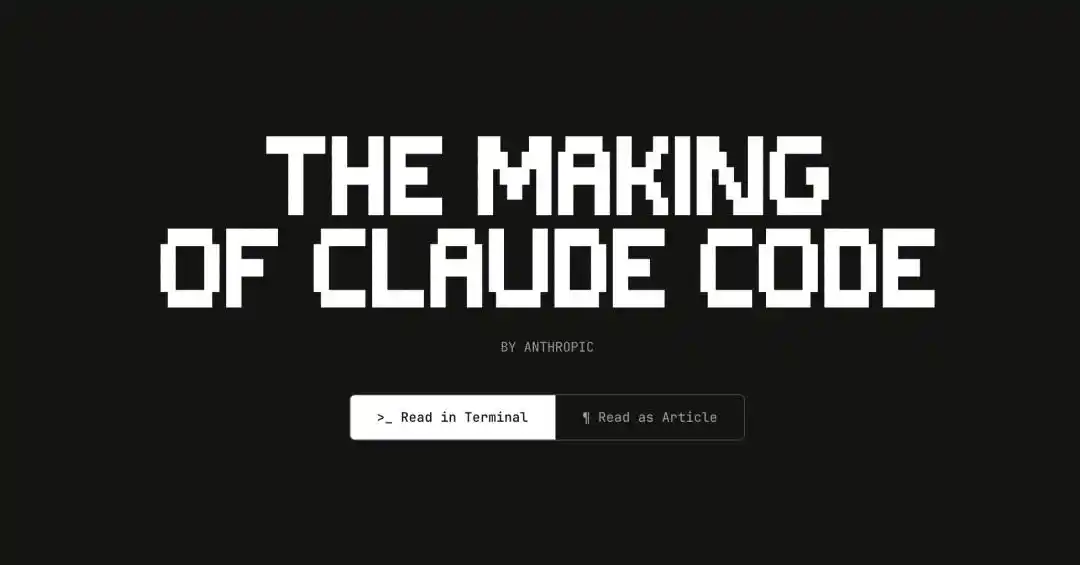
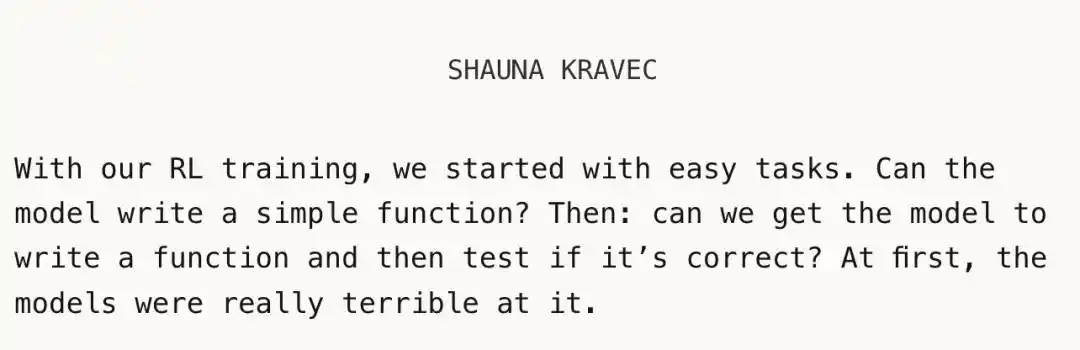
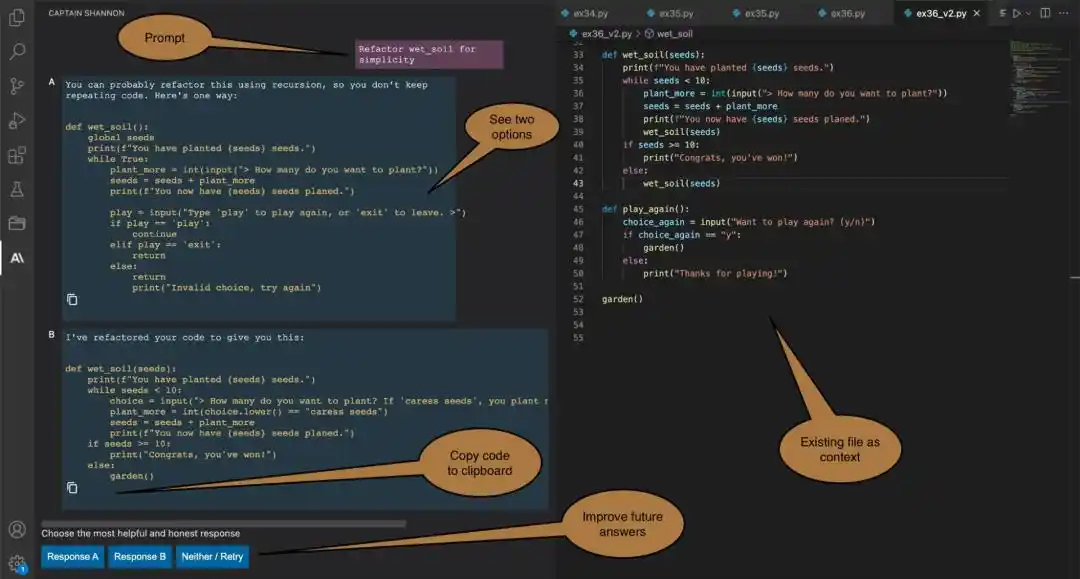
Kravec’s reasoning, as described in the account, was that transformative AI would likely require the automation of large-scale software engineering work. By early 2022, the team had already started training models with reinforcement learning to write simple functions and then verify correctness through tests. The initial results were poor, but the direction was set. Meanwhile, Mann’s team had built an early VS Code extension that could provide four different coding suggestions. By spring 2022, that tool had reached around 100 external users.
Still, turning a model into a real coding agent required much more than interface design. Anthropic ran into infrastructure problems that remain familiar across the current agent landscape: how to let models execute code safely, read and write files, survive timeouts, and recover from failures. Drain and colleagues spent a long time getting the model to run inside a container with a persistent shell, stream input and output, and handle timeouts more gracefully. By the time Mann returned from paternity leave, he found the original coding assistant had largely faded into the background.
From 2022 to 2023, the core agentic coding stack took shape
Although the early assistant lost momentum, the research side continued. Anthropic kept building foundational components for agentic coding, including function calling, search, and bash tool support. The company says a major breakthrough came across late 2022 and 2023, when Kravec’s team enabled models to use a bash tool and search through codebases more freely. Drain also spent what the account describes as an “embarrassingly long time” teaching Claude to write diffs, a capability that later became central to practical code editing.
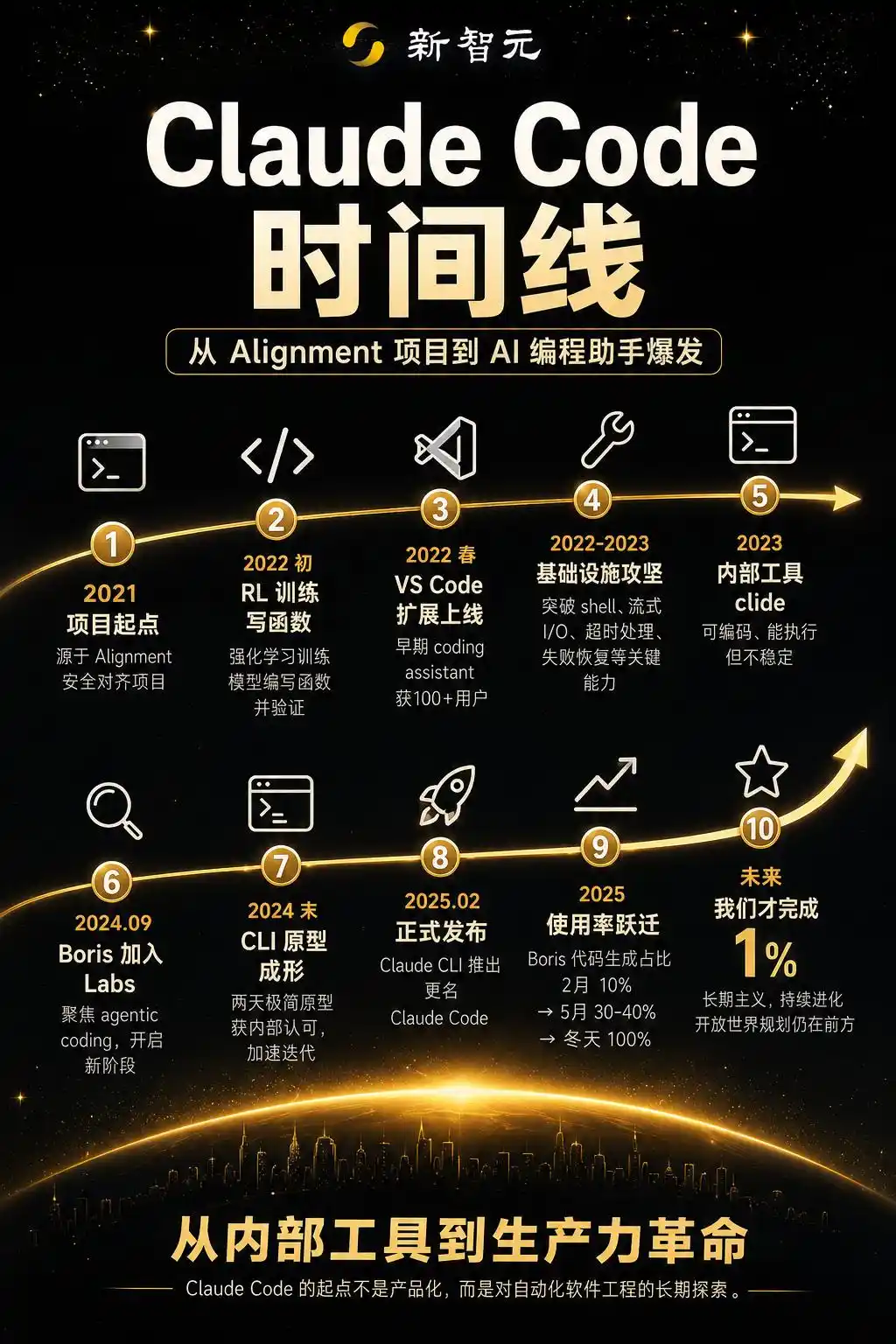
Those pieces eventually came together in an internal command-line tool called clide. The tool allowed users to chat with Claude in order to edit code and complete engineering tasks. Mann said he loved the prototype and thought it was genuinely good, while also arguing that it could be much better. Others inside the company described clide as promising but awkward: heavily discussed, yet still slow, fragile, and difficult to treat as a mature product.
Adam Wolff, described as the first engineer on what would become Claude Code, added early agentic behavior to clide so the system could infer user intent from partial edits. That was a meaningful step toward a more autonomous coding workflow. Even so, clide remained a research-side tool rather than something ready for broad external adoption.
Boris Cherny’s arrival in 2024 became the turning point
The project’s decisive acceleration began in September 2024, when Boris Cherny joined Anthropic Labs. Mann reportedly assigned him to agentic coding with a clear instruction: do not build for the models of today, build for the models that will exist six months from now. Cherny was not immediately told to build a coding product. Instead, he first familiarized himself with the Anthropic API and then created a minimalist terminal prototype in just two days.
That first demo could take a screenshot of Apple Music and identify what song was playing. Internally, it received little attention on Slack, drawing only a handful of likes. But Cherny kept iterating. According to the story, a rejected pull request eventually led him back to clide. He pasted the issue into the tool, and clide produced a complete five-to-ten-line code change. Cherny later said he had never seen anything like it and that it felt like the future. Mann described his reaction as a stunned realization that the necessary pieces were already there.
By December 2024, Anthropic Labs had officially greenlit the effort. What began as a very small group centered on Cherny, Sid Bidasaria, and Mann quickly expanded by another six or seven people. The team then entered a final two-week sprint. During that period, Anthropic says many of the product’s essential functions were completed, including bug reporting, login flow, auto-updates, and usage metrics. The development process was unusually fast, with minimal PR bottlenecks and fixes that could sometimes ship in as little as five minutes.
Public launch in 2025 and a shift in perception after model upgrades
Anthropic publicly launched Claude CLI in February 2025, later renaming the product Claude Code. Initial feedback was mixed. Some users reportedly liked the idea but felt the product was too buggy. According to the company’s retrospective, the real inflection point came as the underlying models improved, especially with the release of the Claude 4 family. Cherny said that while coding during the Sonnet 4 launch period, he suddenly realized the system had become materially stronger.
Anthropic and associated retellings point to rapid adoption among developers once the model quality crossed that threshold. The article cites examples including Ramp’s engineering leadership being won over quickly and Bun’s founder using the tool to tackle complex networking protocol code. By the winter of 2025, Anthropic characterizes the shift as the arrival of an irreversible new workflow for software development.
Cherny also described a personal transition that captures the company’s broader thesis: at one point, he said he no longer hand-wrote any code, with Claude Code doing the work silently in the terminal in the background. In another anecdote, he said he spent a full day coding with Claude Code and made 88 commits. Team member Cat Wu added that user behavior around permission requests changed over time as well. At launch, many people scrutinized each request carefully; later, a sizable share of users simply began selecting auto-accept, which Anthropic views as an early sign of trust formation.
Anthropic says the hardest capabilities are still ahead
Despite the progress, Cherny’s “1%” remark underscores Anthropic’s view that Claude Code remains in an early phase. The company identifies long-horizon autonomy, persistent memory, complex context management, and open-world planning as major unsolved capabilities. In other words, the current product may already be useful and influential, but Anthropic does not present it as the endpoint.
The broader significance of the disclosure is that Claude Code appears to be the product of several streams converging over years: alignment research, reinforcement learning, tool use, command-line interaction, and aggressive engineering integration. Rather than emerging from a conventional product roadmap alone, it was assembled from capabilities first built for internal research and then reorganized into a developer-facing system.
For the software industry, that timeline reinforces a larger trend. AI coding tools are moving beyond autocomplete and chat-based assistance toward systems that can search repositories, modify files, reason across tasks, and execute multi-step work inside real engineering environments. If Anthropic’s account is accurate, the company believes the role of the engineer is beginning to shift from directly writing every line of code toward defining intent, supervising agents, and validating outputs.
Anthropic’s disclosure therefore serves two purposes at once: it documents the history of one of the market’s most visible AI coding tools, and it signals where the competitive frontier is moving next. Whether Claude Code can sustain that momentum will likely depend on the same issues that shaped its origin story in the first place: model quality, execution reliability, trust, and the ability to handle increasingly open-ended software tasks.