
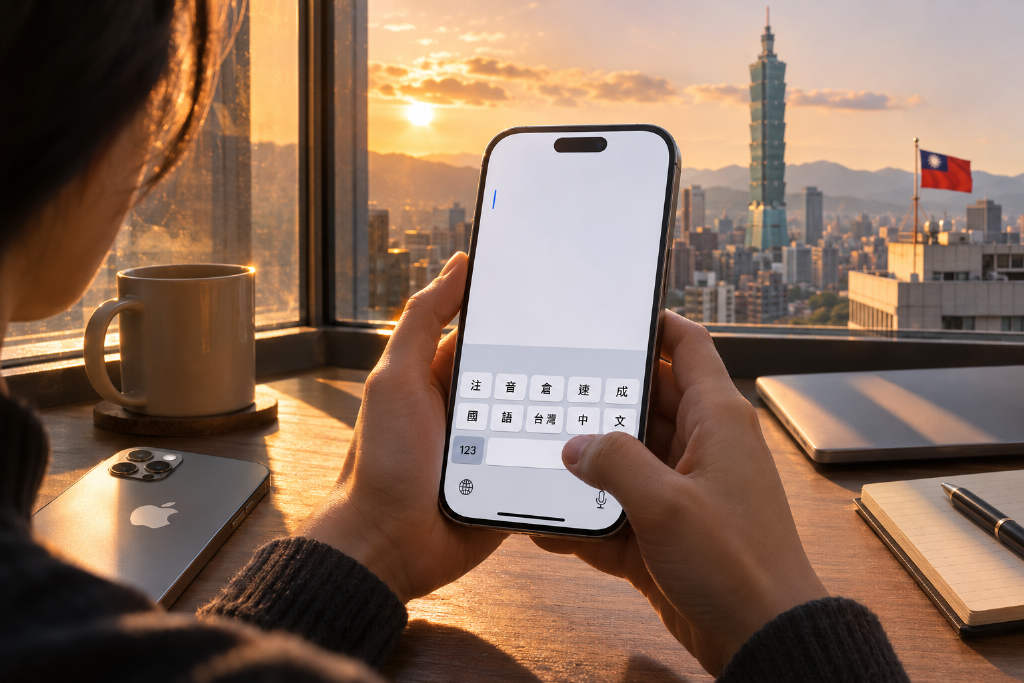
Apple’s iPhone keyboard contains an undisclosed greylist that keeps certain words and phrases out of predictive text suggestions, according to independent researcher Derik Kauffman. Some of the listed terms are also difficult to enter through the keyboard’s swipe-to-type function.
Kauffman told Reuters that the list contains an estimated 100,000 entries across the languages he examined. The estimate does not include Chinese. The list does not ban users from typing the terms. They can still enter them manually, but the keyboard will not proactively recommend them.
Political phrases appear alongside offensive terms
Reuters reported that most of the entries are profanity, offensive language or terms related to drugs, sex and violence. The data also contains politically charged phrases, including “dictator Trump,” “sleepy Joe,” “Tibetan independence” and “United Ireland.”
The Guardian cited other examples such as “male chauvinist pig,” “NSA spies” and “iMessage isn t working.” Reuters tested a small portion of the list on an iPhone and found that some phrases were difficult to enter with swipe typing or did not appear in the predictive text bar.
Swiping “United Ireland” often produced “United Iceland,” while “Tibetan independence” became “Tibetan independences.” The phrase “dictator Trump” could be entered through swiping, but “Trump” was changed to lowercase. The keyboard also declined to suggest the full phrase and instead offered “dictator trumps.”
Codex and Claude Code used to trace the data
Kauffman said he noticed in September that swipe typing stalled on certain combinations. “Bad boy” and “white man” did not work smoothly, while “bad girl” and “black man” did. He investigated the issue with OpenAI’s Codex and Anthropic’s Claude Code, eventually locating the list deep inside the iOS system.
The Guardian reported that Kauffman’s other projects include using artificial intelligence to identify errors in scientific papers. Matt Suiche, an engineer at cybersecurity company Tolmo, told Reuters that he independently reconstructed the same list. He compared his results with Kauffman’s findings, and the two versions were almost identical.
Kauffman published the list and the decoding method on Swipeblocked, with the code available on GitHub. The site says the data was decoded from keyboard information built into iOS 27.0 and language data Apple made available for download in October 2026. Entries that could not be decoded were excluded, meaning the published list represents only a lower bound.
Different languages have separate lists
The list is not limited to English. Reuters reported that at least 27 other languages and writing systems have their own versions. In the Hindi keyboard, “Modi braggart” and “Rahul is Pappu” could not be entered smoothly. The phrases mock Indian Prime Minister Narendra Modi and his main political rival, Rahul Gandhi.
The French keyboard resisted “immigration too high,” while the Hebrew keyboard resisted “occupied territories.” Kauffman said: “Every major language has some version of a list.”
Traditional Chinese data includes 47,840 entries
Kauffman’s estimate of 100,000 entries excludes Chinese, but Swipeblocked has published separate Chinese data. BlockTempo reviewed the site’s Traditional Chinese and Simplified Chinese files. The Traditional Chinese list contains 47,840 entries, while the Simplified Chinese list contains 43,014. They are the two largest language lists shown on the site.
Swipeblocked says the Chinese keyboard works differently from the English keyboard. Listed terms can still appear among candidate characters while a user is typing. What the keyboard withholds is the next-word suggestion after the term has been selected, along with longer phrases that contain it.
The Traditional Chinese word list includes terms such as “Taiwan independence,” the Democratic Progressive Party, the Kuomintang, the Communist Party, the Republic of China and Lai Ching-te. Its phrase list includes “Tsai Ing-wen president,” “the June 4 Tiananmen incident,” “the February 28 incident,” “Xi Dada,” “recover Taiwan” and “Taiwan People’s Republic.” It also contains “Taiwan is sovereign,” “Taiwan is democratic” and “Taiwan is a ghost island.”
The Simplified Chinese file includes phrases referring to Taiwan independence activists, Taiwan independence forces, Xi Jinping, Liu Xiaobo, the liberation of Taiwan and “Taiwan is the People’s Republic of China.”
The English list includes “Taiwan is country.” The site notes that this wording is affected, while “Taiwan is a country” is not. Kauffman also wrote that Apple’s Chinese input engine contains code that skips suggestions when it encounters “taiwan” or “tibet” written in English.
The Chinese files also contain ordinary language, including the single word “independence” and phrases such as “late-night self-study” and “trainee.” The site cautions that an entry’s presence on the list does not reveal why Apple included it.
Apple says users can type the terms themselves
Apple replied to Reuters by email but did not directly address Kauffman’s findings. The company did not explain the size of the list, its contents or why some political phrases appeared in it.
Apple said the keyboard was designed to avoid suggesting language that could be inappropriate or offensive. Users can still type specific terms themselves and can choose not to accept the keyboard’s suggestions.
Kauffman said he understood why Apple would not want users to accidentally send obscene messages or inflammatory slogans, but he argued that the rules were applied inconsistently. “Read smut” can be entered through swiping, he said, while “read gay smut” cannot. “This is a very mild form of censorship,” he told Reuters. “But given Apple’s scale, a light touch can have a very large impact.”
David Greene, a senior attorney at the Electronic Frontier Foundation, said the list felt “a little creepy.” He also acknowledged that it could reduce unwanted or inflammatory suggestions. Greene said that if Apple chose to operate the system this way, users should be clearly informed.



