Introduction: A Joke Unveils the Profit Bill
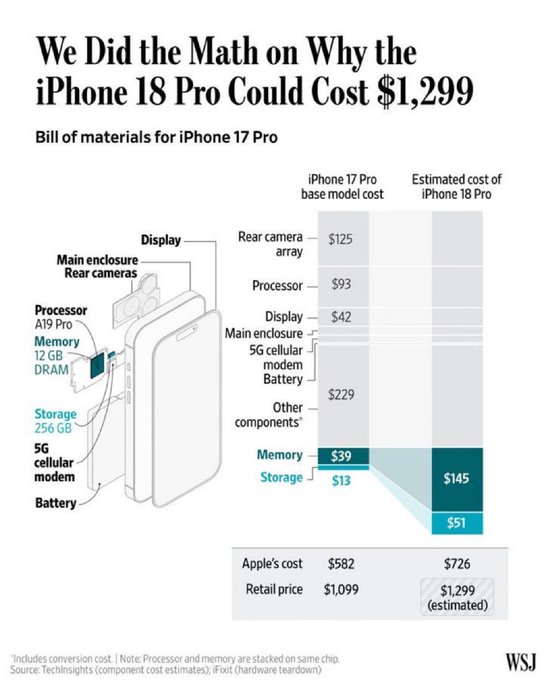
A recent tweet by tech blogger @BluthCapital, mocking Micron's CEO, went viral: For over a decade, Apple bought chips from Micron at $5, encased them in metal boxes, and sold iPhones for $99; when memory makers tried raising prices to $7, Apple ridiculed them. Now, as memory costs hit $50, Apple responds by jacking up product prices by $250. The post triggered widespread discussion, soon followed by a detailed iPhone 18 cost breakdown chart. Sumit Sadana, Micron's Chief Business Officer, told the Wall Street Journal that during the memory industry downturn, certain customers squeezed prices so hard that companies operated at a loss—but now, AI demand has handed memory suppliers the upper hand.
Apple's Profit Hegemony: 33-36% Net Margin, ~75% of Industry Profits
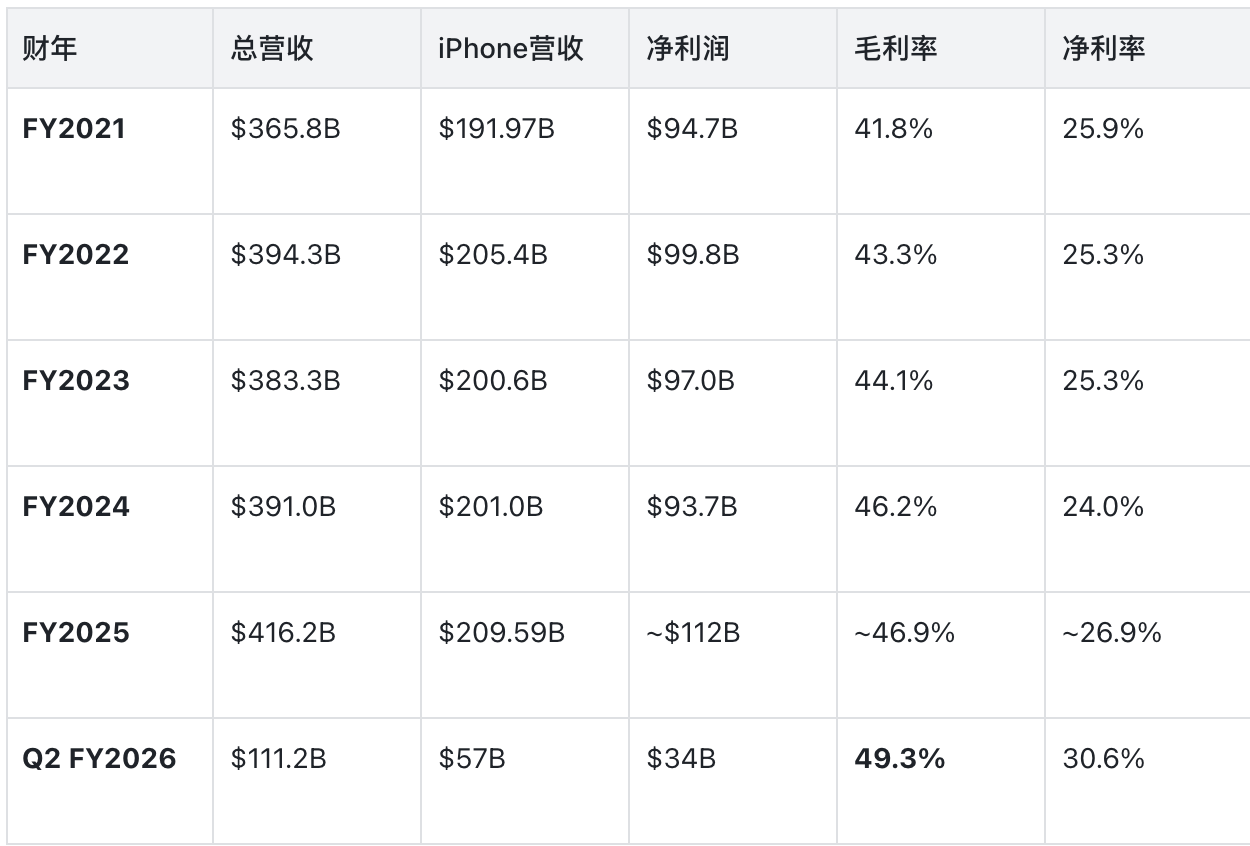
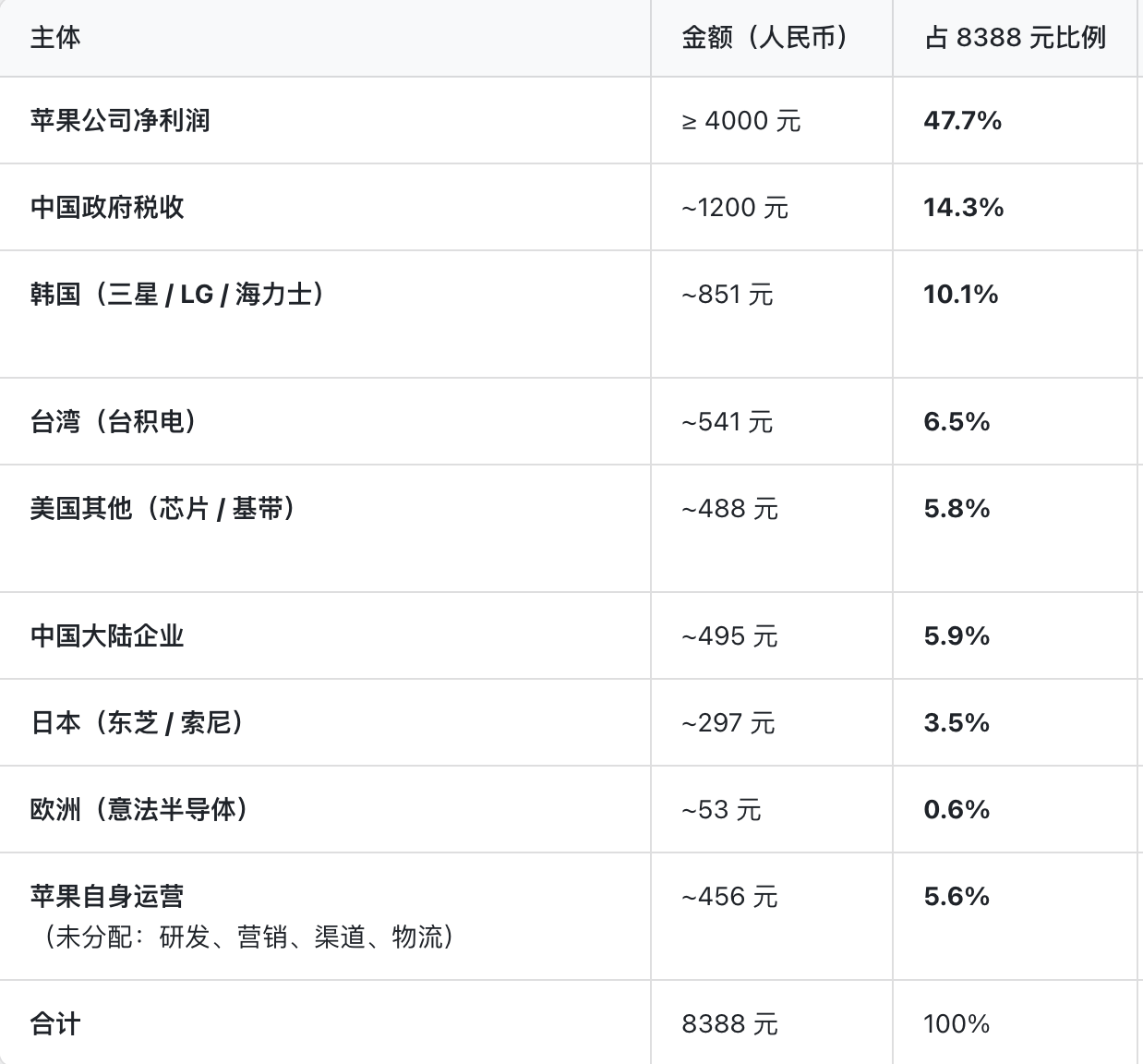
According to Counterpoint and IDC data, Apple has long captured nearly 50% of global handset operating profits. In 2025, Apple's 18% market share yielded about 75% of total industry profits. Based on Apple's Q2 2026 earnings, iPhone revenue reached $57 billion, net profit $34 billion, with estimated shipments of 61 million units. Net profit per iPhone stands at $320-$340, a net margin of 33-36%. Over the past five years, iPhone revenue has remained stable while net profit grew from ~$94 billion in FY2021 to ~$112 billion in FY2025, with net margins consistently around 25%. Meanwhile, memory suppliers take only about 1/30th (roughly 3%) of a single iPhone's profit, while TSMC, due to its monopoly, claims 4-5%.
Memory Cost Evolution: From 'Negligible Component' to 'Critical Part'
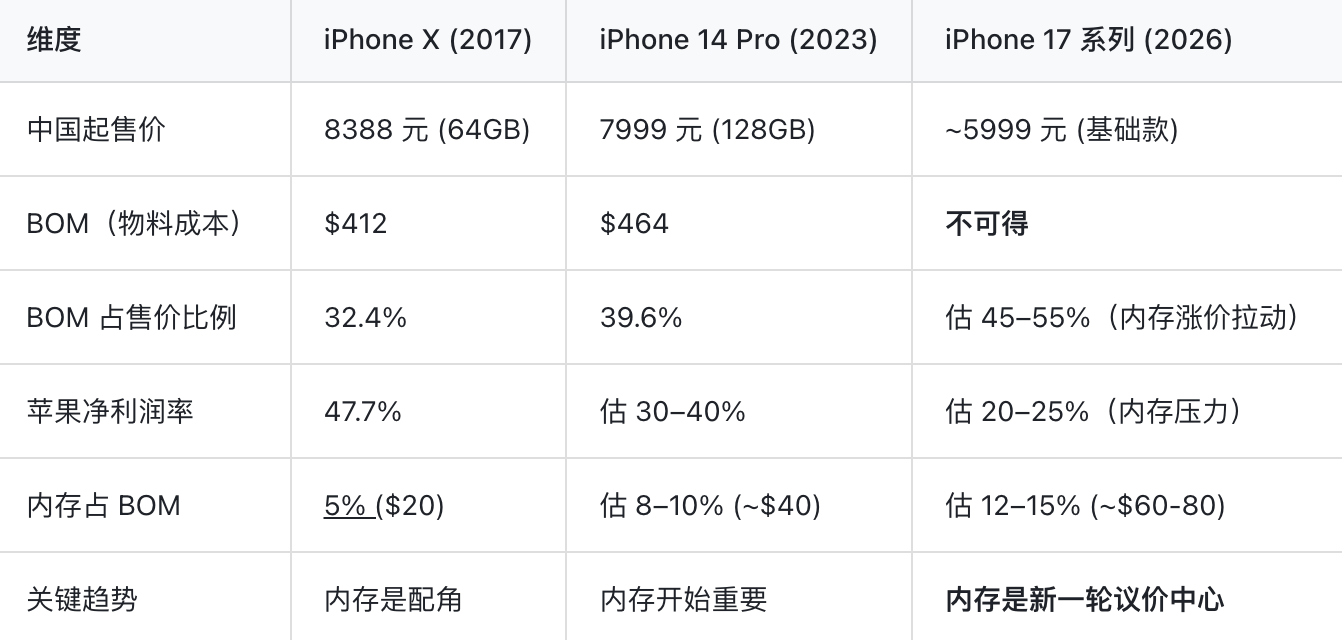
Memory costs in iPhones have passed through three distinct phases. During the iPhone X era (2017), Apple's net margin approached 50%, while Samsung and SK Hynix captured only 1.6-2.3% of the $8388 retail price (approximately 135-195 yuan). By the iPhone 14 Pro in 2023, BOM costs rose to ~$464 (3170 yuan), representing nearly 40% of the selling price, yet Apple's net margin still hovered around 40%. Entering 2025-2026, the iPhone 17 series saw memory costs double, now estimated at 12-15% of BOM, or $60-$80 per unit. TrendForce reports that general DRAM contract prices surged 93-98% quarter-over-quarter in Q1 2026, and Citi expects full-year DRAM average price increases of 88%. Memory has become a pivotal factor in iPhone pricing and profitability.
AI-Driven Memory Bull Run: Micron's 84.6% Gross Margin, SK Hynix's US IPO
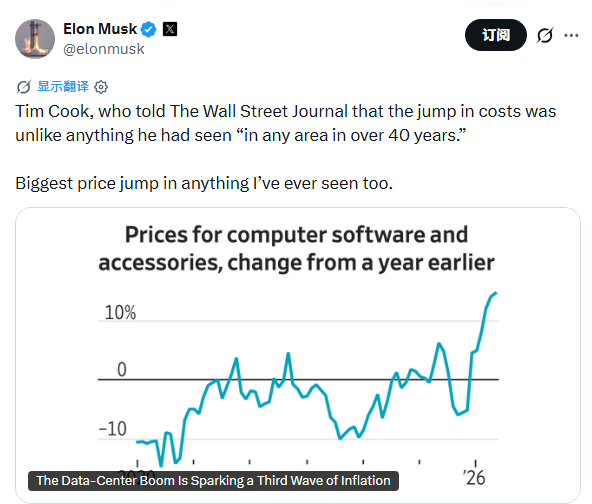
The underlying driver of the memory bull run is insatiable AI demand. Each AI server requires 8x more DRAM and 3x more NAND than a standard server. Samsung, SK Hynix, and Micron have shifted advanced capacity to high-margin HBM and DDR5, deliberately cutting consumer-grade DRAM lines, leading to a shortage of general-purpose DRAM. Micron's Q3 earnings reported a staggering 84.6% gross margin and revenue of $41.46 billion, up 346% year-over-year. SK Hynix announced plans for a US IPO to raise approximately $29 billion, capitalizing on the memory gold rush. For context, one NVIDIA Vera Rubin AI server uses as much memory as about 14,500 MacBook Neo units—highlighting the extreme demand imbalance. Apple CEO Tim Cook initially told the Wall Street Journal on June 17 that memory suppliers were 'passing along enormous price increase pressure' and called for a return to reasonable levels. However, just eight days later, on June 25, Cook changed his tune, describing the cost shock as a 'once-in-a-century flood' and announcing across-the-board price hikes for Mac, iPad, HomePod, Apple TV, and Vision Pro. Apple shares fell 6% on the news, wiping out $263 billion in market value—the steepest drop since April 2025. Elon Musk voiced agreement, calling it 'the most insane price jump I've ever witnessed.'
Power Shift in the Supply Chain: Apple Courts CXMT, IPO Looms
Facing monopolistic memory pricing, Apple is actively lobbying the Trump administration for approval to purchase memory chips from China's ChangXin Memory Technologies (CXMT) to break the Samsung-Hynix-Micron grip. CXMT is expected to go public next month via IPO. Whether it can replicate the wealth-creation miracle of SK Hynix and Micron will determine its ability to secure a seat at the table. The tug-of-war between hardware behemoths and memory oligopolies continues, but with AI demand devouring consumer-grade memory supply, the balance of power has fundamentally shifted away from Apple.