
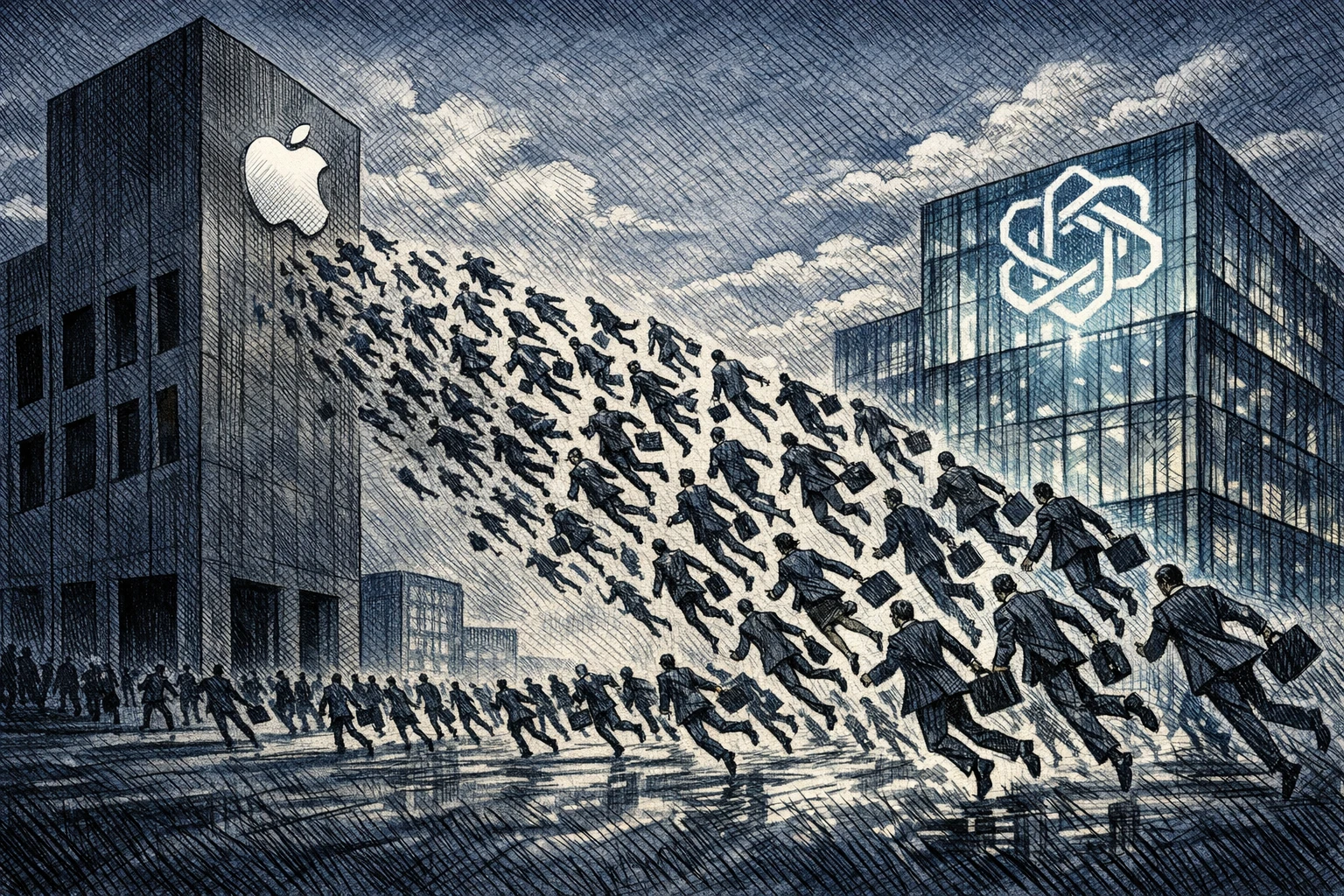
Apple filed a lawsuit in the Northern District of California on July 10, 2026, accusing OpenAI of a systematic campaign to steal trade secrets and use them to build its own consumer hardware. The complaint names two primary defendants—OpenAI hardware chief Tang Tan and former Apple senior systems electrical engineer Chang Liu—both ex-Apple employees. According to the filing, over 400 former Apple employees have joined OpenAI, spanning product design, display, antenna, supply chain, and hardware procurement—covering nearly every layer of hardware development.
Ex-Engineer Downloaded Dozens of Confidential Files, Hardware Chief Bypassed Security Checks
Apple alleges that Chang Liu accessed and downloaded dozens of confidential internal files before leaving and failed to return his company-issued laptop. Tang Tan is accused of using Apple's confidential project code names during OpenAI recruitment, asking candidates to bring Apple hardware parts to interviews, instructing departing employees on how to evade Apple's security checks, and soliciting information about unreleased products.
Apple's Retention Bonuses Couldn't Compete with OpenAI's Million-Dollar Stock Packages
The lawsuit follows months of talent war. Apple granted iPhone hardware engineers four-year stock grants of $200,000 to $400,000 earlier this year, vesting only if they stayed. But OpenAI reportedly offered stock packages worth roughly $1 million annually. Despite raises and expanded responsibilities, staff kept leaving.
Tang Tan Leads OpenAI's Hardware Push with Products Rivaling Apple
Tang Tan, who spent nearly 25 years at Apple as VP of iPhone and Apple Watch product design, now heads OpenAI's hardware division. He is building a line of AI devices including screenless smart speakers, glasses, recording devices, and a wearable brooch. The design capability came from OpenAI's May 2025 acquisition of io Products, co-founded by former Apple chief designer Jony Ive. For Apple, its own talent and long-guarded secrets are now helping a potential rival build hardware from scratch.
Role Reversal: OpenAI Had Considered Suing Apple Two Months Earlier
Two months earlier, OpenAI had considered suing Apple over the underperformance of ChatGPT integration with Siri. OpenAI expected the partnership to generate billions in annual subscription revenue and wanted ChatGPT featured more prominently across Apple apps and Siri. After those expectations failed, OpenAI hired outside counsel to evaluate a breach notice but ultimately held off. Two months later, Apple became the plaintiff.