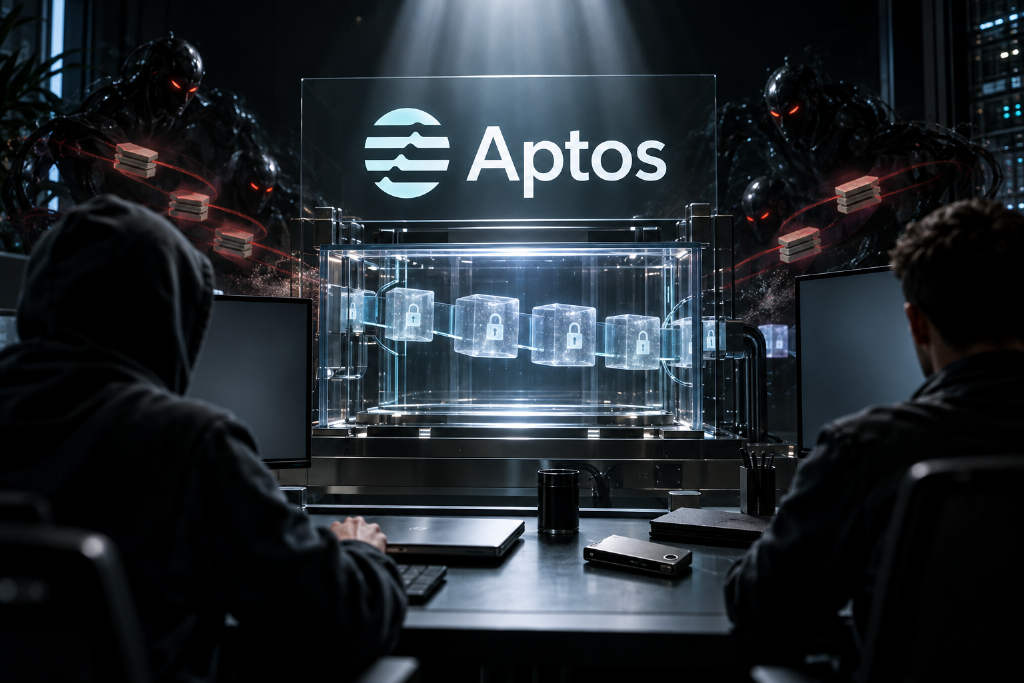
Aptos has rolled out its Encrypted Mempool on mainnet, adding an optional transaction privacy mechanism aimed at reducing risks tied to maximal extractable value, or MEV. When users turn the feature on, pending transactions remain encrypted until block ordering is finalized, preventing bots from seeing details such as the asset involved, transaction size, and smart contract interactions before execution.
The Layer 1 blockchain said the feature is designed for institutions handling large on-chain trades, traders looking to reduce MEV exposure, as well as AI agents and developers. The move addresses a long-running issue across public blockchains, where visible pending transactions can be exploited by bots through tactics such as front-running and sandwich attacks.
Cointelegraph, citing EigenPhi data, reported that Ethereum traders lost about $60 million to sandwich attacks over the 12 months through October 2025. Separately, Bitquery said Solana saw nearly 6.9 million sandwich attacks during an 11-month observation period, affecting about 2.2 million wallets and generating roughly $29.7 million in profit for related bots.
Aptos said its Encrypted Mempool is now live on mainnet, introducing an optional feature meant to reduce risks linked to maximal extractable value, including front-running and sandwich attacks.
With the feature enabled, pending transactions stay encrypted until block transaction ordering is finalized. That prevents bots from viewing information in advance, including the asset involved, the transaction amount, and smart contract interaction details, then using that data to place targeted trades.
Aptos said the feature is mainly intended for institutions executing large on-chain transactions, traders seeking to lower MEV risk, AI agents, and developers.
Cointelegraph, citing EigenPhi data, said Ethereum traders lost about $60 million to sandwich attacks in the 12 months through October 2025. Separately, Bitquery said Solana recorded nearly 6.9 million sandwich attacks during an 11-month observation period, involving about 2.2 million wallets and generating roughly $29.7 million in profit for related bots.
This article was originally published by Bit.Fan. For more cryptocurrency news and market insights, visit www.bit.fan. Disclaimer:
The market information, project data, and third-party content displayed on this platform are for industry information sharing only and do not constitute any form of investment advice or return commitment.
Cryptocurrency trading carries high risks. Users should fully assess their risk tolerance and make independent decisions. All profits, losses, and legal responsibilities are borne by the users themselves.