

Arc mainnet has been live for less than a week. The first burst of excitement is already cooling off. And the launchpads many people thought would ride the network’s debut higher have slipped into a pretty quiet patch too.

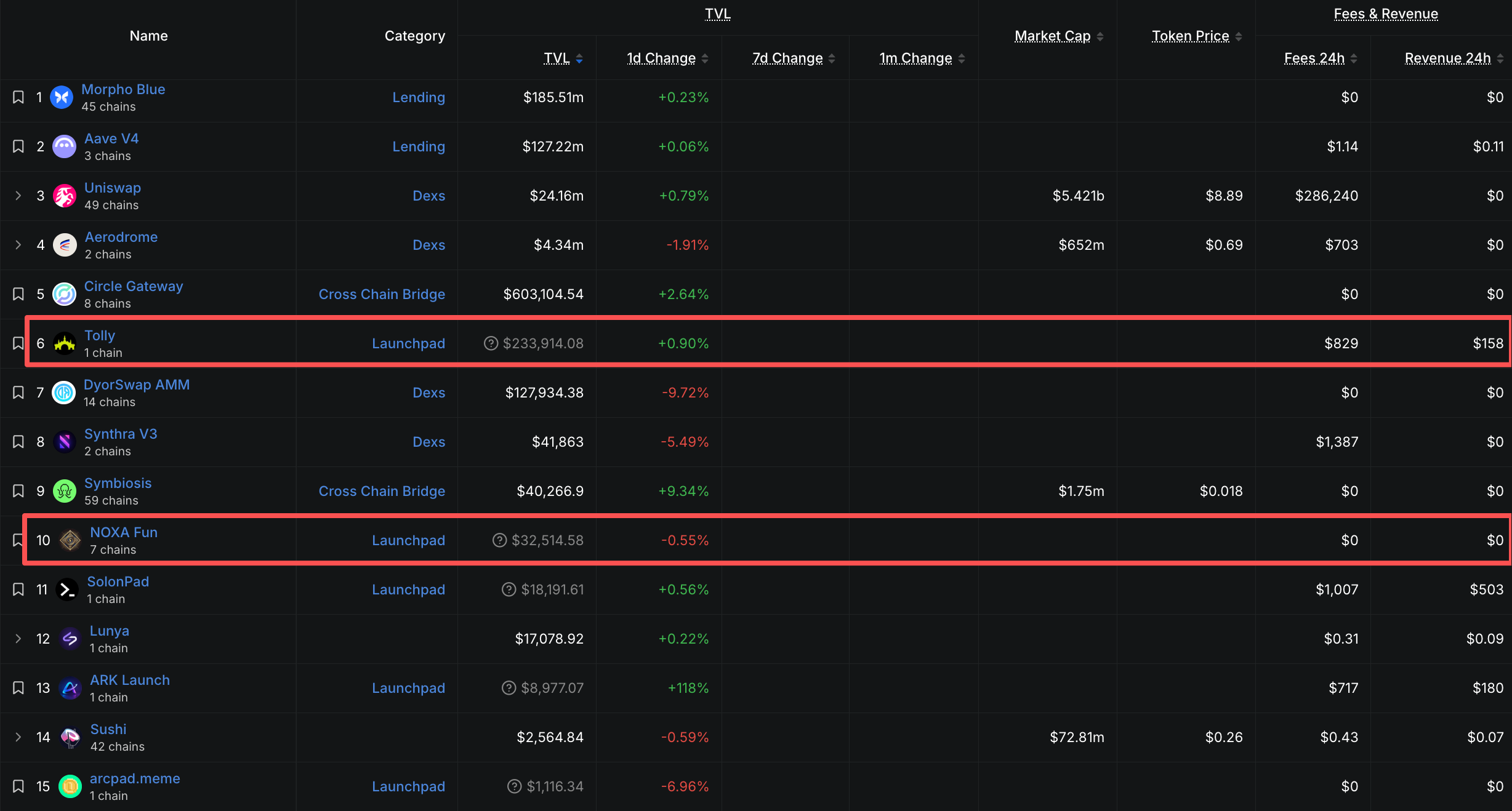
DefiLlama data cited by Odaily shows several meme launchpads on Arc made under $200 in protocol revenue over the past 24 hours. Solon logged $503. ARK Launch and Tolly brought in $180 and $171. Wonk Fun and AKA posted $69.6 and $66.87. UBI.fun, Sashimi.fun, and CircleWarp each made less than $1, and several other launchpads produced no revenue at all.
The piece says Arc tried to copy a Robinhood Chain-like growth route, then hit trouble almost right away. Looking back, the shift from breakout attention to a fast cooldown had already been flashing warning signs.
A difficult first week after mainnet
For Arc, backed by stablecoin issuer Circle, week one has not gone especially well. Before mainnet launched, the network pulled in a wave of crypto-native projects. But a lot of that backing seemed tied more to market access and user acquisition than to any real plan to bring existing liquidity and user bases onto Arc.
Odaily said many partners kept talking about “support” and “integration,” but said far less about incentives or actual deployment work. Big gap.

The “Indian team” controversy
On launch day, a screenshot from an online meeting spread fast across crypto circles. Because the image showed several participants who appeared to be of Indian or African descent, some users wrongly decided it showed Arc’s core team. That quickly turned into rumors that Arc was “actually an Indian project.”
The report says memes on Arc broadly sold off after the screenshot went viral. Crypto KOL Him was quoted as saying, “Arc chain’s livestream looked scarier than a Federal Reserve FOMC meeting.”
Odaily said the screenshot was not from an official Arc team meeting. It showed ecosystem developers, and most of the people in the image were not official team members. The Indian participant who got the most attention was identified as the founder of Arc-based project @Xylonet_. The report said the misunderstanding spread quickly and hurt the technical image Arc had been trying to build.
A $10,000 micro-grant program drew criticism
On Sept. 17, the second day after mainnet launch, Arc announced a micro-grant program. Under the plan, 20 grants of 500 USDC each would go to eligible early developers who launch working Mini Apps on Arc mainnet. That brought the total grant pool to 10,000 USDC, covering early-stage projects, prototypes, and proof-of-concept apps.
Odaily says that number quickly became a target for criticism. For an L1 blockchain that had drawn strong Wall Street attention and raised more than $100 million, a $10,000 incentive program looked small to the market, especially at the stage when chains usually try hard to pull in builders.
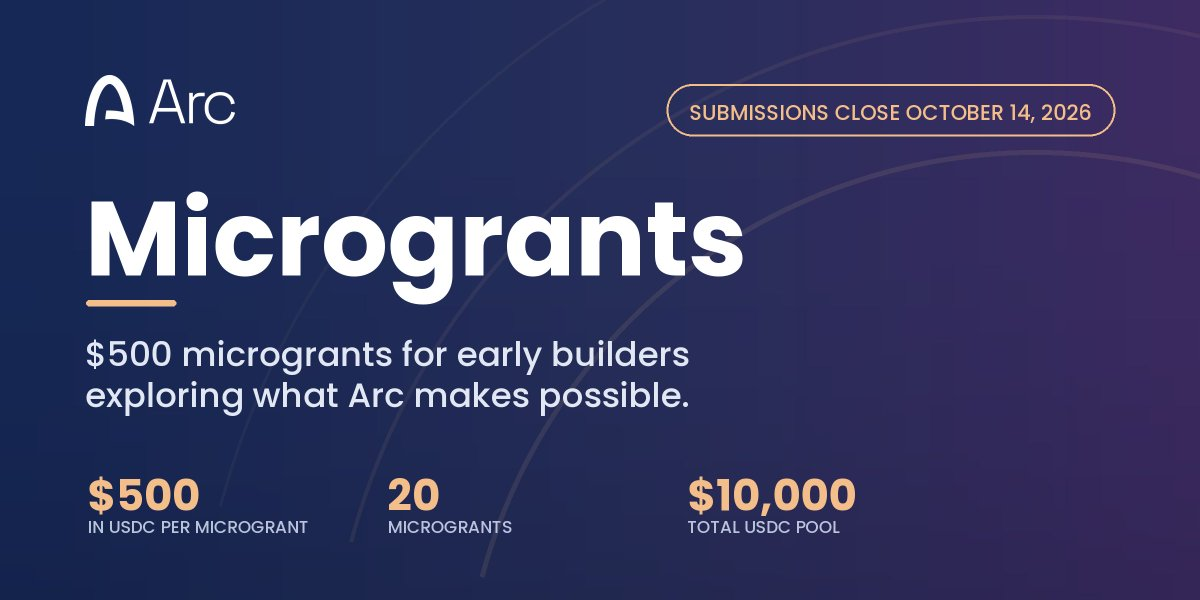
Arc had earlier talked about a separate builder incentive program worth up to $1 million. Against that backdrop, the 10,000 USDC micro-grant package caught a lot of market participants off guard.
AI agent payments versus meme speculation
On Sept. 16, the day Arc mainnet launched, Circle co-founder and CEO Jeremy Allaire said Circle was created around a vision of building a new open economic layer for the internet, one that lets money, contracts, and machines run on a new distributed computing engine. Arc, he said, came out of that vision.
On Sept. 19, Arc said agent payments had gone live, giving x402 developers a custodial access path.
The article says Arc has a natural advantage in AI agent payments because it begins as a stablecoin network, and the use case could be big. But that pitch does not fit neatly with the meme coin trading wave that first formed around the chain.
Crypto researcher Ignas had earlier written that there was “no FOMO” in his Arc trading, and said the network looked more focused on FX, payments, and tokenization than on crypto-native culture.
Meme trader Bonkguy made similar points more than once, the report says. He said, “Arc is essentially a stablecoin public chain. In the future it may find the right use cases around stablecoins and related applications. Although I have already bought meme coins on Arc, I plan to hold them for only a few days at most,” and he stressed that trading Arc memes should be viewed as a short-term opportunity. At one point he also warned, “Don’t get trapped in Arc.”
Revenue and trading volume both weakened
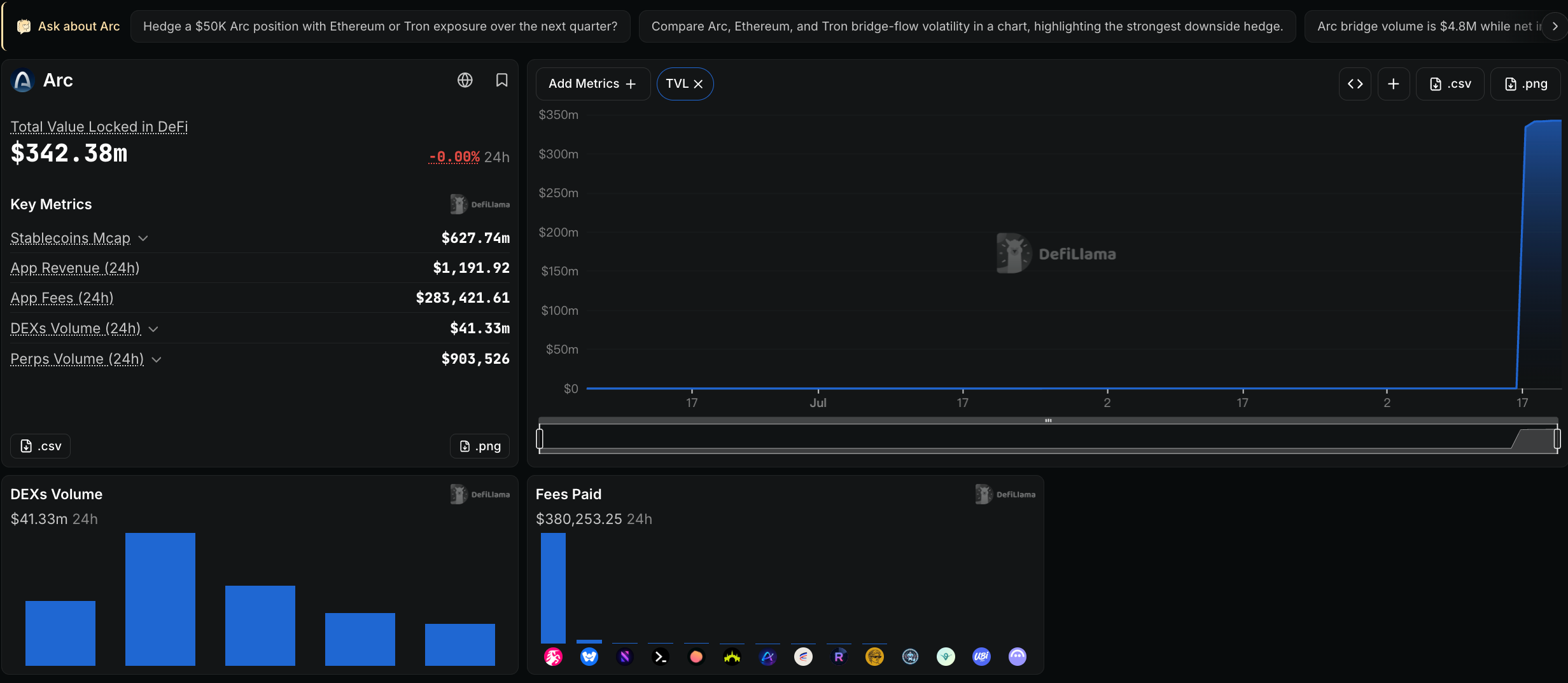
DefiLlama data cited in the report shows apps on Arc generated only about $1,191 in net revenue over the past 24 hours. DEX trading volume peaked at $131 million on Sept. 17, then slid lower day after day, dropping to about $41 million by Sept. 20. That is a decline of nearly 70%.
So the picture is pretty plain: AI agent payments are not yet running at a scale big enough to support the broader Arc market, and the chain has not managed to keep the activity levels it saw right after launch.
What could revive Arc: token incentives and institutional use
The report says two ideas now stand out for Arc’s next stage: the possibility of an ARC token airdrop, and broader institutional adoption.
On Sept. 16, Circle said it had finished a 10 billion ARC genesis mint. The company added that this was only a technical milestone and did not amount to a commitment to public issuance. It also said it was exploring a consensus shift from proof of authority to proof of stake in 2027.
According to Bubblemaps, Circle then sent all ARC tokens to 11 addresses through a null address, making the movement traceable on-chain in real time.
Based on the token white paper cited in the article, ARC is allocated like this:
- 60% to the ecosystem, including token sales, developer grants, and network growth;
- 25% to Circle for protocol development, staking, and governance;
- 15% to long-term reserves for strategic flexibility and economic stability.
Whether the 6 billion ARC set aside for the ecosystem can actually be used to support growth in a meaningful way will depend on how the team handles utility and issuance. Ignas said one possible draw for Arc could be an ARC airdrop, but he expects those tokens may go more to ecosystem partners in payments, foreign exchange, and tokenization than to degen traders.
Institutional adoption remains another key track
Beyond token incentives, Arc’s institutional pitch is still one of its main supports.
On Sept. 16, the first day of mainnet, Robinhood said it would support Arc, the L1 network built by Circle. Users would be able to deposit and withdraw USDC directly on supported networks. Robinhood Chain and Arc do compete somewhat in user-facing and meme-driven markets. But the article says Arc still holds a spot that many institutions, exchanges, and payment networks cannot easily ignore as a payment-focused L1.
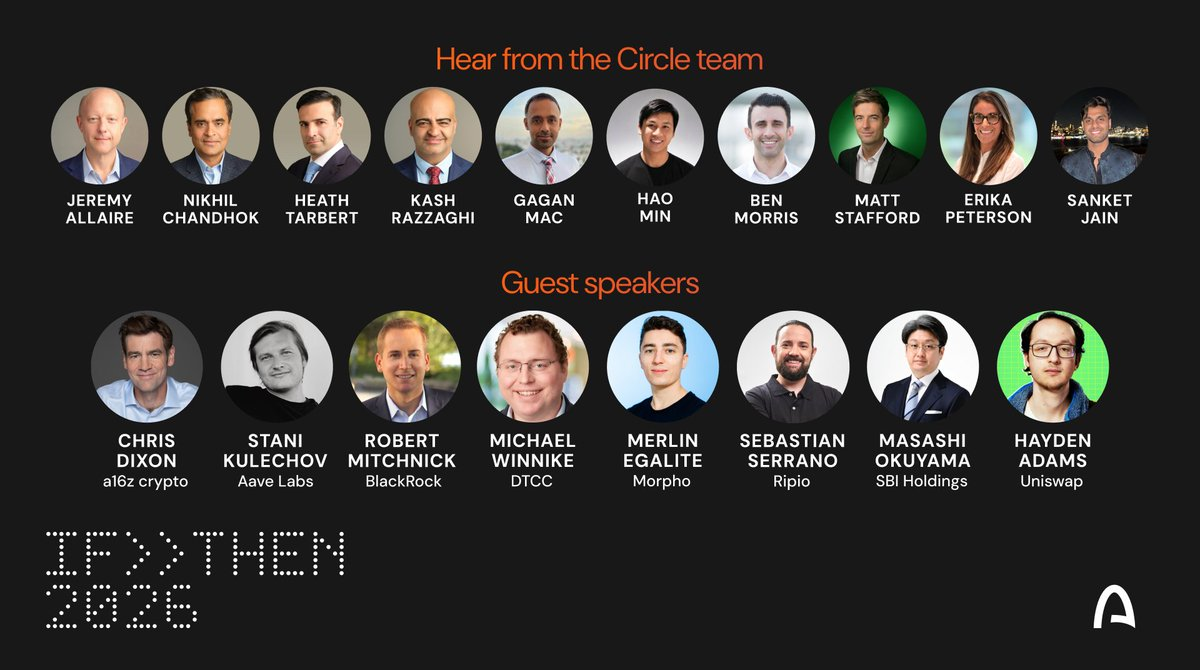
Earlier, on launch day, Arc also invited a number of Wall Street and crypto figures to its launch event. Its first 11 founding validators included BlackRock, Visa, Mastercard, and the Depository Trust & Clearing Corporation. BlackRock had also planned to deploy its BUIDL fund on Arc to support on-chain subscriptions and redemptions.
The article adds that future support from the Genius Act could help push wider institutional use of Arc and strengthen its position in the global stablecoin payments network.
Launchpads still face a harsh reality
The story ends where it started: launchpads on Arc are still under pressure, and DeFi projects are putting up weak fee revenue. A number of projects, the article says, generated zero revenue over the past 24 hours.
Arc may already have hundreds of thousands of on-chain addresses. But judged by revenue, trading activity, and traction across the chain, it is still very early in its growth cycle and still far from building a durable operating loop.