
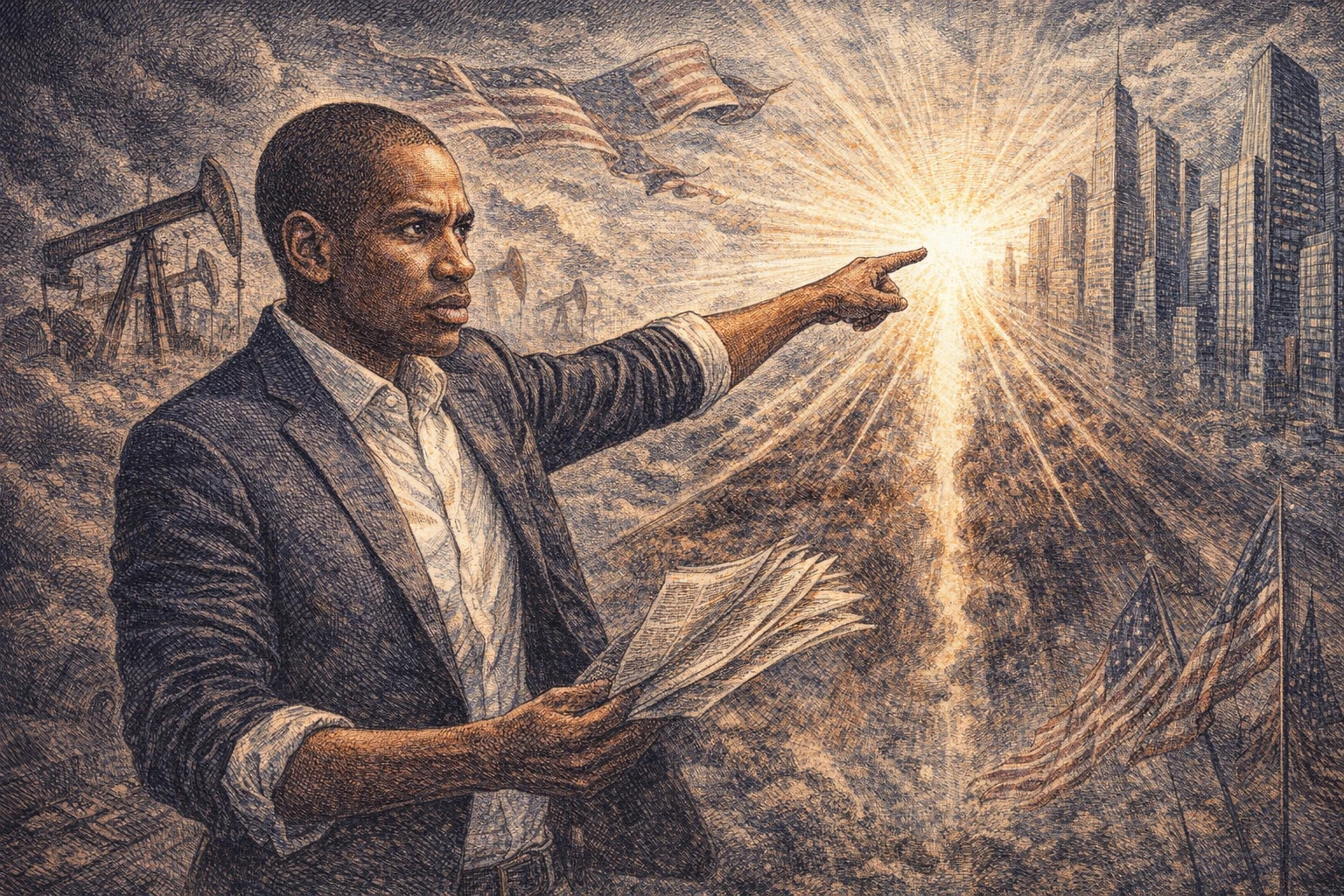
BitMEX co-founder Arthur Hayes said in his June 9 essay Reality Test that three forces could collide and crack the AI trade: higher oil prices, a wave of large AI IPOs, and a possible shift by Donald Trump toward anti-AI campaign rhetoric. In his view, that mix could hit AI stocks first and drag crypto lower in the near term.
Hayes framed oil and hydrocarbon energy prices as the most reflexive variable in the broader investment system. He argued that the war involving the US and Iran has reduced traffic through the Strait of Hormuz. Global markets can still lean on inventories and alternative supply for now, but if that strain lasts deeper into the second quarter, spot prices for hydrocarbons and other key commodities could jump in the third quarter. He added that Trump and Iran may only reach a deal once conditions become severe enough, which would leave the shipping constraint in place into early Q3.
His political chain reaction starts with higher energy costs
Hayes linked rising oil prices to election pressure in a straightforward sequence. More expensive energy lifts consumer prices, voters get angrier, and Trump, facing a tougher fight over control of the House, may target AI because it is a visible and politically useful issue. That would put data center construction, AI regulation and AI taxation closer to the center of campaign messaging. Citing Polymarket odds, Hayes wrote that Republicans are currently likely to lose their House majority, though he believes redistricting could reduce the number of seats needed from 19 to 11.
He argued that Trump would not need immediate legislation to move markets. Strong campaign rhetoric alone could be enough. Hayes wrote that Trump could promise limits on AI capital expenditure and even a windfall profits tax on AI companies. Investors, he said, may not treat that as tactical election messaging. They may read it as the start of a real policy turn and sell first.
Why bitcoin did not climb harder despite expanding dollar liquidity
One of Hayes’ main claims was aimed directly at crypto. He said the AI sector has absorbed the bulk of new dollar liquidity through debt issuance since ChatGPT’s commercialization in November 2022. Based on a Perplexity estimate drawn from public disclosures, AI-related debt issuance reached roughly $1.5 trillion, while US M2 increased by about the same amount over the same period. His conclusion was blunt: the AI boom soaked up the fresh dollars, leaving bitcoin with far less room to benefit.
He added that the financing surge became especially intense in 2025. Of the $1.5 trillion total, $1.3 trillion was issued in 2025 to date, according to his essay, and bitcoin peaked in October 2025 at roughly the same time AI capital spending hit extreme levels. Hayes used that overlap to argue that liquidity was being pulled into AI infrastructure rather than flowing into crypto. If AI equities fall, he expects lending conditions to tighten as well, with banks pulling back credit and pressure spreading beyond valuations into the credit system.
Three “arrows” aimed at AI valuations
The first arrow is energy. Hayes said AI data centers depend on hydrocarbon-based power, including natural gas, so higher oil prices raise token production costs and squeeze margins at companies such as Google, Anthropic and OpenAI. If token usage and profitability weaken at the same time, markets may start questioning whether data center capex can keep expanding.
The second arrow is IPO supply. He pointed to expected listings for SpaceX in June and for Anthropic and OpenAI around September. Hayes described the SpaceX IPO structure as similar to a “low-float, high-FDV meme coin,” with an implied valuation of about $1.8 trillion, pricing around 100 times revenue, and only 4% to 5% of shares initially floated. If these blockbuster offerings do not surge after listing, he believes investors may treat that as a sign the cycle has topped.
The third arrow is politics. If oil does not fall, Hayes expects the debate around data centers, job displacement and AI regulation to intensify in the third quarter. Anti-AI rhetoric from Trump, in that setting, becomes another direct pressure point for the sector.
Portfolio shift: out of AI equities, focused on BTC, ETH and energy producers
Hayes said Maelstrom has already moved into a defensive posture. In equities, the fund has built a large position in US-listed energy producers. His reasoning is simple: whether the war ends quickly or drags on, he expects oil prices to be higher over the next 3 to 6 months.
In crypto, he said he sold HYPE, NEAR and WLD last week, and also exited ZEC after the Orchard Pool vulnerability. His core holdings are now limited to bitcoin and ether. Hayes wrote that if the AI bubble bursts and triggers a financial crisis, bitcoin could fall first and rise later as large-scale liquidity expansion returns. He also said he still plans to use derivatives for tactical short positions.