
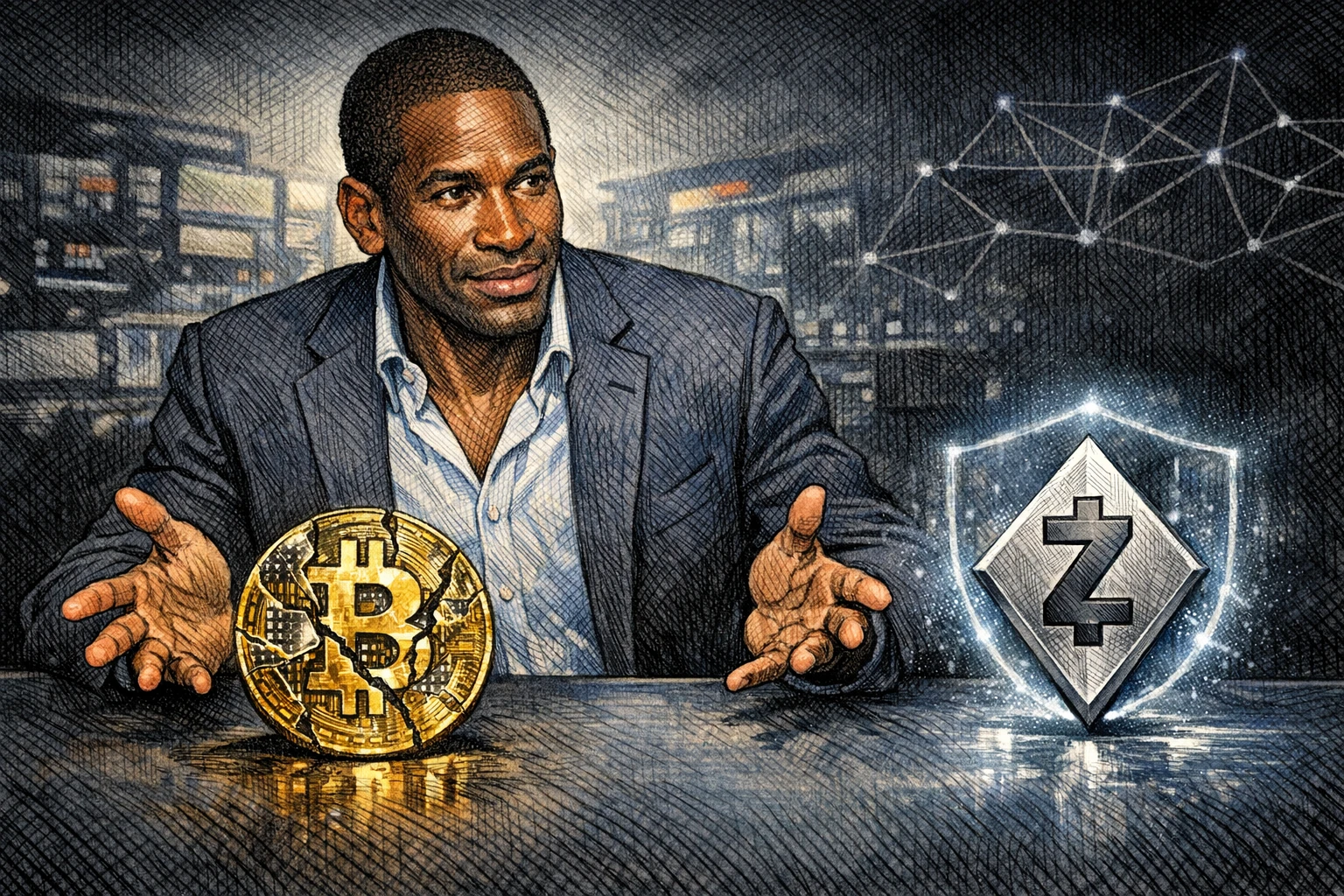
Arthur Hayes, who once held over 90% of his net worth in Bitcoin, is now selling BTC for Zcash. In a May 12 interview on Unchained with Laura Shin, the Maelstrom CIO said Bitcoin's on-chain transparency means financial privacy is nearly dead in the AI age. His answer: Zcash — and he's betting real money, swapping Bitcoin for ZEC.
Bitcoin's Transparency Trap: All Flows in the Open
"Bitcoin is transparent, but it's not fully private cash," Hayes stated. Every transaction is permanently recorded; once an address links to a real identity via KYC or merchant payments, the entire history can be traced. De-anonymization costs are near zero in the AI era — tools like Chainalysis do address clustering and identity matching cheaply, accessible to governments and tax authorities. Bitcoin never promised anonymity, but Hayes reframes the need: if mainstream assets can't offer privacy, assets that do have scarcity premium.
Zcash: Born with Zero-Knowledge Proofs
Zcash forked from Bitcoin's codebase and introduced zero-knowledge proofs (ZKP) in 2016. Shielded addresses (z-addr) encrypt sender, receiver, and amounts — outsiders only see "a valid transaction." Hayes said: "If you want full privacy, protocols like Zcash with zero-knowledge proofs are valuable." ZK tech matters in AI era: traditional mixers leave patterns (graph, timing, amounts) that machine learning can reconstruct; ZK eliminates analyzable data points entirely.
From 90% Bitcoin to Loading Zcash: Real Money Moves
In a separate interview with Anthony Pompliano, Hayes disclosed: "My net worth is over 90% Bitcoin." But he admitted selling Bitcoin to buy Zcash and Hyperliquid — not for fiat, but for crypto internal reallocation, seeking asymmetric opportunities. ZEC is now Maelstrom's "second-largest asset after Bitcoin." His high-conviction positions: Hyperliquid, Zcash, NEAR. On X, Hayes said he would consider adding ZEC if it drops to the $300-$350 range.
Same Day, Two Institutional Moves
On May 12, Grayscale officially filed for a spot Zcash ETF with the SEC — if approved, it opens a window to mainstream finance. Also, Starknet announced strkBTC, a wrapped privacy Bitcoin that lets holders bring BTC into the ZK Rollup ecosystem while retaining privacy. Bitwise's CIO stated: "Privacy could be the next killer app in crypto." Hayes wrote on Substack: "The privacy meta-narrative will drive crypto for years; Zcash's market cap should be second only to Bitcoin and Ethereum."
Macro Framework: Why Now
Hayes argues war is inflationary; nations invest heavily in AI and drones. Sovereign states are losing faith in dollar reserves: "They find they have dollars but can't buy anything." His "Tehran toll booth" scenario: if the Strait of Hormuz is blocked, nations with huge U.S. debt can't trade that wealth for energy. That could end the petrodollar system. In this frame, privacy coins become functional: when AI tracks personal finances, tools that protect wealth privacy hold utility. Hayes is long Hyperliquid (DEX revolution), Zcash (privacy infrastructure), and NEAR — all point to alternative financial infrastructure.
Risks Remain
Hayes repeats: privacy is an AI-era financial infrastructure necessity — a multi-year bet. But risks include: regulation — Japan, Korea, some European exchanges have delisted ZEC; SEC could restrict Zcash ETF and crush the sector. Liquidity — ZEC's market depth is thin; large trades create slippage. Tech competition — Monero, successor to Tornado Cash, or Ethereum-native solutions could challenge Zcash. Hayes's positions are public, and his bullish comments serve his own portfolio — an opinion, not a fact.