
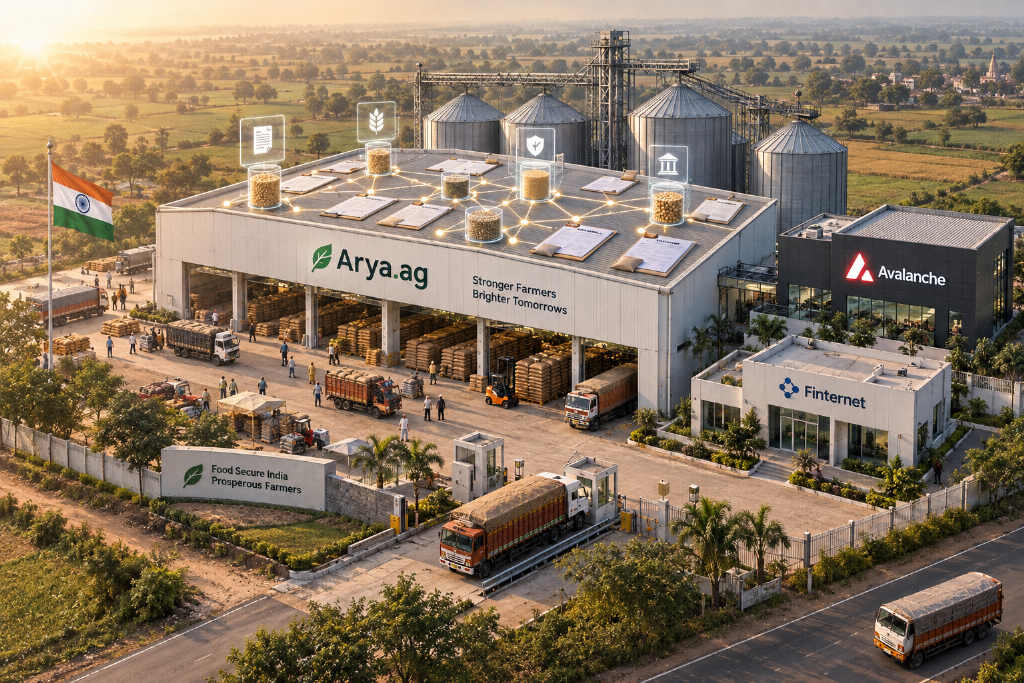
ChainCatcher reported that Indian agricultural warehousing and lending company Arya.ag is testing a system on a dedicated Avalanche Layer 1 blockchain to tokenize warehouse receipts for stored grain.
Arya.ag is working with Finternet on the project. The network is designed to connect grain storage, warehouse receipts, collateral pledges, and loan status. Devika Mittal, Ava Labs' India head, said the test is under way and that each tokenized warehouse receipt represents ownership of the stored commodity.
Sanmesh Kalyanpur, a director at Finternet Labs, said Arya.ag's samplers collect data on stored grain and enter it into the company's portal. Finternet then combines farmer, commodity, warehouse, and insurance information into a “compound token” that banks can use when assessing collateral risk.
Arya.ag's operating scale
Arya.ag stores about $2 billion worth of agricultural products across its warehouse network. The company supports around INR 120 billion in loans each year, which the report said is about $1.26 billion. Its lending unit, Arya Dhan, issues roughly $230 million in loans annually.
Where the Finternet concept came from
The Finternet concept comes from a 2024 paper by the Bank for International Settlements, or BIS. The paper was co-authored by Infosys co-founder Nandan Nilekani and then-BIS General Manager Agustín Carstens, and proposed an interconnected unified ledger for tokenized assets.
The report also said the Indian government introduced a INR 10 billion credit guarantee program in 2024 to encourage financing tied to electronic negotiable warehouse receipts.
The two companies did not disclose an expected launch date or the size of the initial deployment.