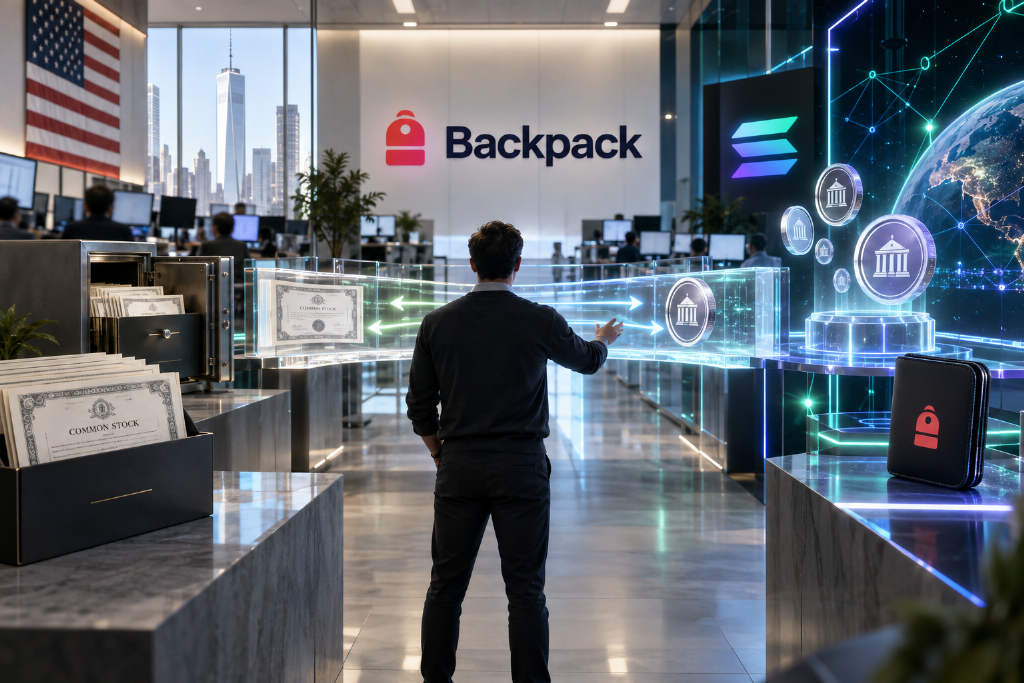
Backpack founder Vibhu said on X that the Solana ecosystem wallet and trading platform supports a two-way conversion model between tokenized stocks and actual shares. According to his explanation, Backpack operates as a full-service broker and offers a 1:1 conversion mechanism. The platform supplies initial liquidity first, and if on-chain demand exceeds available supply, it will gradually buy more shares through the brokerage side and mint matching tokens on-chain. Vibhu also said users can redeem tokenized equity holdings for actual stock shares. He described the setup as a two-way equity bridge that lets users move equity from a brokerage account onto the blockchain or transfer it back off-chain, while keeping the nature of the equity unchanged throughout the process.
Backpack founder Vibhu said in a post on X that the Solana ecosystem wallet and trading platform allows users to convert tokenized stocks back into actual shares.
According to Vibhu, Backpack operates as a full-service broker and provides a 1:1 conversion mechanism. The platform supplies initial liquidity, and if on-chain demand rises above supply, it will gradually purchase more shares on the brokerage side and mint corresponding tokens on-chain.
Vibhu added that users can redeem tokenized equity holdings for actual stock shares. He described the system as a two-way equity bridge, allowing users to move equity from brokerage accounts onto the blockchain and also transfer it back from the blockchain, with the nature of the equity remaining unchanged through the process.
This article was originally published by Bit.Fan. For more cryptocurrency news and market insights, visit www.bit.fan. Disclaimer:
The market information, project data, and third-party content displayed on this platform are for industry information sharing only and do not constitute any form of investment advice or return commitment.
Cryptocurrency trading carries high risks. Users should fully assess their risk tolerance and make independent decisions. All profits, losses, and legal responsibilities are borne by the users themselves.