

Balaji Srinivasan’s attempt to turn the ideas in The Network State into a physical community in Malaysia has hit a hard stop. On July 21, 2026, the Iskandar Puteri City Council revoked the business license of Network School, the project he launched in Forest City. The shutdown took effect on July 22.
The result cuts to the same question that has followed internet governance for decades. Digital networks can connect people across cities and countries, but once those communities take physical form, they run into permits, jurisdictions, and the state.
From cyberspace to physical communities
In February 1996, John Perry Barlow signed “A Declaration of the Independence of Cyberspace” in Davos, telling the “Governments of the Industrial World” that cyberspace did not fall under their sovereignty. He also wrote one line that has stayed with the internet age: “Cyberspace does not lie within your borders … It is both everywhere and nowhere, but it is not where bodies live.”
Thirty years later, the internet has not disproved that claim. If anything, the second half matters more now. Digital nomad hubs, hacker houses, and temporary cities have moved off social platforms and into plane tickets, leases, co-living arrangements, and identity checks.
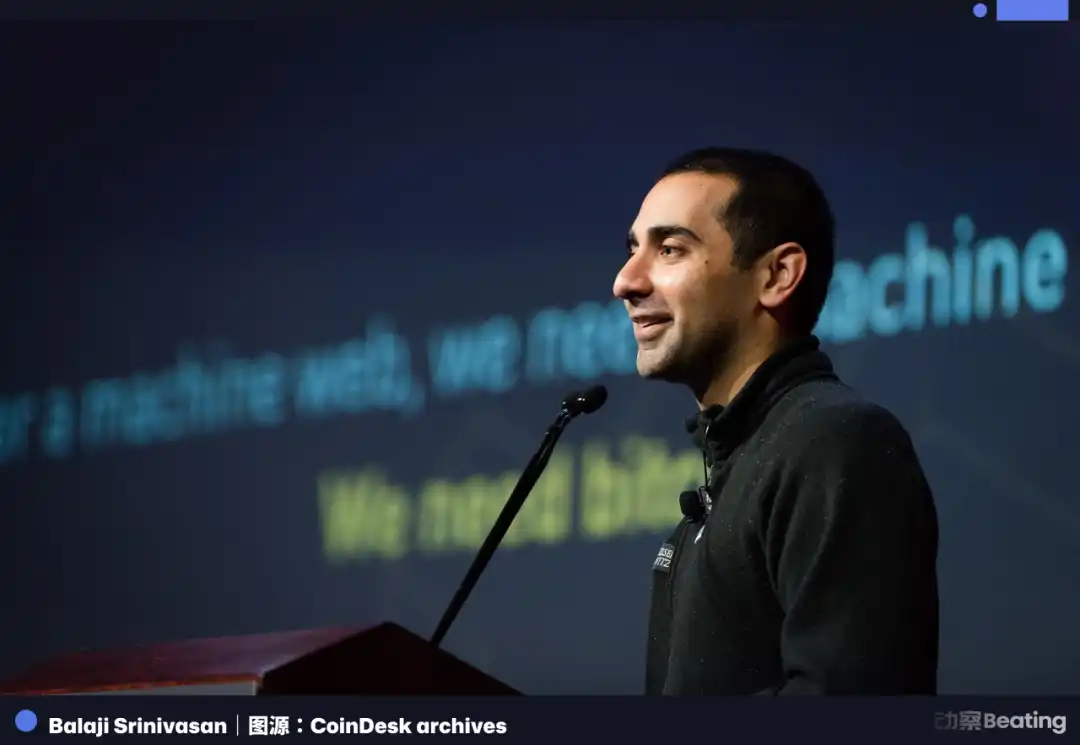
Few people pushed that line of thought as far as Balaji Srinivasan. In The Network State, he set out a sequence he described as “Cloud First, Land Last”: gather a community online, pull together capital and relationships, lease or buy physical nodes in the real world, then seek diplomatic recognition. In 2024, Network School became his first serious attempt to build that sequence on the ground. He chose Forest City, at the southern tip of Malaysia.
Balaji’s career arc: genetics, attention, money, then people
Balaji grew up on Long Island in New York. His parents were doctors who had immigrated to the United States from Tamil Nadu. He studied electrical engineering at Stanford through the PhD level and also earned a master’s degree in chemical engineering. He later co-founded Counsyl, a company focused on genetic carrier screening. Families planning to have children could receive reports showing the risks and probabilities of inherited recessive diseases. Research and specialist language that had largely stayed in labs became something a couple could carry home and discuss at the dinner table.
He then built Earn, a project that let strangers pay in crypto for an email reply, assigning a market price to someone’s time. Coinbase acquired Earn in 2018, and Balaji went on to serve as Coinbase CTO, where he pushed the launch of the stablecoin USDC. He also spent time at Andreessen Horowitz, or a16z, as a GP.
Read together, those jobs point in one direction. They shift things once interpreted, stored, and verified by large institutions into records an individual can read, carry, and trade. Genetic risk fits that pattern. So does attention. So does money. Push that logic one step farther and the next portable unit is the person, along with work, reputation, and social ties.
Balaji also made that move in his own life. He settled in Singapore and, in March this year, posted a widely shared message arguing in broad terms that libertarianism only works when paired with Lee Kuan Yew-style order.
Why “exit” leads back to leadership
The intellectual path behind this idea did not start with Balaji. In 1997, former Times editor William Rees-Mogg and U.S. investment writer James Dale Davidson published The Sovereign Individual. The book argued that information technology would shrink the power of nation-states, turning citizens into something more like customers. It also described an encrypted, anonymous digital currency that could move through borderless markets. Twelve years later, Bitcoin appeared, and many readers saw the resemblance immediately. For years, some have believed Satoshi Nakamoto drew inspiration from that book.
Peter Thiel has said no other book influenced him more. In 2009, he wrote his well-known essay saying he no longer believed freedom and democracy were compatible, and named cyberspace, outer space, and seasteading as frontiers where freedom might grow again.
Thiel’s question was how to leave a disappointing system. Balaji kept going: what happens after you leave? In The Network State, one term stands out: the “Recognized Founder.” A movement built in the name of personal freedom still begins, in practical terms, by identifying a leader.
There is a reason for that. The capacity to exit has never been evenly distributed. Some people can switch passports, time zones, and ways of life. Others are pinned down by family, debt, and professional licenses. Friends, clients, reputation, and assets are usually tied to the old ship together. Few can detach only their own share and walk away. That makes exit less an individual act and more a coordinated one. Someone has to gather the scattered people and money first, and build the road for those who cannot move yet. That is the job of the recognized founder.
That role is not free of tension. The article compares it to Zhang Beihai in The Three-Body Problem, the officer who steals an interstellar warship before the final battle and takes thousands into deep space. The ship was not his. Humanity built it together. Anyone preparing an exit for others is usually working with resources that are not fully their own.
Ethereum co-founder Vitalik Buterin saw the same problem. After reading The Network State, he said Balaji took ethics and communal life more seriously than most libertarians focused only on personal freedom. But he still asked two things: why must there be a recognized founder, and who pays for the resources a new community draws from the surrounding society? The first goes to power inside the project. The second goes to obligation outside it.
In spring 2023, Vitalik launched Zuzalu, a temporary city on the coast of Montenegro. Roughly 200 people lived there for two months and talked about crypto, longevity, and governance. Formally, it had no recognized founder and relied on self-organization. Day-to-day life worked well enough: meals, workouts, and events happened. More than a year later, though, Vitalik said two issues had never really been resolved, governance and membership, especially the latter. And whether he liked it or not, outsiders called it “Vitalik’s temporary city” from start to finish.
The point lands in the same place. A community may sound warm and horizontal, but someone still decides who gets in and who stays out. The only real difference is whether that authority is written into the charter or left to reality to assign.
How Network School picked its members
Balaji announced Network School in August 2024. The first term ran from September 23 to December 23. Shared rooms cost $1,000 a month and private rooms cost $2,000. The project summed up daily life in four words: Learn, Burn, Earn, Fun. Study technology. Train the body. Make money together. Live together.
He called the target group “Dark Talent,” borrowing the language of dark matter to describe people not yet seen by legacy institutions. The phrase resonated with many applicants. Degrees, employer names, and major-city status still sort people into tracks long before many of them get a real chance.
But the school did not remove the gate. It changed its shape. Some early applicants put down deposits of as much as $2,000 before the location was even disclosed. The application form asked about technical background, then asked applicants to score a string of unrelated items, including Bitcoin maximalism, military technology, Dubai, Marx, Jordan Peterson, and Israel. The first cohort drew more than 4,000 applications from over 80 countries, for just 128 seats.
According to the article, individuals, couples, families, and teams can now apply to join Network School for either a month or a year. Shared accommodation rose to $1,500 a month, while private rooms rose to $3,000. Another route is the Fellowship program. Founders and creators from any country can apply for $100,000 in funding and a one-year membership, and the page displays a list of well-known investors.
In his 2025 review, Balaji said teaching and helping members make money pulled in different directions. If classes stayed basic, senior engineers found them too easy. If classes became difficult, people who came mainly to meet others fell behind. One course could not serve both groups at once. In the end, the smoothest parts of the program were working out, having fun, eating together, and sharing daily life.
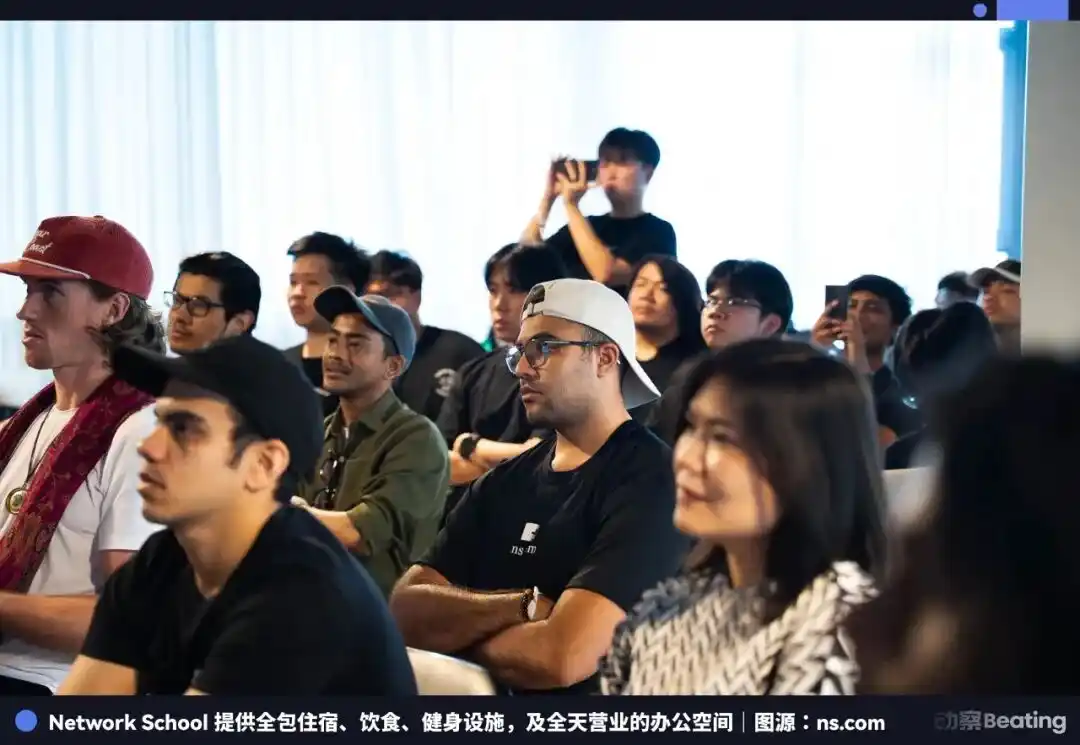
One member who stayed for a month in 2025 said the school operated out of a hotel in Forest City. The rooftop had the gym. The 13th floor handled meals and events. The coworking space sat 1 kilometer away. At the time, there were more than 100 people in the cohort. Indians were the largest group, Americans came next, and about 80% were men. Most activities were optional, and many gatherings were organized by members themselves.
An anonymous allegation turned into a political problem
Early in July, an anonymous Instagram account accused Network School of harboring Israelis who had entered Malaysia on third-country passports. Johor state elections were approaching, and Malaysia does not recognize Israel and has no diplomatic relations with it. That turned the allegation into a political issue almost immediately.
On July 14, Malaysia’s Home Ministry stepped in. The next day, immigration officials inspected 266 foreigners from 40 countries and found all of their documents valid.
Balaji answered in a long post on July 16. The structure was simple: deny the claim, show the economic contribution, then make a direct ask. He said the accusation had no basis, and described the visiting officials as courteous and professional. But he also borrowed an old line from the U.S. legal world: “the process is the punishment.” Even if an investigation ends with no finding, the investigation itself burns time, reputation, and morale.
He was specific on the numbers. He said the project had already put more than RM100 million into the area, supported dozens of local jobs, and even lifted surrounding property prices. He then said he was hitting pause: a planned RM500 million expansion and a global scholarship program with the founder of Replit would both be suspended.
He also said he wanted a meeting with Prime Minister Anwar and a memorandum of understanding stating in writing that he and his friends were welcome there. “We don’t want money, just one meeting,” he said in substance, adding that executives at major global tech firms and the largest venture funds were watching how Malaysia handled the matter.
Meanwhile, city officials inspected the venues and found that one of the two sites had no business license at all, while the other held an office license even though classes were being taught in the rooms. A suspension notice was issued on July 18. The license was formally revoked on July 21. Johor Menteri Besar Onn Hafiz voiced support for the decision, said no one could stand above the law, and called on the digital ministry to review the official recognitions the company had previously received.
Why Forest City was the obvious choice
It is tempting to frame this as another rebellious tech enclave running into a conservative state. The article argues the opposite. Malaysia has been one of the countries working hardest to attract exactly this kind of person and project.
Forest City sits at the southern edge of Johor, next to the Malaysia-Singapore Second Link, on land created by reclamation. The project was developed through a joint venture between Country Garden and a Johor state-owned company, with the Chinese side holding 60%. It launched in 2016, when then-Prime Minister Najib personally backed it and declared the area a duty-free island. The total development was valued at about $100 billion and planned for close to 1 million residents.
The city was initially aimed largely at Chinese buyers. Sales offices opened in dozens of cities in China. Around 60% of buyers came from China, attracted by tax perks, proximity to Singapore, and the prospect of owning overseas property.
Then both sides of that equation changed. In China, foreign-exchange controls tightened in 2017. Individuals still had a $50,000 annual quota, but the rules explicitly barred using it to buy property overseas. Domestic showrooms began closing one after another. In Malaysia, politics shifted after the 2018 election. Najib, who had championed Forest City, left office. New Prime Minister Mahathir said homes there should not be sold to foreigners and that anyone hoping to live there should not expect a visa. Those remarks did not turn into formal law, but the market got the message. Prospective residents struggled to enter, and existing buyers no longer knew whether they would be able to live in what they had purchased. A city built for a million people was left hanging over the strait.
When the BBC visited in 2023, it reported that only about 15% of the project had been completed and that the number of actual residents was only a little above 1% of the planned population. At night, blocks of towers sat dark, giving the place the feel of a ghost city. A development built for a million had turned into one of the largest pieces of inventory from China’s overseas expansion era.
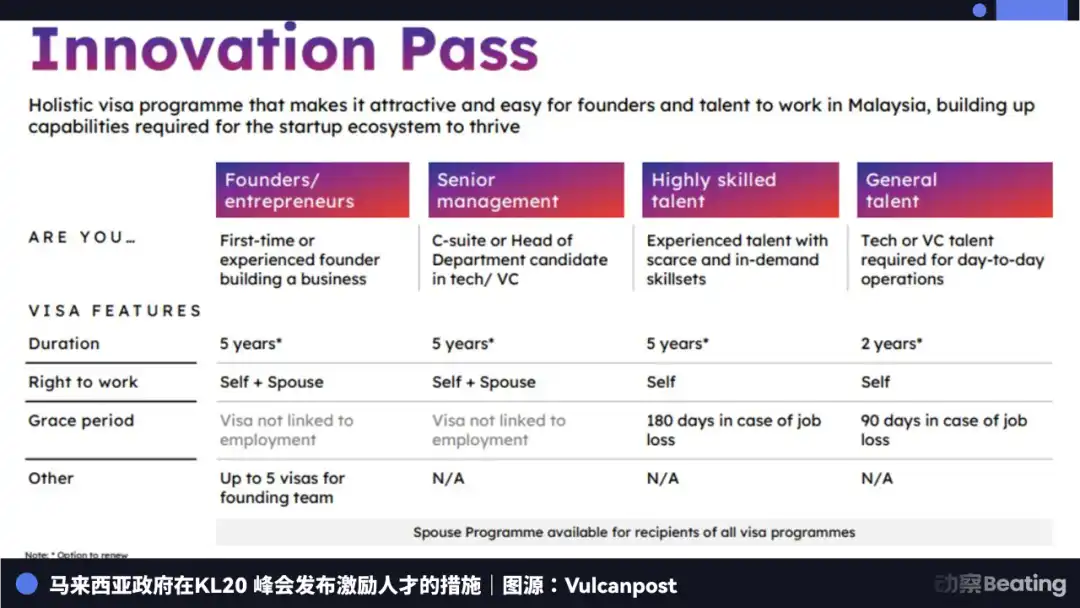
Malaysia then doubled down. In 2024, the government designated Forest City as the country’s first special financial zone, aimed at fintech firms and family offices. Before that came the KL20 plan to position Kuala Lumpur as a global tech hub, a digital nomad visa, and an economic zone jointly developed by Johor and Singapore. Balaji later said these policies were exactly what drew him there.
That is how a country eager to absorb inventory and a community eager to find an address met in the same empty city. The state offered incentives and discounts. The community brought people and money. During that honeymoon, neither side looked too closely at the contract underneath. The state thought it was attracting investors. The community thought it had found a foundation. Promotion and enforcement, though, belong to the same system. Being welcomed means you are needed. It does not mean you are fully understood.
Forest City also sits at the overlap of several layers of authority. A Chinese developer built the city. Johor state capital is invested in it. The federal government added special-zone policy. The Sultan retains traditional authority. Capital spills over from Singapore across the strait. Now a self-described network-state community has entered the stack as well. The article compares this to a medieval frontier, a place where sovereignty overlaps, taxes can be lighter, freedom can be wider, and rules can be less stable. Balaji picked Forest City for exactly those cracks. They made it cheaper and more flexible. But any one layer of authority can still shut the whole thing down.
Once it lands, it sits inside the range of sovereignty
The Sovereign Individual offered another image that often gets quoted: the state treats taxpayers like farmers treat dairy cows, keeping them fenced in and milking them, but before long, “the cows will grow wings.” Many readers like that line on its own. The next page matters too. It says desperate farmers will take desperate measures to stop the herd from escaping, using hidden and arbitrary means to restrict access to technologies that promise liberation.
In the article’s telling, wings are the long-term trend. Fences are the present reality. Johor, in July, showed how those fences go up.
There is a precedent. In 2013, Honduras passed legislation allowing privately built semi-autonomous cities. The U.S. company Próspera went on to build one on an island, with its own legal system and a written promise that key terms would not change for 50 years. In 2022, politics turned. A new congress unanimously repealed the law, and the president said the country was reclaiming sovereignty. Próspera did not leave. It filed a claim in a World Bank arbitration forum, seeking nearly $11 billion, roughly two-thirds of Honduras’s annual budget. Honduras responded by withdrawing from that arbitration system. The dispute is still unresolved.
Set those experiments side by side and a pattern emerges. Zuzalu was the lightest model and dissolved when its term ended. Próspera went deepest into the ground and ended up in a legal battle with no clear end. Network School sat between them and was pushed out through a licensing action. The common feature is not hard to see: once a project lands in physical space, it comes within the range of sovereignty.
After taking that hit, Balaji reached again for the “wings” side of the equation. Capital can be redeployed. People can move to another country. That argument carries weight in a city that has sat underoccupied for nearly a decade and hoped his money might help revive it. But for a government that had just said publicly that no one stands above the law, and said it in an election month, bending under capital in full view could cost more than losing a single investment.
On July 22, the shutdown order took effect. The rooftop gym, the restaurant on the 13th floor, and the 1-kilometer route between sites all fell quiet. At night in Forest City, another patch of lit windows disappeared.
Barlow wrote three decades ago that cyberspace is everywhere, but not where bodies live. Today, the first half still belongs to websites and online networks that remain accessible. The second half belongs to the darkened towers of Forest City.