
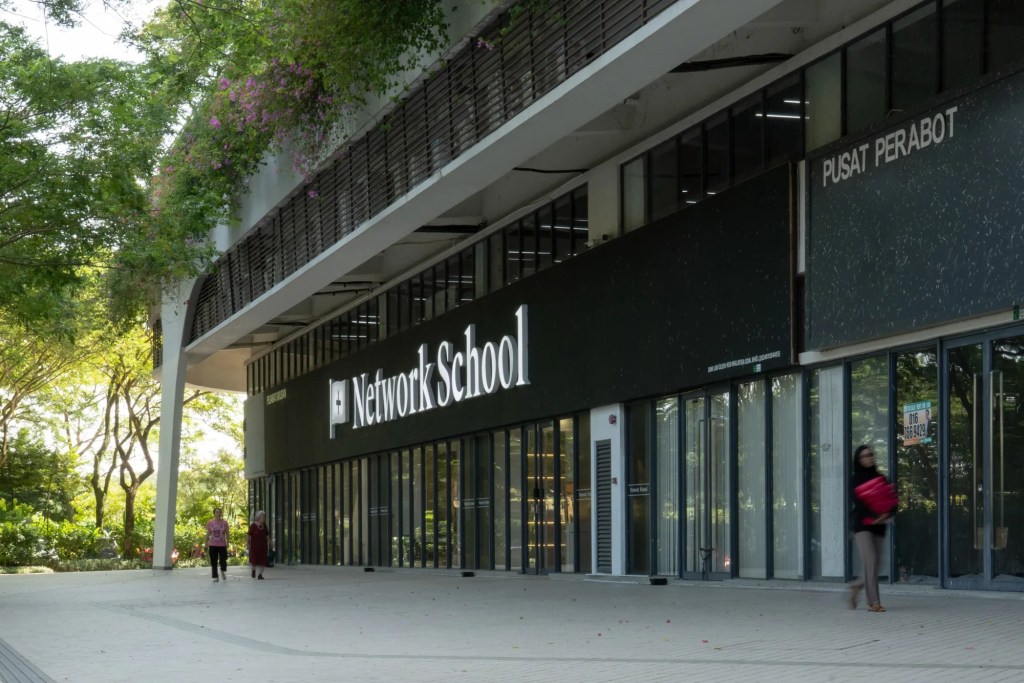
Former Binance Australia CEO Jeff Yew is considering taking over the Forest City campus left behind by former Coinbase CTO Balaji Srinivasan’s Network School, according to Bloomberg, with the aim of turning it into a tech hub focused on AI, blockchain and computer science talent.
Yew said the new plan would not be a direct replica of Srinivasan’s Network State vision. Instead, he wants a clearer “Malaysia First” approach that puts local founders, respect for Malaysian authorities and regulatory compliance at the center.
Network School came to an abrupt halt in July
Network School has been one of Srinivasan’s most closely watched experiments in recent years. The former Coinbase chief technology officer published The Network State in 2022, laying out a model in which people with shared values first gather online, then pool capital to buy land and build a physical community, and could eventually seek diplomatic recognition as a “Network State.”
He later brought that idea to Forest City in Johor, Malaysia. Over nearly two years, the project drew in high-school graduates, university students, professionals, founders and young families. Residents studied entrepreneurship and tech skills, exercised together and built products, forming a concentrated community built around tech entrepreneurship.
That experiment stopped suddenly in July. The controversy began after social media posts circulated claims that Israelis were present at Network School, touching off a political dispute in Malaysia. Because Malaysia does not have formal diplomatic relations with Israel, the allegations quickly drew government scrutiny.
Immigration authorities then checked 266 foreign nationals at the school and confirmed that those inspected held valid travel documents. The matter did not end there. Johor state authorities later found two violations involving local licensing requirements, and Network School was ultimately served with a closure order. Students had to leave.
Bloomberg reported that Srinivasan had tried to communicate with the office of Malaysian Prime Minister Anwar, but the effort did not save the project.
Srinivasan is now looking to Kazakhstan
After the closure in Malaysia, Srinivasan did not abandon the experiment. He shifted his attention to Kazakhstan.
According to internal information obtained by Bloomberg, Srinivasan told students that Network School would “permanently” re-establish itself in Kazakhstan once it finds a suitable location. He has also met Zhaslan Madiyev, Kazakhstan’s minister for AI and digital development.
Students who had been living in Malaysia then dispersed. Some moved temporarily to a hotel on Batam Island in Indonesia. Some headed directly to Almaty to wait for a new campus. Others chose to leave the program and request refunds. That left the Forest City site vacant.
Jeff Yew has started early talks
Days after Network School was told to leave, Yew publicly said he was interested in taking over the site. He confirmed to Bloomberg that he has had preliminary discussions with Srinivasan and his team, though he said the overall plan is still at a very early stage.
Yew is also a familiar figure in crypto. He was born in Malaysia and later moved to Australia. He comes from a family of architects and also worked in architecture himself. He first got into Bitcoin in 2013 and later became CEO of Binance Australia.
After leaving Binance, he founded digital asset management firm Monochrome. Its Australia-listed Bitcoin ETF now manages about A$128 million in assets.
Bloomberg also noted that Yew owns a matte blue Lamborghini Huracan Sterrato with a license plate that reads “Bitcoin.”
A different pitch built around “Malaysia First”
While Yew wants to use the infrastructure left behind by Network School, his version would differ sharply from Srinivasan’s model.
“The focus is to strike a balance between attracting foreign talent and cultivating local entrepreneurs,” Yew said.
His proposal could include scholarship programs for Malaysians, with the longer-term goal of turning Johor into a global digital center for AI, blockchain and computer science.
Yew said the project would need to be designed around Malaysia’s own interests to work, including explicit respect for local government and regulators. That stance addresses one of the core flashpoints around Srinivasan’s model. The end goal of the Network State idea has always carried an element of moving beyond the traditional nation-state. Yew’s version moves the other way, stressing “Malaysia First” and using global tech talent and capital to serve Malaysia’s domestic tech sector.