
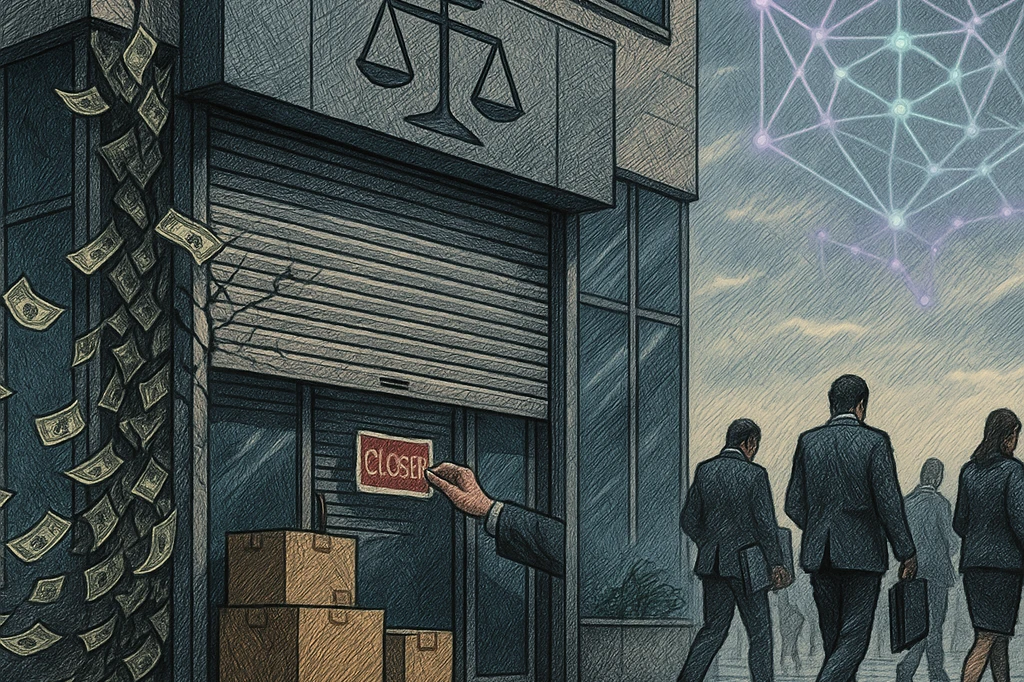
Balancer Labs has officially shut down. Founder Fernando Martinelli announced the closure of the company he founded, just four months after the protocol suffered a $116 million hack last November.
“This was not an easy decision,” Martinelli wrote. “But the company has gone from being an asset to the protocol to becoming a liability.” The immediate trigger was worsening finances — Balancer Labs had been operating with zero revenue, relying entirely on DAO treasury grants. In a fast-iteration market, that model became unsustainable.
TVL Cratered From $3.3B to $158M
The numbers tell the story. Balancer’s total value locked (TVL) peaked at $3.3 billion in November 2021, then gradually shrank as DeFi cooled. Before the hack last October, TVL stood at around $800 million. The attack wiped out $500 million in liquidity within two weeks, dragging TVL below $300 million. Today, TVL sits at roughly $158 million — down over 95% from its peak.
Yet Martinelli insists the protocol still has value. Over the past three months, Balancer generated $1 million in fees. “That’s not zero — it’s a working protocol crushed by a distorted token model,” he said. “The problem isn’t that Balancer doesn’t work. It’s that the economics around it are broken. Those things can be fixed.”
DAO Takes Over: Zero Emissions, Fee Redesign, Team Cuts
Balancer Labs’ closure does not mean the end of the Balancer protocol. Under Martinelli’s “lean continuation plan,” the Balancer Foundation and DAO will assume daily operations, driving structural changes: BAL token emissions cut to zero, a redesigned fee distribution mechanism, a smaller core team, and lower operating costs. CEO Marcus Hardt said the protocol “still has a real foundation to move forward.” This essentially transforms a traditional corporate development team into a community-run lean operation — not a first in DeFi, but whether it can revive a protocol that has lost significant market share remains uncertain.
The Core Issue: BAL Tokenomics
Balancer’s struggles trace back to BAL’s design. High continuous emissions to incentivize liquidity worked in a bull market but created a “sell-pressure sinkhole” in a bear market. Liquidity providers sold their BAL rewards, the token depreciated, and the protocol became less attractive — a vicious cycle. Cutting emissions to zero is the first step to break that cycle. But how to maintain sufficient liquidity depth without token incentives, and how to convince existing users to stay, will be the hardest challenge for the DAO going forward.
For readers, Balancer’s case is a reminder that a DeFi protocol’s technology and its business model sustainability are two very different things. A protocol can function technically yet become marginalized due to failed token design or governance.