
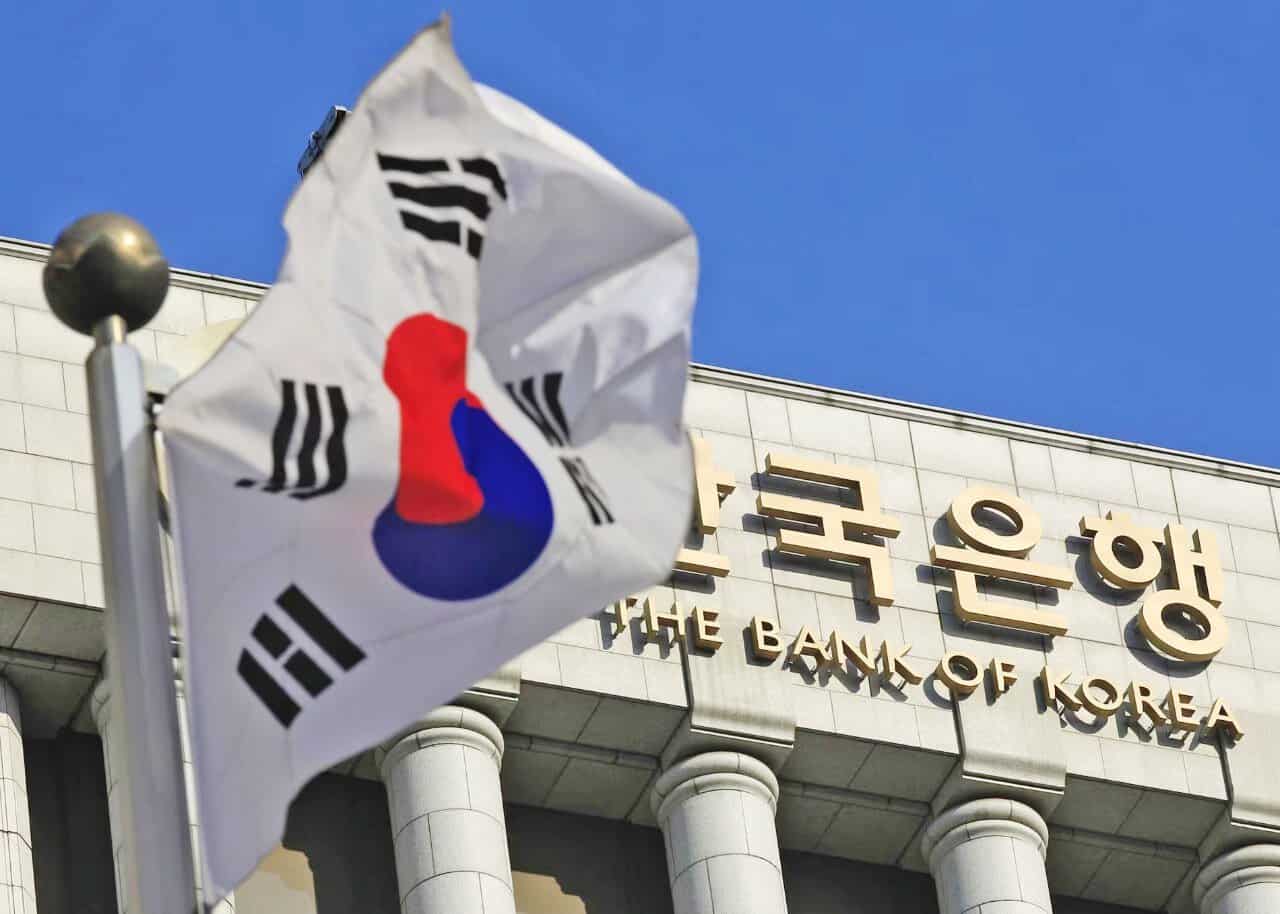
The Bank of Korea (BOK) plans to launch the second phase of Project Hangang as early as September, expanding the number of participating banks from seven to nine and introducing live transaction testing.
According to ETNews Korea, the pilot uses a wholesale CBDC as the settlement asset between financial institutions, while commercial banks issue deposit tokens for consumers and merchants to use in everyday payments. A BOK official said the central bank will provide the institutional CBDC infrastructure in the second phase, while individual banks will use deposit tokens to develop their own business applications, with the goal of laying the groundwork for future commercialization.
Pilot shifts closer to everyday finance
Unlike the first phase, which centered on testing payment infrastructure, the September rollout will move closer to real-world financial use cases. The trial is designed to examine whether the digital won can support cross-bank payments, cross-merchant transactions, and the distribution of public funds.
The second phase adds Kyongnam Bank and iM Bank, bringing the total number of participating lenders to nine. Existing participants include major South Korean financial institutions such as KB Kookmin Bank, Shinhan Bank, Hana Bank, and Woori Financial Group. These banks will issue and manage deposit tokens on top of the central bank’s infrastructure, allowing users to transact through bank wallets or related payment interfaces.
The report said the second-stage test will be open to as many as 500,000 users, far above the scale of the first phase.
First-stage data showed limited usage
The first phase of Project Hangang ran from April to June 2025. About 81,000 people opened wallets, around 114,900 transactions were completed, and roughly 12,000 merchants took part.
Actual usage remained limited. Foreign media cited in the report said about 42% of first-phase wallet holders made purchases, which is one reason the second phase will place more weight on practical functions and higher-frequency payment scenarios.
New functions include P2P transfers and biometric payments
The next phase will add features that more closely resemble banking services, including person-to-person transfers, biometric payments, automatic top-ups, recurring automatic payments, cash receipt generation, and interest payments.
If a user’s deposit token balance is insufficient, the system will be able to automatically convert funds from a linked bank account, making daily payments easier to complete.
Government subsidies to be tested on-chain for the first time
The Bank of Korea will also test government subsidy distribution through programmable deposit tokens for the first time. That would allow public funds to be sent directly to designated recipients through digital wallets, with support for usage restrictions, disbursement conditions, and transaction tracking built into the design.
The original report said that if the test proceeds smoothly, social welfare payments, local stimulus vouchers, or certain policy funds could in the future circulate in a more immediate, lower-cost, and auditable way.
CBDC and won stablecoin work are advancing in parallel
Project Hangang sits between a central bank CBDC model and a bank-issued deposit token model. Retail users would not directly hold the wholesale CBDC issued by the central bank. Instead, they would use deposit tokens issued by commercial banks for payments, while the CBDC would function in back-end settlement between financial institutions.
Kim Dong-seop, head of the Bank of Korea’s digital currency planning team, previously described the structure as a compromise between a CBDC and a stablecoin.
At the same time, South Korean banks are building infrastructure for a won-based stablecoin. Hana Bank has begun designing the issuance, redemption, settlement, digital wallet, and anti-money laundering systems that would be needed to support such a product.
South Korea’s government is also planning to update its 70-year-old National Asset Act to include cryptocurrencies within national asset classification.
The parallel push across CBDCs, deposit tokens, and won stablecoins shows that South Korea is moving to fold digital money into a broader upgrade of its financial infrastructure.