
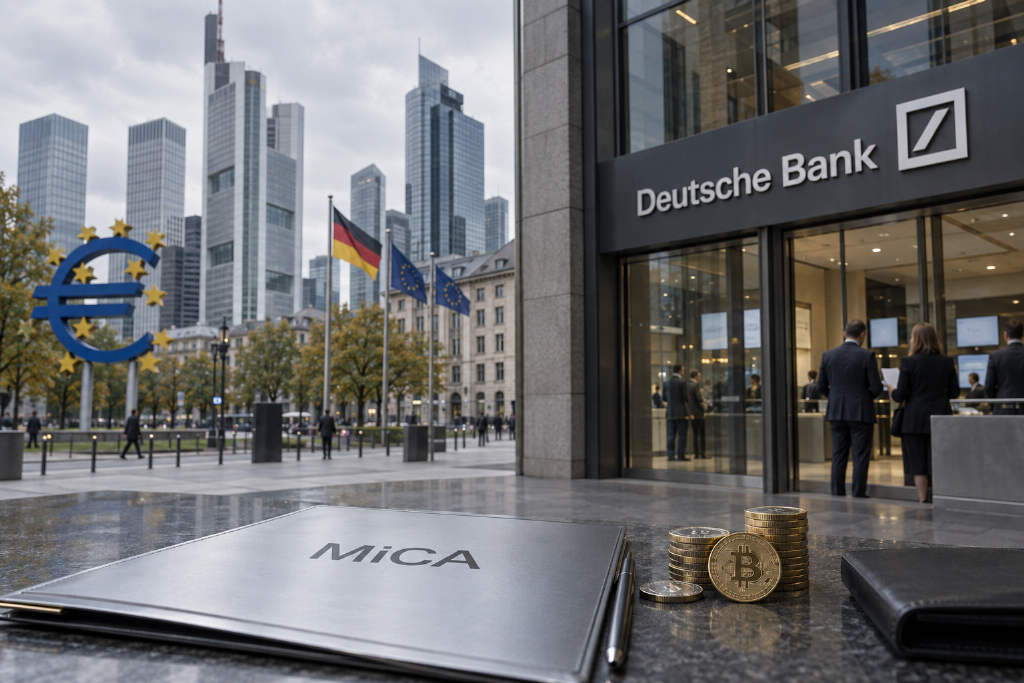
Banks are expanding their footprint in Europe’s regulated crypto market, and they now account for nearly one in four providers listed under the European Union’s Markets in Crypto-Assets framework, or MiCA.
According to a Cointelegraph analysis of MiCA register data from the European Securities and Markets Authority (ESMA), the number of banks on the EU’s MiCA crypto provider list rose to about 80 from roughly 40 between June 26 and Sept. 16.
Over the same stretch, the total number of listed crypto-asset service providers, or CASPs, increased from 243 to 349.
Non-bank providers still dominate the register, and their numbers also increased in absolute terms. Even so, they lost share on a relative basis. Their portion of the list fell from about 84% to 77%, while banks increased their share from around 17% in late June to nearly 23% in September.
German banks account for much of the increase
Germany drove a large part of the banking expansion, with dozens of cooperative and commercial banks appearing on ESMA’s MiCA register.
New names include Deutsche Bank, Germany’s largest lender. The bank said on Wednesday that it plans to launch digital asset custody services for institutional and corporate clients in Europe. A Deutsche Bank spokesperson told Cointelegraph that the lender expects to receive regulatory approval for the offering under MiCA in October.
The shift is not limited to Europe’s biggest banking groups. Germany’s additions also include numerous Volksbank, Raiffeisenbank and VR Bank institutions. That points to regulated crypto services spreading through the country’s regional cooperative banking network rather than staying concentrated among large international banks.
Banks have a separate path into MiCA
Banks do not enter MiCA in the same way as crypto companies. While crypto firms must apply for CASP authorization, banks can provide crypto services through a separate notification procedure.
Under Article 60 of MiCA, a credit institution may provide crypto-asset services if it submits the required information to its home regulator at least 40 working days before offering those services for the first time.
That notification route gives banks a way to expand into crypto without going through the standard CASP authorization process.