

Robinhood Chain has turned long-standing questions around Base into immediate pressure points.
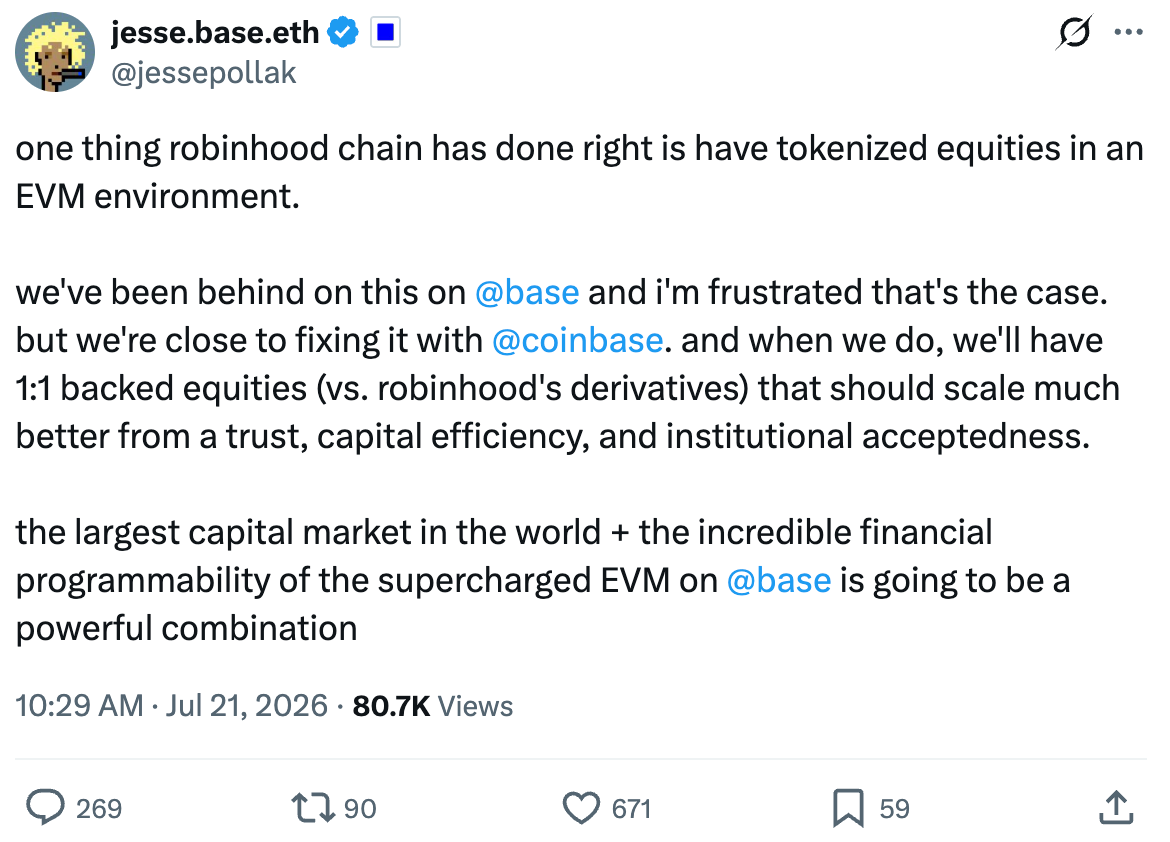
At midday Beijing time on July 21, Base co-founder Jesse Pollak wrote on X that Robinhood Chain was taking the right approach by launching tokenized stocks in an EVM environment. He said Base had fallen behind in that area, but was working with Coinbase on related products. Base plans to offer tokenized stocks backed 1:1 by shares, rather than using the derivatives model adopted by Robinhood.
Pollak’s second public acknowledgment of a miss
This was Pollak’s second public admission in recent weeks.
On the eve of Robinhood Chain’s mainnet launch, he had already said Base’s push over the past year into social and creator tokens was a strategic mistake. Attempts built around Farcaster, Zora and content tokens did not lead to sustainable adoption. Prices tied to those tokens fell sharply, and enthusiasm among early builders faded with them.
Pollak later handed leadership of Base App back to Coinbase. Cobie took over that role, while Pollak shifted his attention to Base’s core infrastructure.
Base remains a major player, but the old issues never went away
Among public chains launched by exchanges, Base has few direct peers outside BNB Chain. BNB Chain’s moat comes from years of accumulation, something Base cannot close quickly. But against other L2 networks with similarly long development histories, including OP Mainnet and Arbitrum, Base has not been outmatched. In areas including meme tokens, it has even held a visible edge.
Still, the article argues that Base’s connection to Coinbase helped fuel its rise while also allowing unresolved problems to sit in the background. Once Robinhood Chain arrived, those issues became much harder to ignore.
Decentralization is back at the center of the debate
After taking over Base App, Cobie acknowledged that Coinbase had grown further apart from crypto-native users. In Base’s case, the lack of progress on decentralization is presented as a clear example.
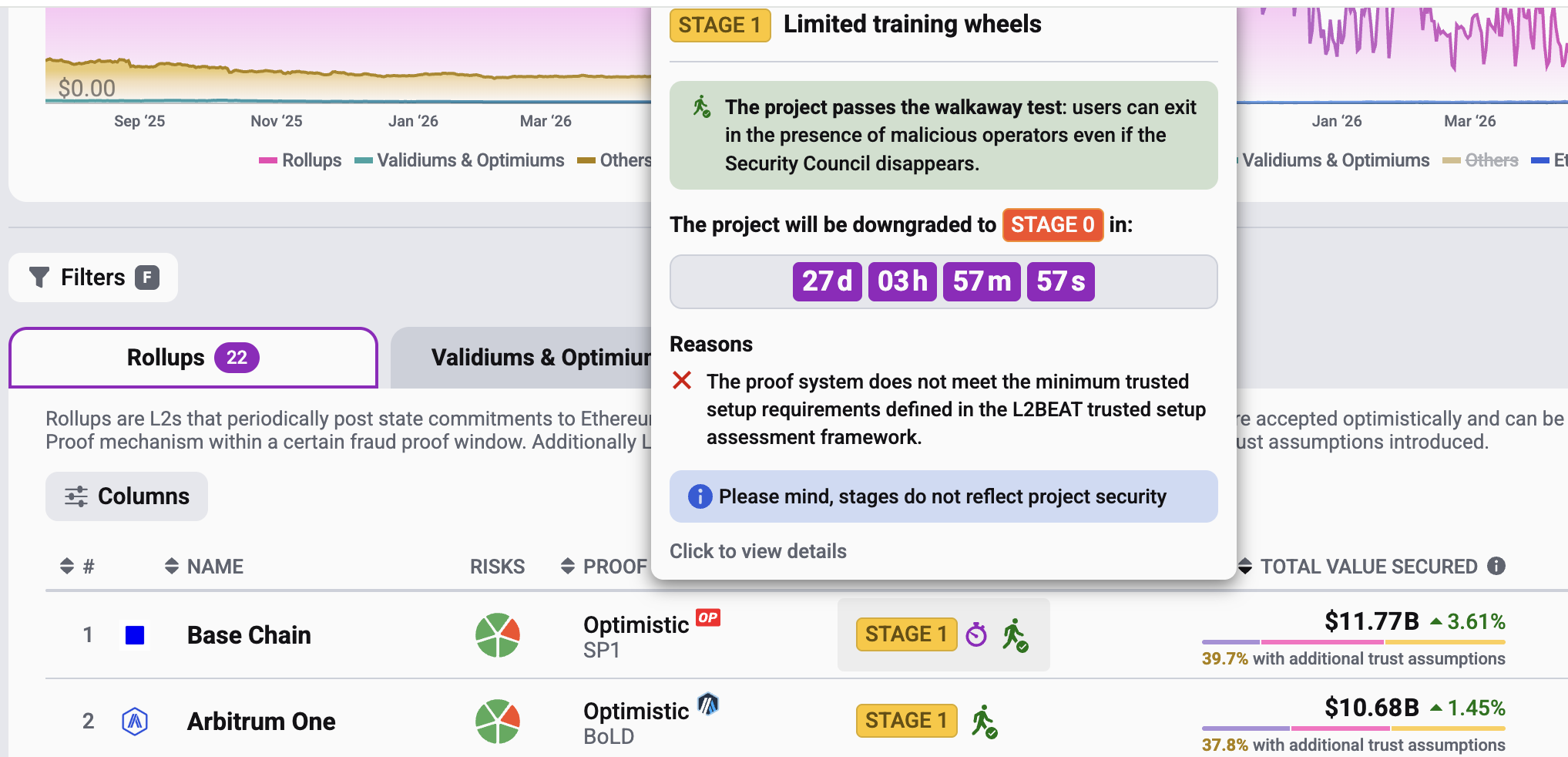
Base has long faced criticism over centralization. The article points to two block production outages, one in August 2025 and another in late June 2026, as clear signs of the risks tied to having a single sequencer. It also says L2BEAT is preparing to downgrade Base’s decentralization rating from Stage 1 back to Stage 0.
At the same time, the piece notes that L2BEAT’s framework is not the same thing as a direct security measure. Base has already shown that user assets remain safe even if the security council fails. Even so, the issue has resurfaced because the competitive question is becoming harder to avoid: if a crypto-native exchange has spent this long without building a stronger decentralization advantage, how does it compete with Robinhood Chain?
Competition became tangible within days of launch
Within just over 10 days of going live, Robinhood Chain had pushed its DEX trading volume into the top five, and its daily transaction count briefly exceeded Base. Before that, the article says, Base could still lean on its own traffic and network data while tolerating smaller flaws. Once a serious rival arrived at the gate, those same flaws stopped looking minor.
After Robinhood Chain launched, Robinhood CEO Vlad Tenev kept a close eye on new project activity. Coinbase founder Brian Armstrong, by contrast, drew criticism after changing his avatar in a move that helped send the meme token BRAIN higher, then quickly switching back to the old image. According to the article, BRAIN’s market capitalization fell from $37 million to $2 million after that reversal. The contrast between the two executives became a talking point in the market.
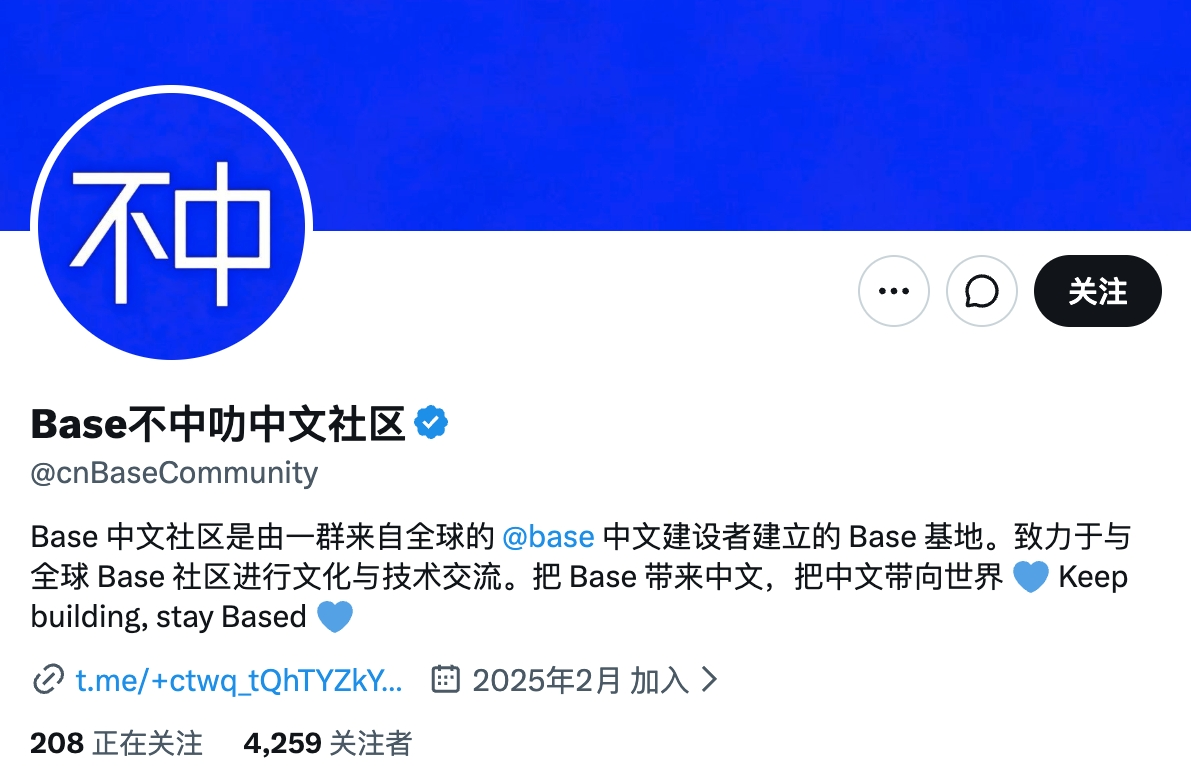
Armstrong later responded on X, saying his personal account was not an investment signal and that he would not endorse any specific token. The article says that explanation did little to calm sentiment. An unofficial Chinese-language Base community account on X renamed itself “Base 太狗了中文社区” after the episode, then changed again on the same day to “Base 不中叻中文社区.”
Base still has scale, but the window is narrowing
The article does not argue that Base has performed poorly across the board. Base still has the highest TVL among L2 networks at nearly $12 billion, and it holds the standard-setting role in machine payments. Armstrong has repeatedly said Base is meant to become long-term financial infrastructure rather than chase short-term speculation.
What Robinhood Chain has changed is the pace of competition. Its arrival has forced Base to answer user demands around reliability and support more quickly than before.
For Base, the more urgent task may not be to rebut every comparison point by point. The article’s conclusion is that this pressure should be used to finally address technical and trust issues that have been left unresolved for too long. Wall Street has no shortage of financial companies that could follow the Robinhood Chain playbook, and Base does not hold an overwhelming edge in RWA tokenization. If it does not make use of this moment to change course, the position could become even more passive.