

A MarsBit market analysis says the most punishing part of a bear market is not the price drop on its own, but the way it exposes poor strategy and leverage. Written by @stacy_muur and translated by AididiaoJP for Foresight News, the piece sets out a repeatable framework built on on-chain data and past market cycles, with one goal: preserve capital, earn steady returns where possible, and build optionality before moving back into risk assets.
How the article frames 2018, 2022 and the 2025–26 cycle
The piece starts with a comparison of three Bitcoin drawdown periods. In 2018, Bitcoin fell from about $19,000 to roughly $3,600, a decline of more than 80%. According to the article, buyers who entered at the bottom saw returns of about +192% one year later.
For 2022, the author describes the cycle as a governance and credit crisis rather than a simple selloff. Bitcoin topped near $69,000 and later fell to about $16,500, a drawdown of roughly 77%. The contagion triggered by the FTX collapse led to around 1.2 million BTC being realized at a loss, the article says. Buyers at that bottom would have seen about +127% over the following year.
The current 2025–26 cycle is presented as materially different. The article says Bitcoin peaked near $124,800 and later fell to $58,115, for a 53.43% drawdown, the smallest on record. So far, this cycle has lasted about 267 days. Around 72.4% of supply is in loss, equal to about 10.74 million BTC under water, while MVRV Z-Score fell as low as about 0.24.
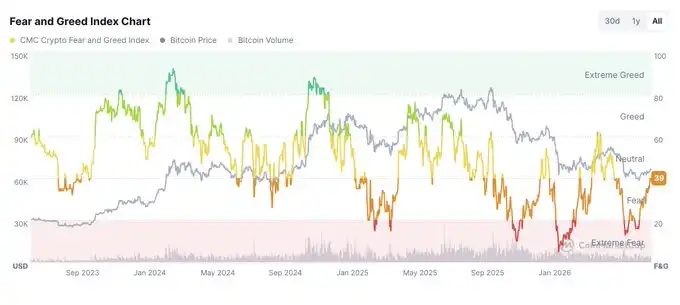
The author’s reading is that structural risk is lower than it was in 2022 because systemic contagion is more limited, but the market may still pass through a capitulation phase. That, in the article’s view, is where both danger and opportunity tend to cluster.
Keep dry powder in stablecoins and make it earn
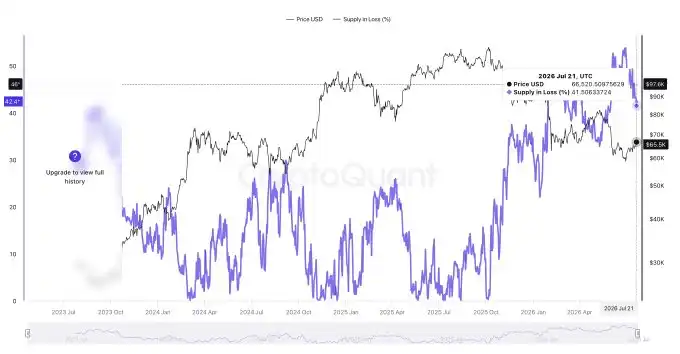
The first tactical point is to hold dry powder in stablecoins and collect what the article calls reliable yield rather than leaving capital idle. The argument is straightforward: the longer a bear market lasts, the more opportunity cost matters. The piece cites target stablecoin lending yields of around 5% to 10% APY and Bitcoin liquid staking yields of about 4.5% to 5.5%.
Its suggested approach is to place a base allocation in USDC or USDT, depending on personal risk tolerance, and use lending venues and custodians with provable reserves. The resulting income can then be recycled into a dollar-cost averaging plan or a broader accumulation program.
The article gives a simple example. Put $50,000 into stablecoins at 7.5% annual yield and the position generates about $3,750 over a year that can be redeployed. In the author’s framing, that is more productive than holding BTC with no yield and creates a real compounding engine.
Stop trying to call the bottom and follow a process
The second principle is to move away from bottom calling and toward a rules-based process. The article says buying the exact low is close to impossible. Dollar-cost averaging helps smooth entry risk, while an “accumulator” setup with focused deployment windows has outperformed pure DCA over longer backtests.
The backtest figures cited in the piece show excess returns of about 10% for a three-month accumulator, 13% for six months and 26% for 12 months, compared with pure DCA.
In practice, the author suggests setting a base DCA rhythm, weekly or every two weeks, while reserving a separate accumulation tranche for statistically extreme drawdowns. The article also offers a three-part framework across multiple assets:
- Deploy one-third now.
- Use one-third for scheduled DCA.
- Hold one-third back for deeper pullbacks.
To show why process matters, the piece points back to 2022. Buyers at the $16,500 low captured about +127% over the following year, but only if they made it through the FTX contagion phase. A structured process, the author argues, avoids turning the entire trade into an all-or-nothing bet.
Use diversified yield strategies rather than a single source of return
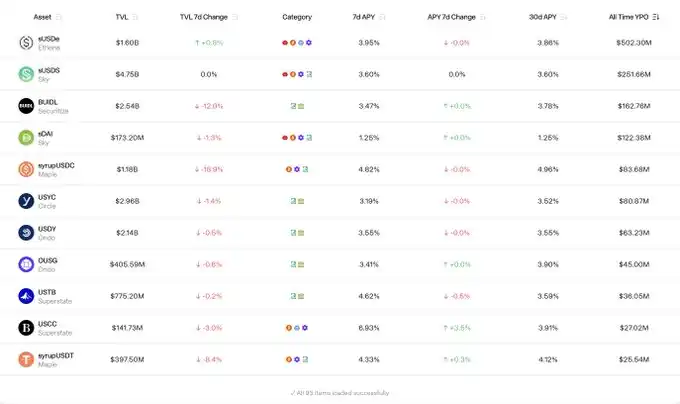
The third major point is to compound through diversified, lower cycle-risk income strategies, described in the article as “meta-vaults.” The reasoning is that single-strategy yield can break down or compress sharply. The article gives Ethena’s USDe as an example, saying its return profile depends heavily on funding rates.
Meta-vaults, in the author’s view, help by spreading risk across strategies and rebalancing automatically, which lowers exposure to one cycle or one yield engine. The examples named in the article include institution-style vaults such as Lombard Bitcoin Earn and Bybit Mantle Vault, as well as diversified lending pools that publish transparent risk metrics. The target is multi-source yield drawn from lending, tokenized Treasuries and liquid staking.
Avoid leverage unless liquidation risk is fully understood
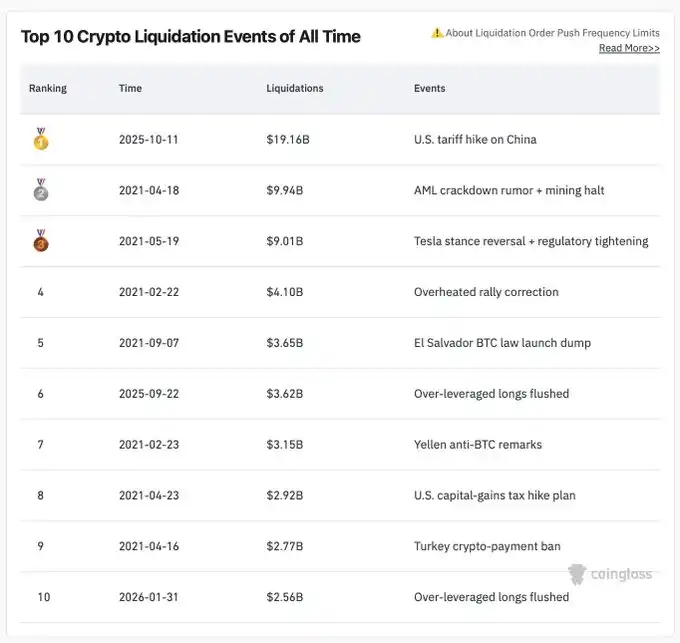
The article is blunt on leverage. It says leveraged traders were the biggest losers in both 2018 and 2022 because forced liquidations created chain reactions. Market infrastructure may be stronger now and systemic contagion may be lower, but leverage still magnifies downside moves.
The guidance is clear: stay away from leverage and off-exchange financing arbitrage unless liquidation mechanics and margin risk are truly understood. If leverage is used at all, positions should be conservative and tested against realistic drawdown scenarios.
Watch on-chain signals to tilt exposure, not to pick an exact low
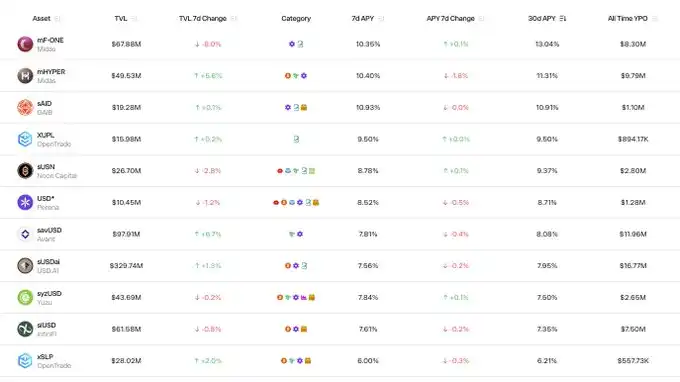
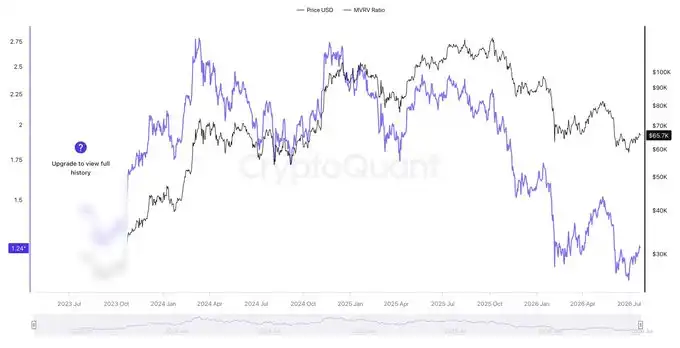
Rather than aiming for perfect timing, the article recommends adjusting exposure based on on-chain signals. The indicators named are MVRV Z-Score, supply in loss, and the divergence between short-term holder and long-term holder cost bases.
In the signal section, the article lists a current MVRV Z-Score of about 1.24 and says around 41% of supply remains under water. It also cites CryptoQuant data showing that short-term holder cost basis was around $69,000 in July 2026.
The author’s interpretation is that when MVRV begins to converge and realized losses peak, that has historically marked the end of capitulation. When those signals line up, deployment speed should increase. For now, the article says the market reflects maximum pain but has not fully converged, which supports process over an all-in approach.
What could go wrong
The piece lists three main risks. The first is yield compression. In stressed conditions, income can reverse, so the author favors diversified yield and tokenized Treasuries over dependence on a single funding-rate structure.
The second is regulation. Some legislation may target yield-bearing products, the article says, so compliant stablecoins and Bitcoin are preferred. It cites a Benchmark report from January 2026 that says Bitcoin’s commodity status is becoming clearer.
The third is macro pressure. A move in the U.S. dollar index or interest rates could extend the bear market, in which case the article says investors should widen the DCA window and hold a larger stablecoin buffer.
Execution checklist
The article closes with a practical checklist:
- Build a stablecoin reserve equal to X months of planned accumulation and deploy it through vetted lending venues or meta-vaults.
- Set a DCA cadence and size, while reserving one-third for accumulation windows. The article says backtests show clear outperformance versus pure DCA.
- Keep leverage on core positions below 2x and record the available margin buffer.
- Track MVRV, supply in loss from CryptoQuant and ETF fund flows, then speed up deployment when MVRV converges and realized losses peak.
The article’s bottom line
The author argues that the 2025–26 bear market looks more like an infrastructure-driven correction than a 2022-style systemic collapse. That lowers tail risk, but it also means the window for buying at distressed levels may be narrower.
What still works, according to the piece, is preserving liquidity, earning diversified returns and following a disciplined accumulation process. The article also warns against two common mistakes: treating yield as a free lunch and using past maximum drawdowns as a shortcut for estimating how far the current cycle can still fall.
The final signal set to watch is MVRV convergence, realized-loss peaks and ETF flows. Those, the author says, are the markers for shifting from steady DCA to faster accumulation. The closing line is simple: let process, math and on-chain evidence compound the advantage, not hope.