In February of this year, Citrini's report "The 2028 Global Intelligence Crisis" triggered a selloff in U.S. software stocks and intensified Silicon Valley layoff fears. In April, its analyst #3 conducted on-the-ground research in the Strait of Hormuz, revealing Iran's "toll station" operation model. Recently, semiconductor analyst Jukan accurately highlighted the importance of copper foil in AI and semiconductors, sparking a new wave of investment. Behind these moves is James van Geelen, a UCLA graduate with dual degrees in biology and psychology, who worked as an emergency medical technician and founded a healthcare company before pivoting into investing. He is now hailed as the "God of Research."
Cross-Industry Background: From EMT to Research Master
Now 33, Geelen earned dual degrees in biology and psychology from UCLA and worked as an emergency medical technician in downtown Los Angeles. He calls himself a "musical genius" but originally planned to become a doctor. Instead, he founded a healthcare company, sold it to a private equity fund, and then established Citrini. He also co-founded one of Connecticut's first medical marijuana dispensaries. In 2018, he began investing under Citrinitas Capital, catching early opportunities in AI (e.g., Nvidia) and GLP-1 weight-loss drugs (Ozempic/Wegovy). In December 2025, Citrini raised approximately $5.05 million in seed funding with only about 10 employees.
A Report That Caused Wall Street to 'Bleed'
In February, Geelen co-authored "The 2028 Global Intelligence Crisis" with Alap Shah, a traditional finance veteran. Although labeled a "thought experiment," the report's scenarios of mass white-collar unemployment, declining consumer spending, and economic contraction (Ghost GDP) triggered capital market panic. IBM recorded its largest single-day drop in 2025; American Express and Blackstone fell over 8%, and the software sector dropped nearly 5%. DoorDash, Uber, Mastercard, Visa, Capital One, and Apollo Global Management all fell up to 3%, with the Dow temporarily shedding over 800 points. Alap Shah publicly stated his investment stance as "bearish on paper, bullish in action" — shorting companies that AI would disrupt while holding semiconductor stocks that benefit from AI. The report was covered by Bloomberg, The Wall Street Journal, and other outlets.
Field Research and Crypto Ecosystem Synergy
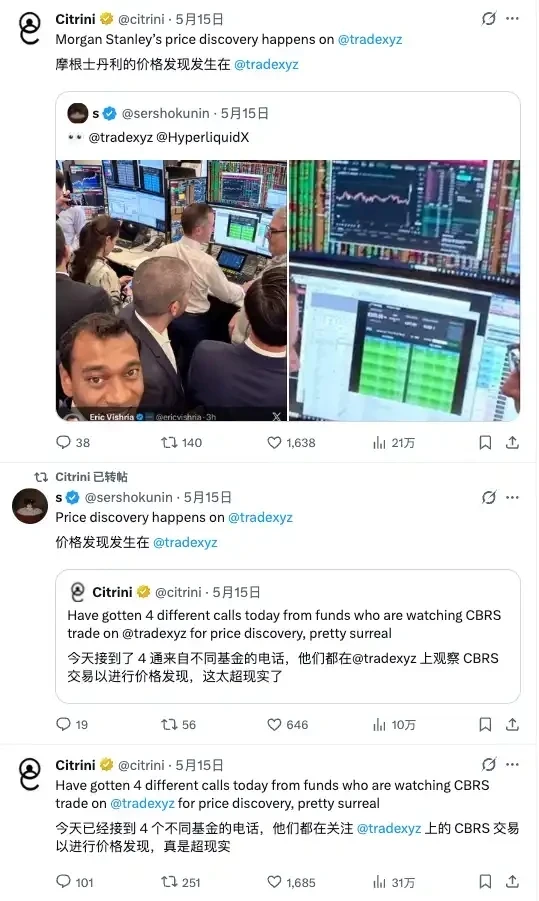
On April 6, Citrini's analyst #3 conducted on-site research at the Strait of Hormuz, revealing the operational model of Iran's "toll station" and offering counter-intuitive conclusions: shipping volumes through the strait will gradually increase, Iran does not want to close the strait, passage order is surprisingly regulated, and the conflict is fundamentally a multi-party game rather than a simple confrontation. Additionally, in May, before Cerebras (CBRS) went public, Citrini posted about fund managers conducting price discovery on Trade.xyz (built on Hyperliquid), which was later confirmed by Trade.xyz founder Shokun. Citrini's strong endorsement of the Hyperliquid ecosystem and Trade.xyz brought RWA platforms, pre-market contract platforms for U.S. stocks, and on-chain trading platforms into the mainstream, contributing to this year's "RWA asset boom in U.S. stocks."

Investment Philosophy: Second-Order Thinking and Long-Termism
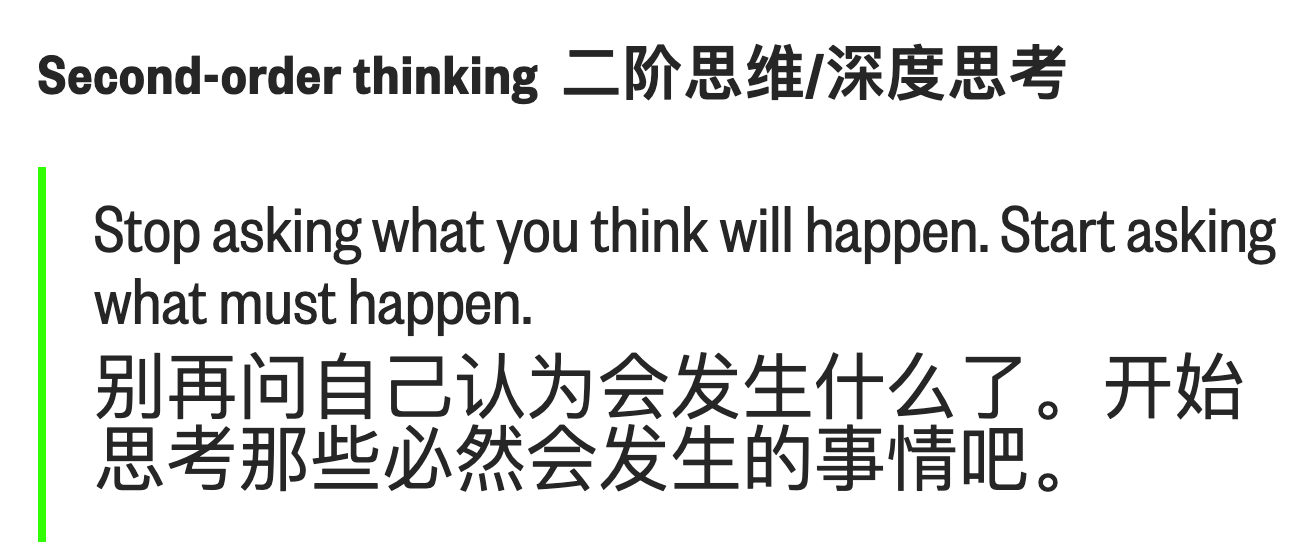
Citrini's name is inspired by the alchemical stage "citrinitas" from George Soros's book "The Alchemy of Finance" — the phase where lead begins to turn into gold but has not fully transformed. Geelen says this is his favorite moment: seeing the birth of gold before others notice the change in lead. He advocates second-order thinking, often using "scenario hypotheses" to help readers grasp second- and third-order effects. He emphasizes: "Don't just think about what you expect to happen. Think about what must happen. How will market reactions change reality? What are the secondary effects? What obstacles stand in the way of a trend continuing, and where will capital flow to overcome them?" In March 2023, when Silicon Valley Bank collapsed, he aggressively bought call options on overnight financing rates, pocketing nearly 50x returns. In December last year, before the U.S. launched military action in Venezuela, he shared views on Venezuelan sovereign bonds. Citrini focuses on long-term "super trends" such as AI, robotics, energy demand, fiscal policy, geopolitics, and modern warfare, providing actionable "investment kits" and tactical macro ideas with a tilt toward structural changes rather than short-term trades.

Team Expansion and Production Model
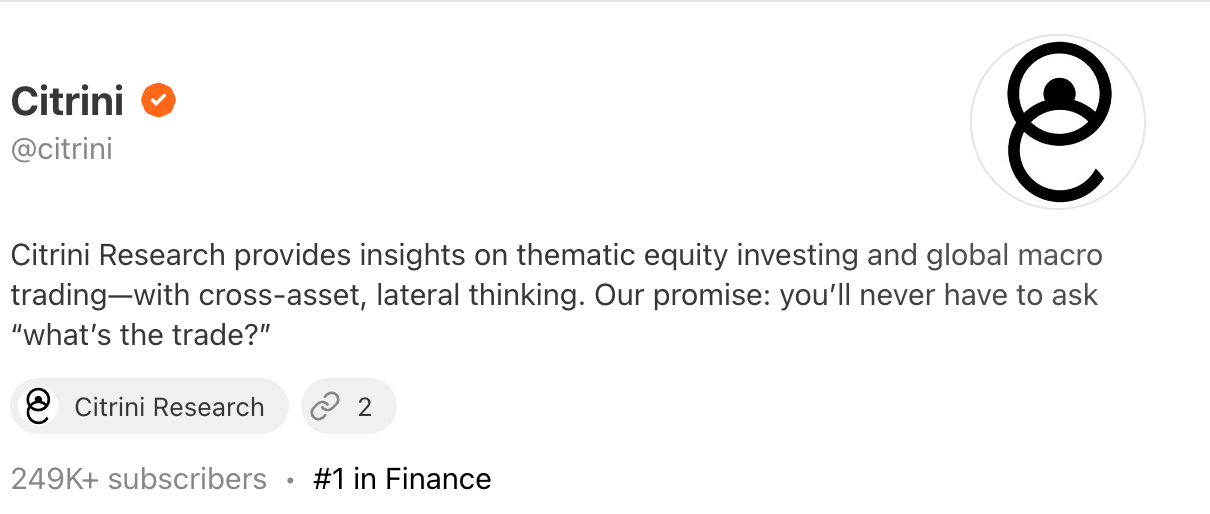
This year, Citrini has added several independent analysts, including macro analyst Nick Reece, Korean semiconductor analyst @jukan05, and AI chip analyst @zephyr_z9, filling gaps in industrial details and technological processes. The firm maintains a founder-driven + anonymous elite team collaboration model, and its Substack consistently ranks first. The Substack description states: "You (the reader) will no longer need to ask 'What is the trade?'" — highlighting its emphasis on actionable insights.

The rise of Citrini shows how cross-industry outsiders with unconventional backgrounds are reshaping the research landscape. Its "warning signal" reports continuously challenge the traditional financial world, and founder Geelen's second-order thinking and long-termism may be the key to its repeated market-moving insights.