
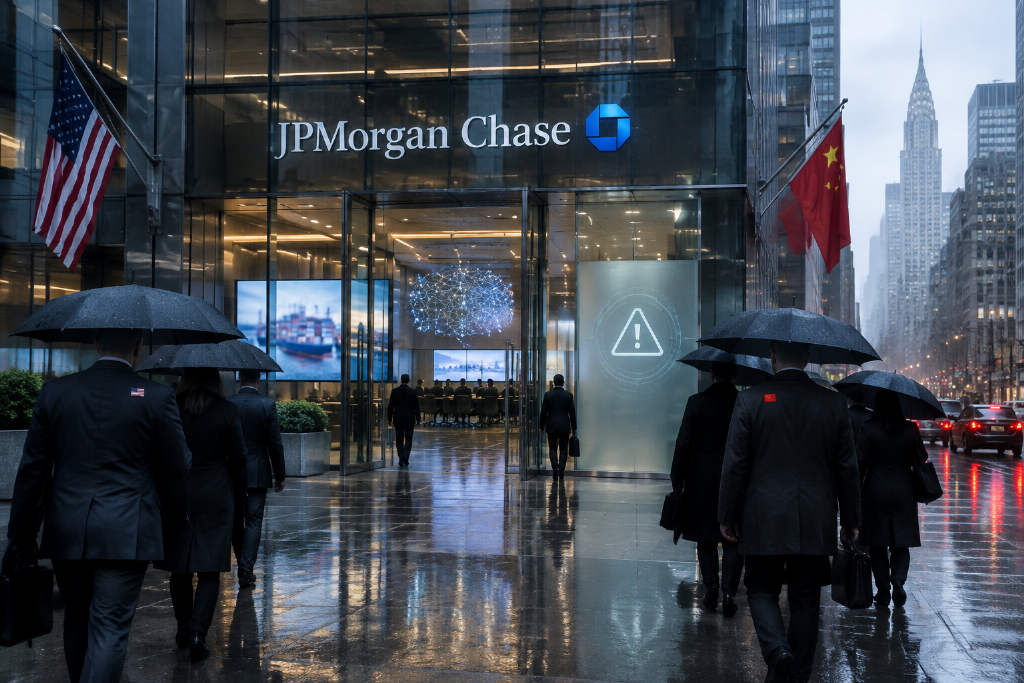
U.S. Treasury Secretary Scott Bessent met Chinese Vice Premier He Lifeng for about eight hours at JPMorgan headquarters in New York on Sept. 20 Eastern Time, with trade and artificial intelligence high on the agenda. According to CBS, Bessent told reporters after the meeting that the two sides had a "very successful" exchange on trade and AI and agreed to meet again.
The meeting took place ahead of a Trump-Xi summit. U.S. President Donald Trump is set to receive Chinese President Xi Jinping at the White House on Sept. 24. U.S. Trade Representative Jamieson Greer and China’s chief trade negotiator Li Chenggang also joined the talks.
U.S. proposes AI incident reporting mechanism
Bessent said the U.S. side proposed a "U.S.-China AI dialogue" that would include a notification mechanism covering serious AI incidents, including cases that rise to the level of national security. The idea, he said, is to give both sides a channel to communicate on "common goals and common threats."
"We believe, as with any cross-border activity, that it is very important for the world’s number one and number two AI powers to move from less transparency to more transparency," Bessent said.
Greer said export controls on advanced AI chips and semiconductor manufacturing equipment would not fall within the scope of the proposed mechanism.
Trade committee reviewing non-sensitive goods
On tariffs, Bessent said the two sides are using a newly launched "trade committee" to identify a group of non-sensitive goods for trade in what he described as a "balanced" way. The list includes consumer goods and low-tech products, energy products, agricultural products, and could also include medical devices.
In a statement, Greer said the Trump administration would keep pursuing balanced trade with China by monitoring the implementation of recent commitments, improving trade in non-sensitive goods, and expanding market access for U.S. farmers, manufacturers, and workers.
Chinese side gives shorter readout
The Chinese readout was more concise. Xinhua said the two sides held a "candid, in-depth and constructive" exchange on implementing past economic and trade consultation consensus and on promoting bilateral trade and investment, and also held dialogue on AI-related issues. Taiwan’s Central News Agency cited that report.
Bloomberg quoted Li Chenggang as saying the atmosphere of the talks was good and that working groups would continue consultations on Sept. 21.
Busan trade truce expires on Nov. 10
A trade truce reached by the U.S. and China in Busan, South Korea, in October last year capped U.S. tariffs on Chinese goods at about 20%. That arrangement is due to expire on Nov. 10.
Washington has also kept pressing Beijing over supplies of rare earth magnets and other critical minerals, but Bessent and Greer announced no new progress on that front after the Sept. 20 meeting.
The Trump-Xi meeting on Sept. 24 will include a state dinner. It will be their second face-to-face meeting this year, after their previous one in Beijing in May.