
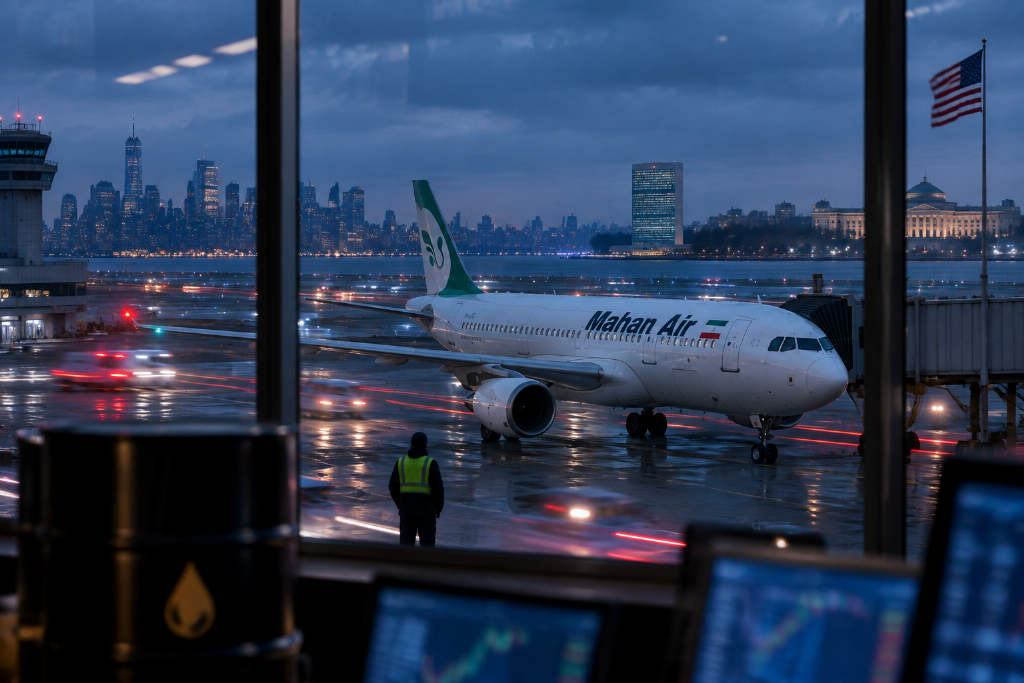
U.S. Treasury Secretary Scott Bessent said in an interview on CNBC’s Squawk Box that all Iranian airlines would be shut down starting Sept. 23.
He laid out the method bluntly: “How do you do it? Simple—once they land, you cannot refuel them, you cannot provide landing services, and you cannot sell their tickets, or you will be kicked out of the dollar system.” In his telling, that means the moment those aircraft touch down, anyone who refuels them, handles landing services, or sells their tickets risks being cut off from the dollar system.
Bessent also said Washington was squeezing Iran with what he called an “unprecedented” level of force, while cutting off Iran’s backers worldwide, including through sanctions on banks.
Move follows Sept. 8 sanctions targeting 27 Iranian airlines
These remarks build on the Treasury Department’s Sept. 8 action. A Treasury press release said the department sanctioned 36 targets at that time, including 27 Iranian airlines such as Mahan Air, plus companies that provided cargo handling and ticketing agency services for the carrier.
Back then, Bessent said any foreign company helping sanctioned Iranian airlines would face serious consequences for backing what he called the world’s leading state sponsor of terrorism.
CNBC reported that the Treasury last week announced sanctions on Russia’s state-owned VTB Bank as part of a push to isolate Iran’s economy by going after its commercial partners and financial “facilitators.”
Oil prices moved higher after the remarks
And the market reacted. CNBC said oil prices climbed after Bessent’s comments. As of 3:58 a.m. Eastern Time on Sept. 22, November Brent crude futures were up 1.19% at $101.53 a barrel. October West Texas Intermediate crude futures were up 0.7% at $96.45 a barrel after earlier touching $97.42.
Traders also watched diplomacy around the U.N. General Assembly
Investors were also watching the diplomatic track. Iran’s semi-official Tasnim News Agency said President Pezeshkian would travel to New York for the United Nations General Assembly to present Iran’s position on international conditions, with special attention on the war involving the United States and Israel. Meetings with leaders from multiple countries were scheduled for Sept. 22 to 26 and Sept. 28.
Lukman Otunuga, head of market research at FXTM, said: “If direct talks between Washington and Tehran are confirmed, that could improve expectations for regional supply and put more downward pressure on oil prices.” But he added that Tehran had warned of a major response if tensions escalated again, a move that could push oil prices higher.
G7 also called on the Houthis to halt attacks
Separately, on Sept. 21 U.S. time, the G7 called on Yemen’s Houthi group to stop attacks on Yemen and Saudi Arabia.
CNBC said the Houthis had recently taken Perim Island in the Red Sea, tightening their grip on the Bab el-Mandeb Strait. And that, the report said, could hand Iran and its proxy forces a chance to control both the Strait of Hormuz and the Bab el-Mandeb Strait, two major oil shipping routes.