
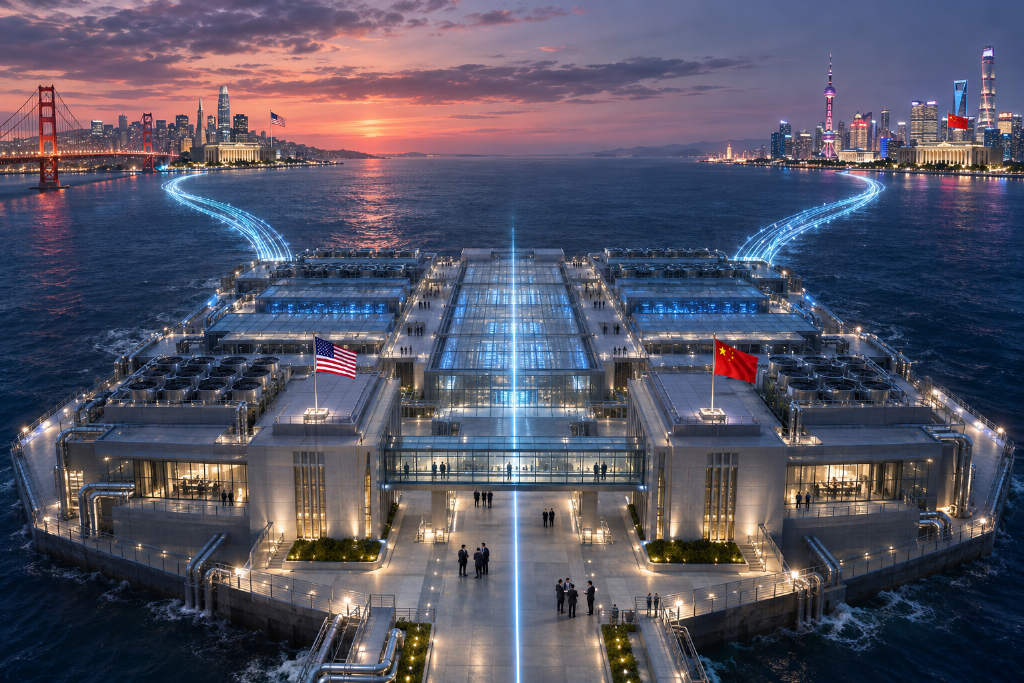
US Treasury Secretary Scott Bessent said the United States and China have established a new dialogue mechanism on superintelligence at President Donald Trump’s direction. He made the announcement during a speech at the annual dinner of the National Committee on U.S.-China Relations on the evening of Nov. 10 US time.
The mechanism is intended to address risks shared by the two countries and reduce the chance of miscalculation between their two systems as superintelligence develops.
Three areas for AI coordination
According to remarks released by the Treasury Department, the new channel will cover three areas:
- Exchanging approaches for evaluating and testing advanced models before release;
- Discussing how to keep human judgment firmly in control of the technology;
- Creating a direct line for either side to immediately notify the other if a major incident occurs involving its superintelligence model.
Bessent cited views expressed by Henry Kissinger late in his life. Kissinger considered the emergence of superintelligence a possible new form of strategic danger, Bessent said, and believed major powers had a duty to find common objectives even when they faced deep disagreements. During Kissinger’s final visit to China, he discussed deeper cooperation with Chinese President Xi Jinping.
Bessent says differences will remain
Bessent said the two countries need to cooperate in new areas of risk created by superintelligence while showing how competition can coexist with leadership responsibilities. He said the US and China should not hold illusions about their differences, adding that their interests will not always align.
CNBC reported that Bessent did not promise to limit the development of AI technology. In a CBS interview broadcast on Nov. 8, Trump said he did not mind guardrails but did not want regulation to leave the United States behind China.
The US government has taken more steps on superintelligence recently. The Justice Department established a Superintelligence Task Force at the beginning of this month and directed AI companies to strengthen internal controls.
Trade talks and Trump’s next China trip
The speech remained focused mainly on US-China economic and trade ties. Bessent said he would travel with Trump to Shenzhen next week, where Trump and Xi are scheduled to meet. The two leaders will then hold a fourth meeting in Miami. Bessent described that number of meetings between the leaders of the two countries within a single year as unprecedented.
He also said the US-China trade committee had agreed to identify $30 billion worth of non-sensitive goods from each country for more favorable tariff treatment. China had previously agreed to import at least 25 million metric tons of soybeans and 10 million metric tons of coal from the United States over the next two years.
“De-risking, not decoupling,” is the US objective toward China, Bessent said.



