
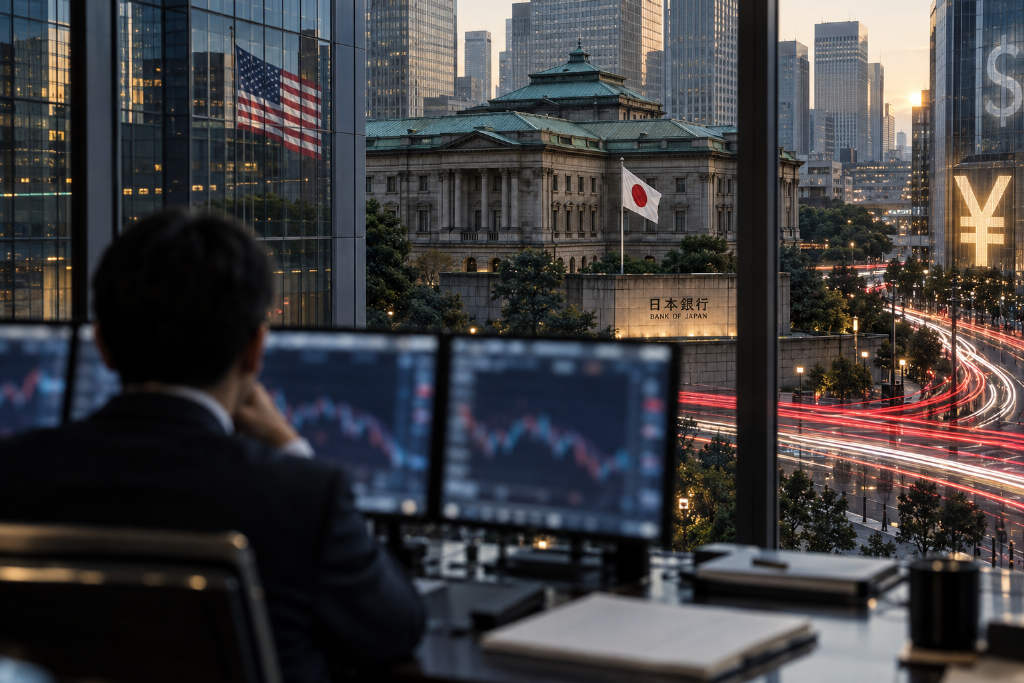
U.S. Treasury Secretary Scott Bessent publicly challenged traders shorting the Japanese yen, saying they are free to bet against him.
According to BlockTempo, Bessent said at an event at Southern Methodist University in Texas on Tuesday, Sept. 8, that he has asymmetric information unavailable to the market and a firm grasp of what the Japanese government and the Bank of Japan are likely to do next. On that basis, he said anyone who wants to wager on the yen is welcome to take the other side of his trade.
July 31 intervention failed to hold the move
BlockTempo said the U.S. and Japan stepped in together on July 31 to support the yen. The move stood out because direct U.S. participation in the currency market has been rare in recent years, and Bessent referred to that episode again in his latest remarks.
The gain did not last. After the yen jumped on the day of the intervention, it gave back most of that move over the following sessions. Trading desks cited a practical reason: the Treasury's firepower for buying currency is finite, enough to affect the market temporarily but not enough to defend a level for an extended period.
By late August, USD/JPY had moved back above 160, effectively erasing the impact of what the report described as Japan's largest-ever currency support operation.
The yen has recovered more than 4% since Sept. 1
The turn came in September. USD/JPY fell to 153.75, close to the yen's strongest level in seven months. Using 160 on Sept. 1 as the reference point, the yen recovered more than 4% in nine days. The report said the market has started to see the rebound as more than a short-lived effect of intervention.
Pressure from Washington has come through monetary and fiscal channels
BlockTempo said U.S. pressure on Japan has been running along two tracks.
On monetary policy, Bessent urged Bank of Japan Governor Kazuo Ueda to do what is right, a remark that the report said pointed to faster rate hikes.
On fiscal policy, Bessent also publicly criticized Japanese Prime Minister Sanae Takaichi on Sept. 1, saying he had told Japan to stop reflationary policies, including fiscal expansion.
Takaichi's cabinet drafted a roughly JPY 143 trillion budget request for fiscal 2027, far above the prior year's roughly JPY 122 trillion and the largest on record. After that, yields on long-term Japanese government bonds briefly rose to 3%, a 30-year high.
Congressional criticism and BOJ expectations are both building
Bessent's approach has also drawn scrutiny in Washington. The report said Democratic Senator Elizabeth Warren sent a letter in August questioning the legitimacy of intervention by the Trump administration in the foreign-exchange market. Bessent responded by saying he would give her an "intro to FX" lesson.
Separately, Bloomberg reported that the Bank of Japan is inclined to raise rates by 25 basis points on Sept. 18. Market pricing for that move has continued to increase, and the report described it as an important factor behind the yen's recent stabilization and rebound.
Markets are watching what Ueda says next
BlockTempo said Bessent has treated the exchange rate as a policy tool and cast himself as a market maker in the yen trade.
Even so, the report said the key variable for crypto and other risk assets is not Bessent's rhetoric but what Ueda says on Sept. 18 about the pace of future rate hikes. If the Bank of Japan is pushed into accelerating tightening, pressure from carry-trade unwinds could spread more quickly into bitcoin and U.S. stocks.