
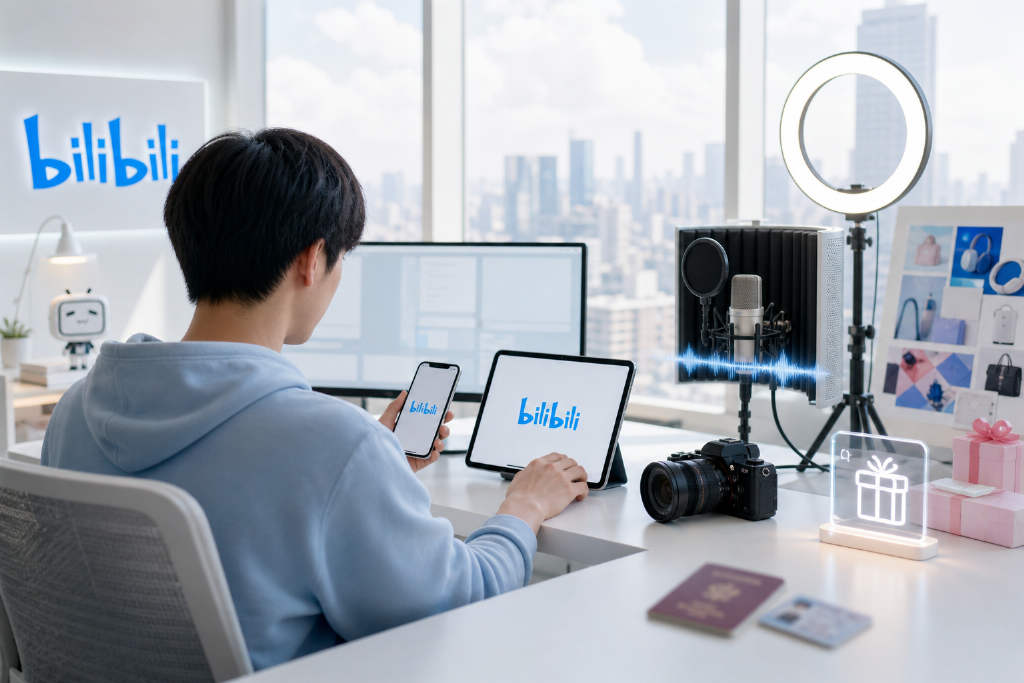
Bilibili has relaunched its international app on Google Play and removed identity verification for overseas creators, cutting out what had been one of the biggest barriers to publishing on the platform. Its creator recruitment materials also lay out three monetization options — revenue sharing, virtual tipping, and a brand matchmaking marketplace — though the company has yet to publish the key terms behind any of them.
International app returns to Google Play
Bilibili, often described as China’s YouTube, has quietly put its international app back on Google Play in a recent update. The central change is straightforward: overseas creators who want to upload videos no longer need to submit passports or other identity documents before signing up.
On X, the company’s bilibili Creator Hub account said the international app has launched globally on Android, with iOS coming soon and more countries set to follow. The post said the app would offer globally distributed content, better localization, easier sign-ups with no identity verification, and more localization features later on.
For overseas creators, that marks a real change in process. Previously, creators outside China had to comply with real-name requirements by uploading passport or other identification documents before they could publish on Bilibili. For many Western creators, that step itself had been a major deterrent. The international version now removes it entirely.
Semafor reported on the global expansion plan the next day. In the same week, Bilibili also launched an English-language creator community account on X and opened a Discord group to recruit creators in Europe and the United States.
AI dubbing added, bullet comments stay
The relaunched app also includes AI dubbing, allowing viewers to watch overseas creators’ content in different languages. The goal is to reduce language barriers as Bilibili tries to broaden its audience outside China.
The platform’s signature bullet-comment feature remains in place as well. Viewer comments still scroll across the screen in real time, preserving one of the interaction formats most closely associated with Bilibili.
According to creator recruitment materials reviewed by Semafor, the app’s feed will mix content from global creators with videos from Bilibili’s domestic Chinese library, and the two libraries are described as largely similar. That point, though, comes from the recruitment materials and has not been formally confirmed by the company.
Hiring push spans six cities, with AI moderation role in Singapore
Bilibili is also putting money behind the international push through hiring. The company is recruiting community managers and localization operations staff in Los Angeles, London, Mexico City, Sao Paulo, Istanbul, and Tokyo. Separately, it is hiring a product manager in Singapore to build a cross-language AI content moderation system from scratch.
This is not Bilibili’s first attempt to expand overseas. The international app had operated before, later stopped service, and is now being restarted rather than launched for the first time.
For now, the iOS version is still marked as “coming soon.” The English-language website and creator hub also remain on “coming soon,” with no public timetable attached. The old package on Google Play has recorded more than 10 million installs, but that figure reflects historical installs from the previous version, not new downloads after the relaunch.
Three monetization paths are listed, but terms are missing
Bilibili’s recruitment materials mention three ways creators could make money on the platform:
- Revenue sharing
- Virtual tipping
- A brand matchmaking marketplace for sponsorships
So far, none of the critical details are public. There is still no official disclosure covering the revenue split, how creators will be paid, or how royalty management will work across different countries and regions. The brand matchmaking marketplace is even marked as “in development,” and no release date has been given.
Scale and finances may help, but competition is entrenched
For overseas creators weighing whether to join, Bilibili can still point to scale. In the first quarter of 2026, the company reported 376 million monthly active users and 115.2 million daily active users, up 8% year over year. Users spent an average of 119 minutes per day on the platform. Advertising revenue reached RMB 2.59 billion, up 30% from a year earlier.
Some top US creators already have an audience base on Bilibili, even if much of that viewership has formed around unauthorized reposts. The report said Bilibili has also been reaching out directly to leading YouTubers in Europe and the US, encouraging them to upload simultaneously to its platform.
The company also has financial resources to support a long campaign. Its cash, deposits, and investments totaled RMB 24.19 billion, while net profit stood at RMB 202 million.
Moderation, privacy, and local operations remain open questions
The doubts around the relaunch extend well beyond translation. A central question raised in the report is whether translation tools and AI dubbing alone can close the gap with YouTube. The distance between the platforms is not only about language. It also comes down to distribution scale and the depth of local operations in each region.
Dropping identity verification makes registration easier, but that does not answer separate questions about how much personal data the service collects. Content moderation standards, censorship concerns, data protection, and platform governance were also identified as major potential obstacles for Bilibili’s international expansion.
Bilibili is entering a field where YouTube, TikTok, Instagram Reels, and Twitch have each spent more than a decade building local operations and creator monetization systems. Removing ID checks may lower one barrier. It does not erase that competitive gap.