
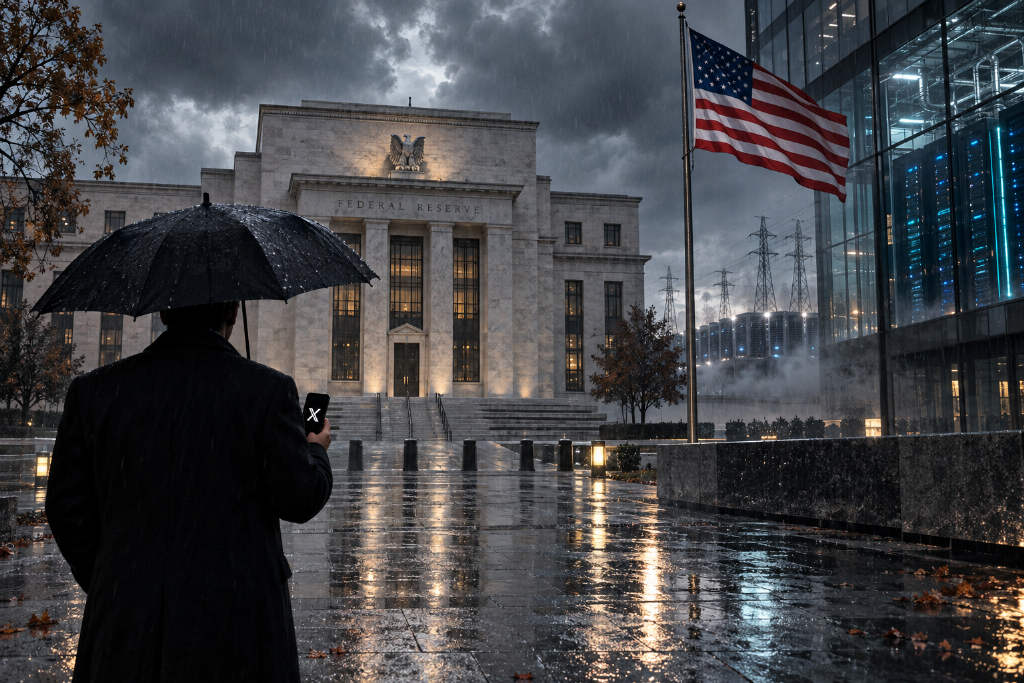
Pershing Square founder Bill Ackman said in a post on X that the Federal Reserve may have made a mistake by restarting rate hikes this month. His argument was that the AI arms race is changing the old logic that higher rates suppress demand and, in turn, bring inflation down.
He ended the post with a direct question: 「I think the Fed may have just made a mistake. Am I right or wrong?」 The post drew more than 1.6 million views within two days and sparked debate across social media.
Fed delivers its first rate hike in three years
According to CNBC, the Fed voted 12-0 on Sept. 16 to raise rates by 25 basis points, moving the federal funds target range up to 3.75%–4%. It was the first rate increase since 2023, and officials signaled that one more hike could come before year-end.
The Fed had left rates unchanged at its first five meetings this year. The shift was tied mainly to stubborn inflation pushed up by energy prices.
Chair Kevin Warsh said at a press conference that inflation had been 「too high, for too long,」 and that the committee had not seen signs that underlying inflation was returning to target quickly enough.
The dot plot showed that most officials expect rates to end the year between 4.1% and 4.4%, above the previous estimate. Over the 12 months through July, U.S. CPI rose 3.4%, still above the Fed’s 2% inflation target.
Ackman’s case: compute demand may be insensitive to rates
Ackman’s reasoning has three steps.
First, rate hikes can only reduce inflation if higher borrowing costs actually slow demand and investment.
Second, he argued that this assumption may not hold in the AI era. The reward for winning the race toward superintelligence is close to unlimited, in his view, so demand for intelligence and energy may not fall when rates rise. Demand for compute, he said, is 「immeasurable.」
Third, if demand does not come down, higher rates could instead push interest costs into the prices of goods and services across the economy, lifting inflation. The Fed would then be forced to raise rates again, creating a vicious cycle.
The article noted that the Fed itself said in its statement that capital investment and productivity growth remained strong. In that sense, Ackman and the Fed were looking at the same set of data, but drawing opposite conclusions from it.
Counterpoint: AI spending is not the whole economy
The argument also has clear weak spots.
First, AI capital spending may be large, but it still represents only part of total U.S. demand. Interest-sensitive sectors such as consumer credit, mortgages, and small-business financing are larger. After a rate hike, borrowing costs on credit cards, home equity lines of credit, and floating-rate commercial loans rise right away, which can still weigh on demand in those areas.
Second, the idea that higher rates can lift inflation is close to the Neo-Fisherian view in economics, which remains outside the mainstream and has limited empirical support.
Third, energy prices have been one of the important drivers behind recent inflation, which means this inflation cycle is not purely the result of AI demand.