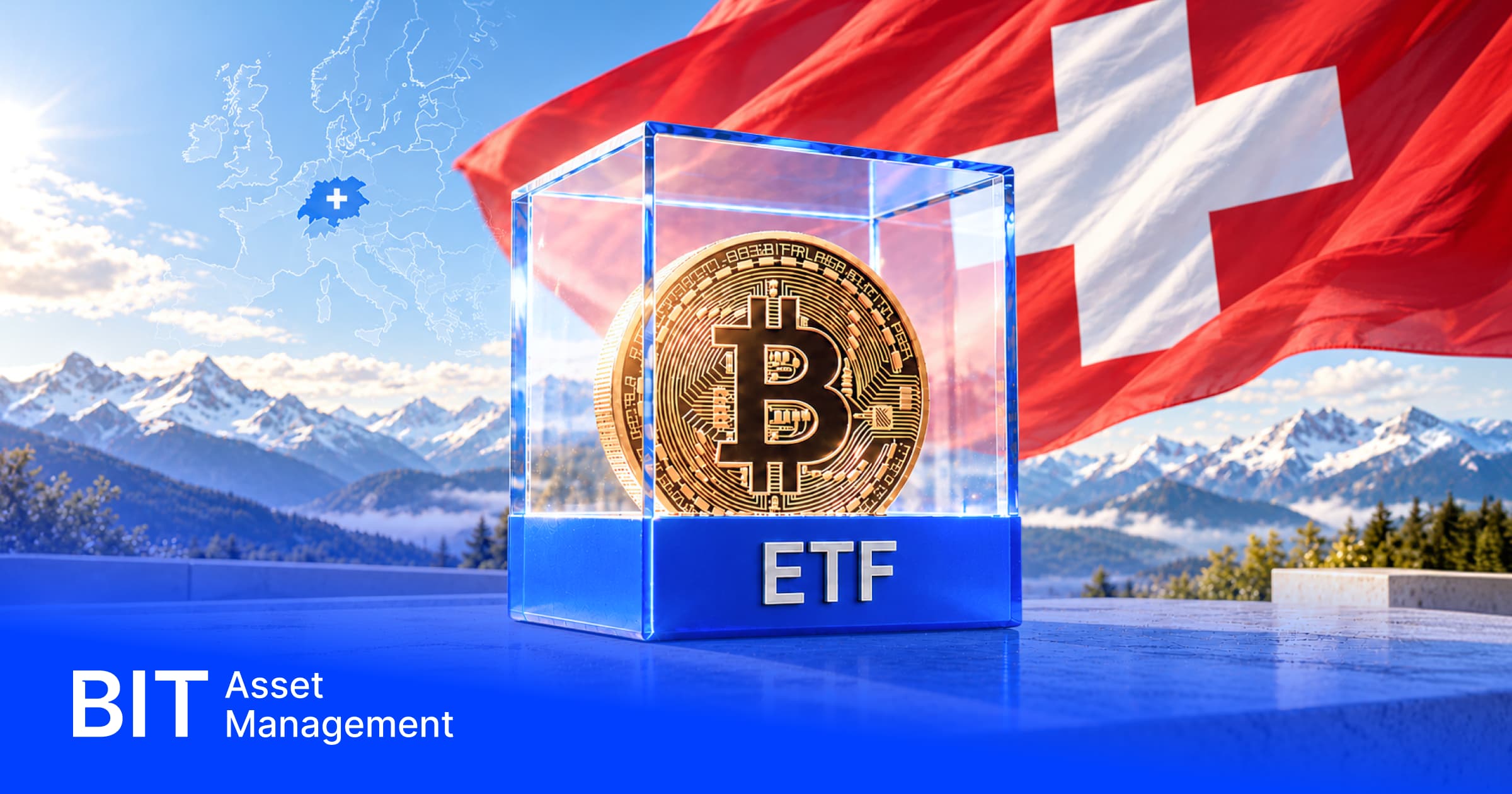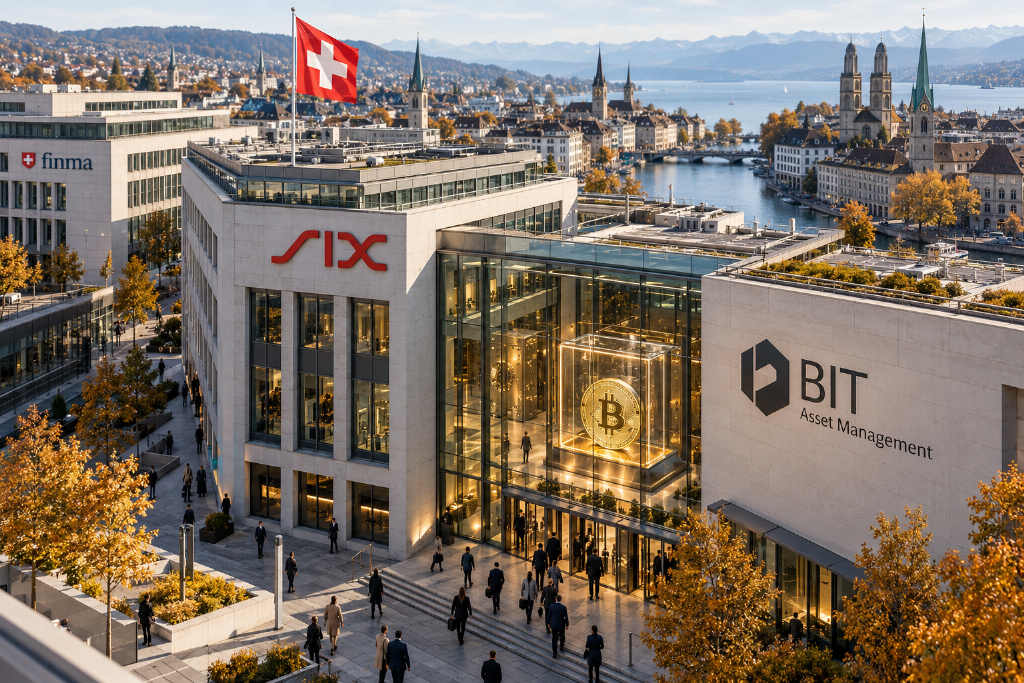
BIT Asset Management AG, the Swiss wholly owned asset management subsidiary of BIT, said the Swiss Financial Market Supervisory Authority (FINMA) has approved the Bitcoin Fund ETF, which will trade under the ticker BBIT. According to the company and FINMA’s announcement on the day, the product is the first exchange-traded fund established under Swiss law that invests directly in Bitcoin and is open to retail investors in Switzerland. BIT also described it as the only spot Bitcoin ETF currently available in Europe.
The fund is expected to start trading on SIX Swiss Exchange in November.
BBIT is structured to hold Bitcoin directly
A spot Bitcoin ETF is designed to track the price of Bitcoin and can be traded through a standard securities account. The structure holds Bitcoin directly rather than using futures or other derivatives.
BIT said this model is the one that brought Bitcoin into mainstream portfolios in the United States. BlackRock’s iShares Bitcoin Trust (IBIT) and 10 other spot Bitcoin ETFs were launched in the U.S. in January 2024, according to the announcement.
How it differs from listed Bitcoin products in Europe
The company said most listed Bitcoin products in Europe are exchange-traded products, or ETPs, which are debt instruments and carry issuer risk. By contrast, the Bitcoin Fund ETF is set up as a Swiss collective investment scheme, with fund assets kept separate from the assets of the fund manager and protected through segregation for investors.
BIT said the fund is not limited to qualified investors and is also open to retail investors.
What executives said
BIT Group CEO John Ge said, 「Switzerland combines a strong financial sector, a clear regulatory environment and an innovative ecosystem, and has become a leading digital asset hub. For BIT Group, Switzerland is a natural choice for our continued international expansion. Launching Switzerland’s first Bitcoin ETF is an important milestone for us and reflects our long-term commitment to the Swiss market and our ambition to connect traditional finance with emerging technology.」
Dominik Oggenfuss, CEO of BIT Asset Management, said, 「With BBIT, we aim to build a truly Swiss Bitcoin ETF, from fund management and custody to listing on SIX Swiss Exchange. Investors can gain direct Bitcoin exposure through a FINMA-approved Swiss investment fund and benefit from the regulatory discipline and investor protection provided by Switzerland’s established collective investment scheme framework.」
He added, 「Investors can now invest in Bitcoin through a regular Swiss bank account, with Swiss fund governance, independent custody and daily position transparency.」
BIT’s business and licenses
BIT said it was founded in 2019 and was formerly Matrixport. The company is headquartered in Singapore and operates as a digital asset platform offering trading, investment, payments, custody and real-world asset tokenization services.
Through its subsidiaries, BIT holds trust or company service provider and money lender licenses in Hong Kong, a major payment institution license in Singapore, and a collective asset manager license issued by FINMA in Switzerland. The company also operates in the United Kingdom as an appointed representative, is registered in the United States as a money services business (MSB), and is a member of the Swiss self-regulatory organization VQF.
About BIT Asset Management
BIT Asset Management AG is based in Zurich, is regulated by FINMA as a collective asset manager, and is a wholly owned subsidiary of BIT.
The company was formerly Crypto Finance (Asset Management) AG. It was fully acquired by the group in 2024 and renamed Matrixport Asset Management AG before later adopting its current name. The firm offers regulated funds, exchange-traded products, actively managed certificates and discretionary asset management services. It is led by CEO Dominik Oggenfuss.
Additional notice
For more information, the company said inquiries can be sent to pr@bit.com.
The announcement also said it is provided for reference only and does not constitute an offer or solicitation to invest in the fund in any jurisdiction where such an offer or solicitation would be unlawful or restricted under applicable law or regulation. Availability of the fund remains subject to applicable legal and regulatory requirements.