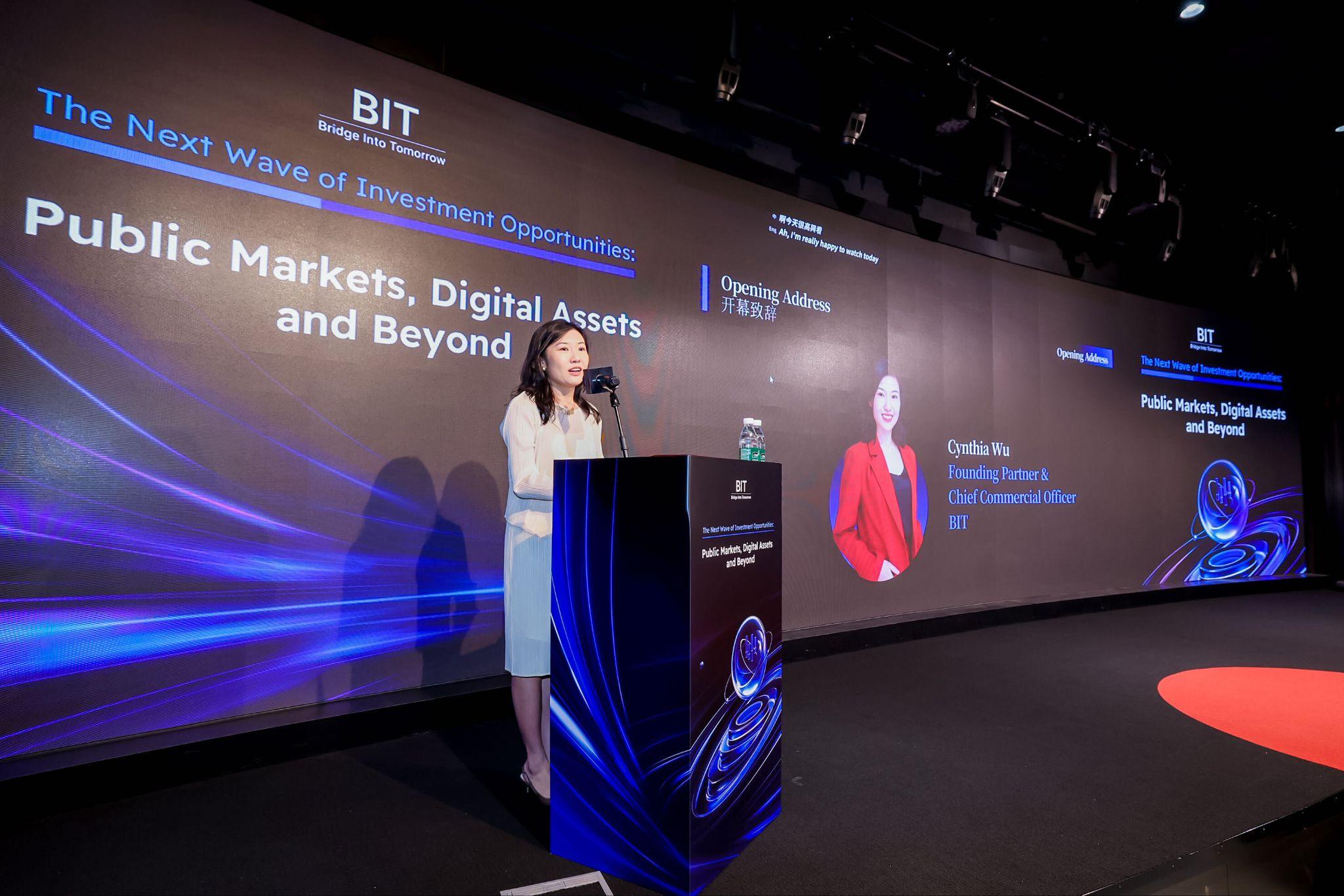
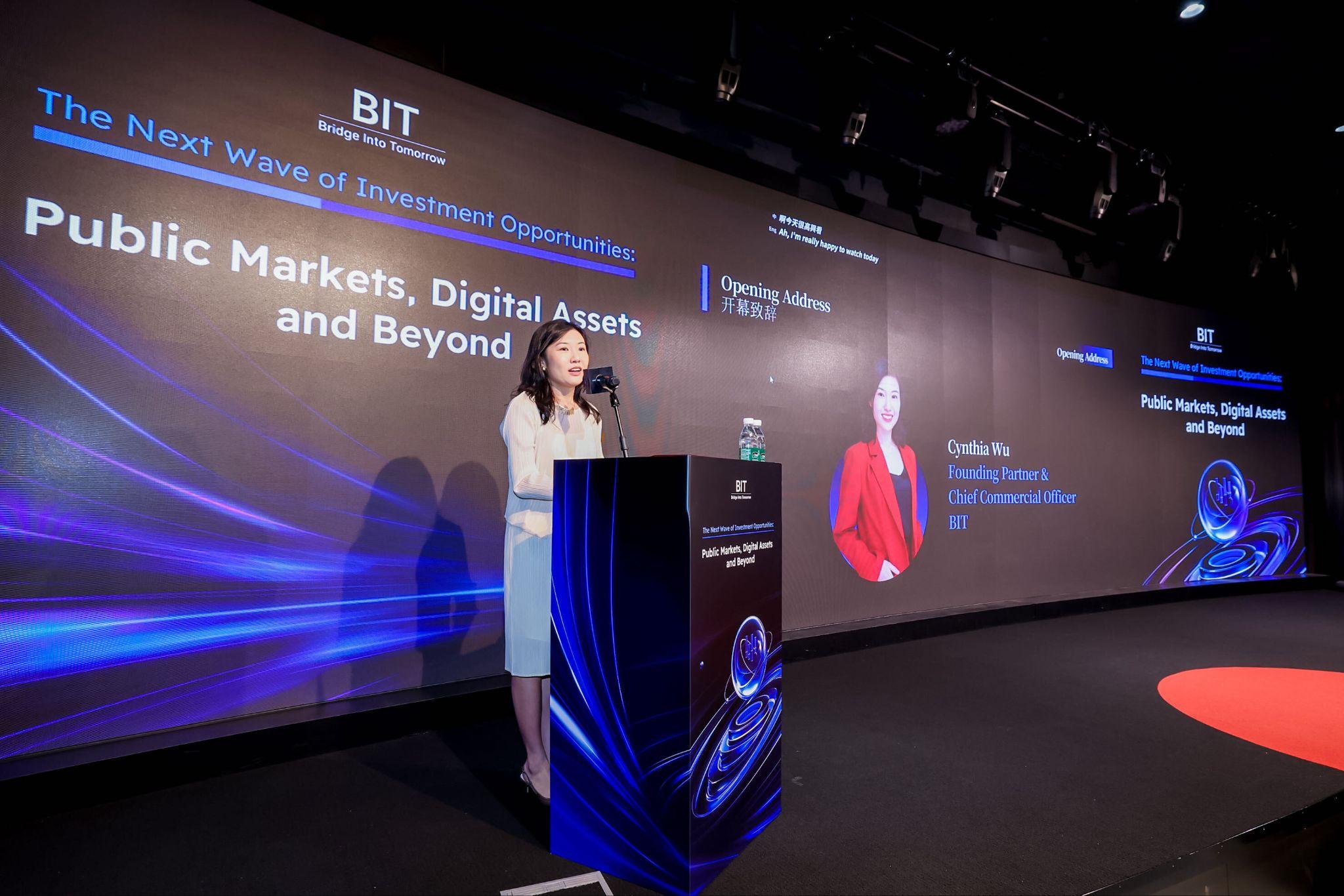
BIT, formerly Matrixport, held an investment opportunity forum in Hong Kong on the afternoon of Aug. 26 during Bitcoin Asia 2026, gathering more than a dozen speakers from institutional investors, family offices, financial commentators, media and academia for discussions on macro cycles and digital-asset allocation. More than 200 investors, institutional representatives and industry participants from Hong Kong and other markets attended.
The event came in a week when bitcoin staged a sharp rebound, briefly rising above $80,000 to a three-month high. That price move set the tone for many of the sessions, with speakers focusing on whether digital assets have moved out of a cyclical trough and entered a new allocation window as liquidity expectations shift and risk appetite improves.
BIT outlines shift toward a multi-asset platform
Cynthia Wu, BIT’s founding partner and chief commercial officer, opened the forum by saying the company has spent more than seven years building around security and risk management while expanding its trading, custody and operations systems. She said BIT’s business has consistently centered on providing long-term, sustainable financial services on a risk-controlled basis.
This year, BIT extended that approach into more asset classes and formally began shifting toward a multi-asset digital finance platform. The company launched U.S. stock spot trading in February, then added margin trading, securities lending and options. Cumulative trading volume for those products has reached about $4 billion, according to Wu. She said BIT also plans to add HKD deposit and withdrawal support and Hong Kong stock trading as it continues building links between traditional finance and digital assets.
Markus Thielen sees a three-way convergence in bitcoin’s cycle
Markus Thielen, a guest analyst at BIT, presented a macro-cycle framework built on bitcoin’s roughly 14-year price history. In addition to the market’s widely cited four-year halving cycle, he pointed to a recurring pattern of about 35 months of gains followed by 12 months of correction.
He said a drop below the one-year moving average has often lined up with bear-market conditions, while a move back above the one-year average and the 21-week moving average, combined with a monthly RSI near cyclical lows, fading demand for put options and a break of a long-term downtrend, has often signaled the end of a correction and the start of a new advance.
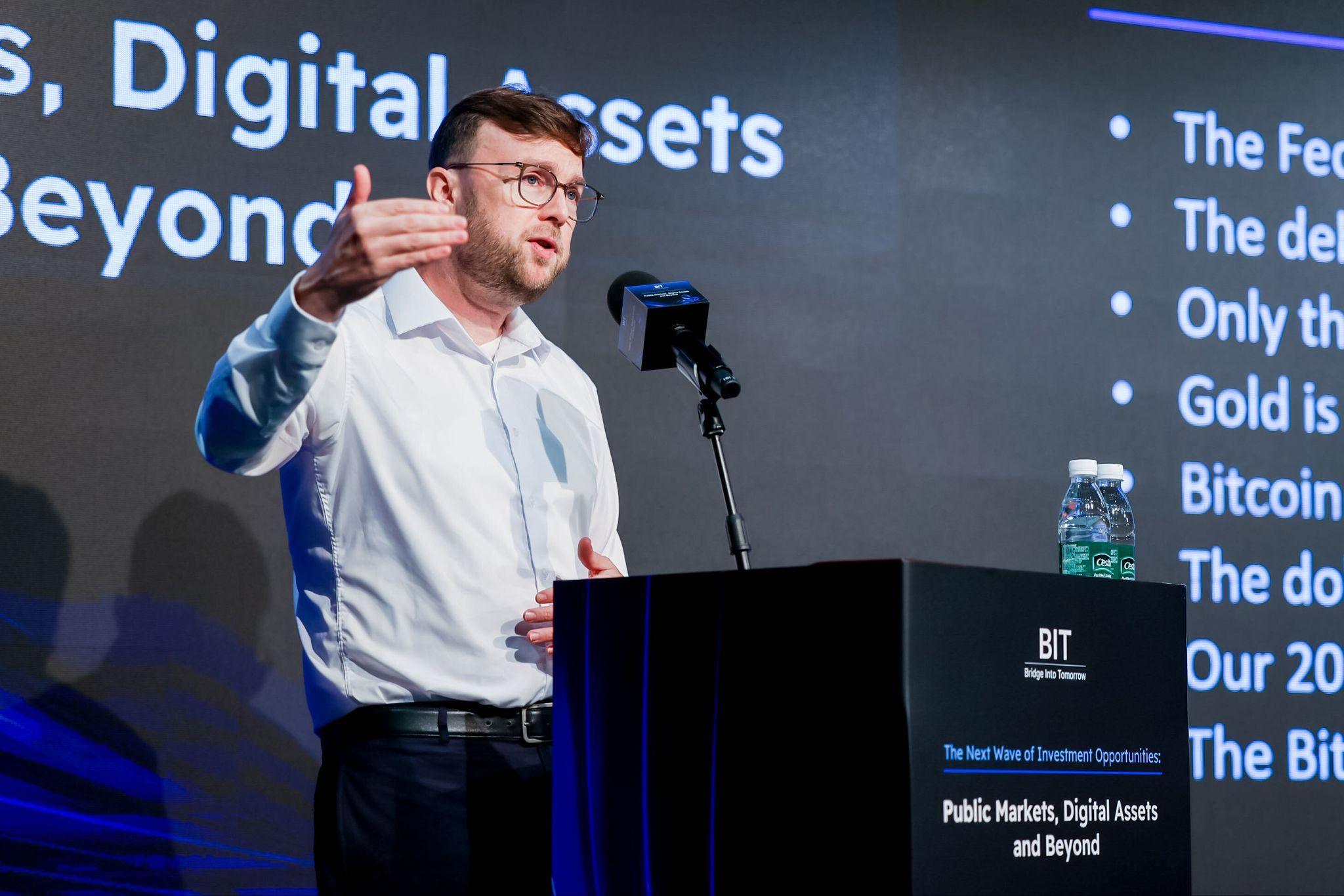
Thielen also argued that bitcoin’s own cycle interacts with a longer debt-and-liquidity supercycle rather than moving in a straight line with it. In his view, U.S. debt levels and bitcoin prices do not rise and fall in lockstep: debt trends shape the long-term slope, the dollar and liquidity shape timing, and bitcoin’s own cycle shapes the pace of rallies and pullbacks.
Based on that framework, he said the market is now at a three-way convergence point defined by continued debt expansion, the end of dollar strength and bitcoin having completed a roughly 12-month correction. He said that points to the start of a new upcycle lasting about two to three years. He also shared what he described as a valuation anchor, saying bitcoin’s fair value would be around $100,000 based on the current size of U.S. debt, leaving the current market level relatively low by comparison.
Panel one: where capital could move if AI valuations are reset
The first panel was moderated by PANews CEO Sunny and featured Elio Cui, head of brokerage at BIT, AVS CEO Ming ZHAO, Crystal He, CEO of Delin Family Office, and Hong Kong market commentator and full-time trader Sunzi Dahu. Their discussion started with pressure on AI giants’ cash flow and whether long-term capital would keep flowing into the sector or begin rotating elsewhere.
One figure framed the discussion: the “Magnificent Seven” lost about $2.4 trillion in market value in June alone this year. Panelists debated whether capital expenditure guidance in AI could slow and whether cash flow can support that level of spending as debt loads keep growing. On a longer technology-cycle view, some described the adjustment as a constructive clearing process closer to the internet-bubble shakeout of 2000 than the end of the sector itself, arguing that the strongest companies are the ones likely to remain.
On allocation, the panel described a split path. Some money is still willing to stay in high-growth sectors such as AI in search of outsized returns. Some is moving toward defensive and more predictable assets, including gold, real-world assets and businesses with stable cash flow, with gold still benefiting from geopolitical uncertainty.
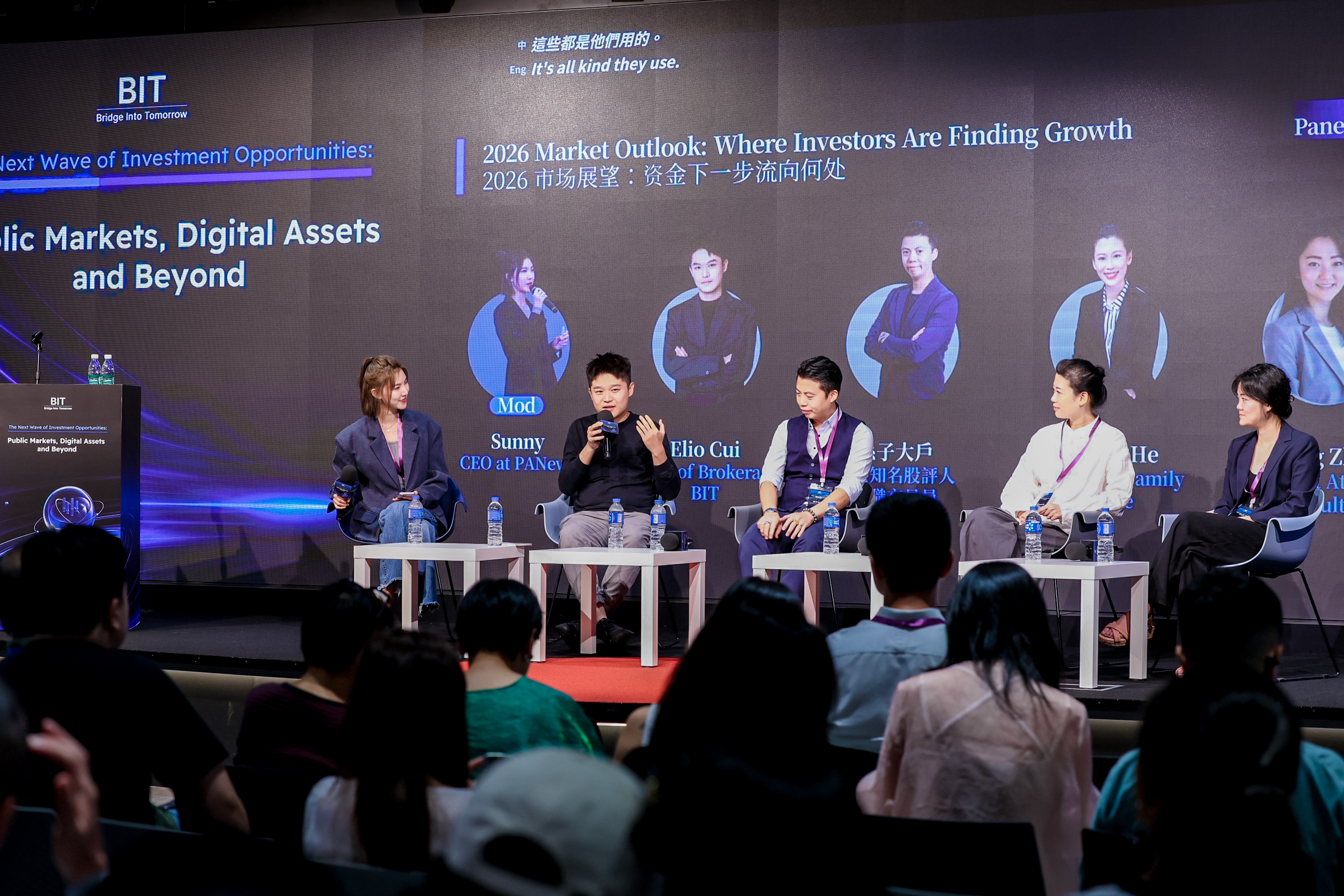
Elio Cui said rising expectations around rate hikes or a turn by the Federal Reserve can shift capital away from highly volatile, high-growth assets toward relatively scarce and more predictable assets such as gold and bitcoin. He said that is why he is focused on gold, BTC, RWA and infrastructure companies with quality cash flow. He also said he sees room for growth in stablecoins and RWA, while adding that the sector still faces a common problem: issuance is large, but trading remains thin.
Crystal He said trillion-dollar institutions such as BlackRock and Franklin Templeton have been building long-term exposure to the theme, but the market still faces four constraints: a narrow set of asset types, weak liquidity, largely single-chain development with limited cross-chain coordination, and a continued need for compliance and policy guidance. Of the $31.4 billion in issuance discussed at the event, about 40% is tied to U.S. Treasuries.
Tokenized U.S. equities draw attention, but depth is still limited
The forum also turned to tokenized U.S. equities, one of the larger segments within RWA issuance. Speakers said the apparent attraction comes from the wealth effect and visibility of U.S. stocks, but the deeper driver is lower access barriers. Tokenization gives users who could not previously open brokerage accounts a way into the asset class.
Industry data cited at the forum showed on-chain monthly trading volume in tokenized U.S. equities reached about $9.22 billion in June 2026, equivalent to roughly $2.1 billion a week. That was still less than one-180th of Nasdaq’s single-day trading volume of about $383.7 billion.
Panelists said lower barriers have not resolved the larger question of whether liquidity and redemption against the underlying shares can hold up under real stress. Investors may only discover the limits when they need to trade or redeem in size and find that the underlying liquidity behind the tokens is not as deep as expected. In that context, access routes directly connected to U.S. capital markets, with genuine underlying inventory and deeper liquidity, still hold an advantage that is difficult to replace in the near term.

Fireside chat: public chains are being judged by records, not stories
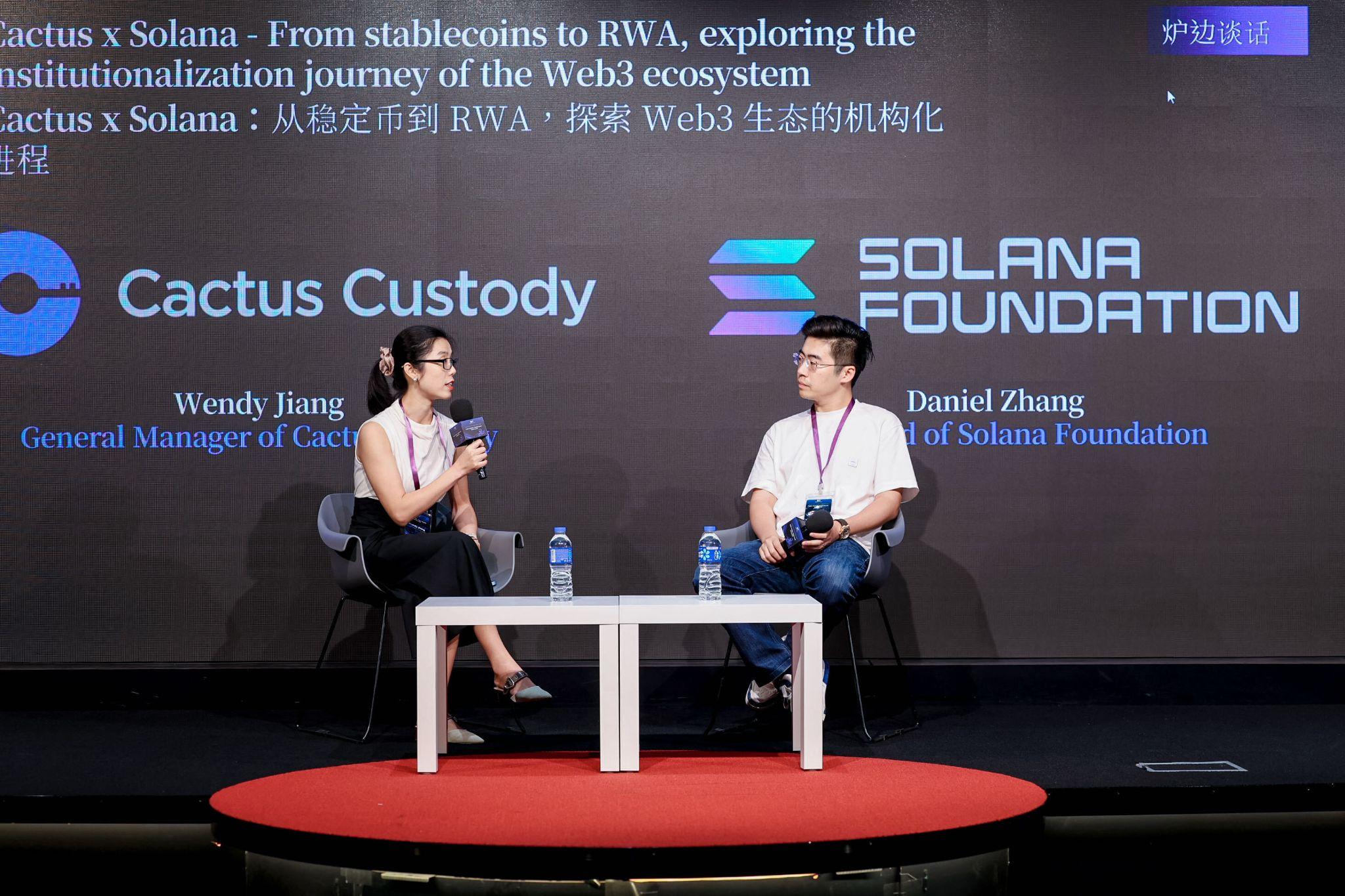
In a fireside chat, Wendy Jiang, general manager of Cactus Custody, and Daniel Zhang, head of the Chinese-speaking region at the Solana Foundation, discussed blockchain ecosystems and the institutional path for stablecoins and RWA.
Daniel Zhang said Web3 is moving out of a phase driven by concepts and narratives and into one led by institutional capital, where trust is built on verifiable records. In that setting, he said, public chains are no longer competing on who tells the most compelling story, but on who can show a security record and real capital activity that stand up over time and under regulation.
He said the Hong Kong Securities and Futures Commission has approved only three spot crypto ETFs so far: BTC, ETH and Solana. He added that the Solana ETF is the first of its kind launched in Hong Kong. Under Hong Kong’s current framework, only a very small number of tokens are available for retail trading, and the public chains realistically positioned to support long-term, large-scale distribution of RWA and stablecoins are down to ETH and Solana.
Zhang also argued that the right way to judge real economic vitality on a chain is not just to look at stablecoin issuance, but also the velocity of funds. By transfer volume, he said, Solana and Ethereum are both in the top global tier.
Wendy Jiang compared custodians to service areas on a major highway. As institutional traffic increases on public-chain infrastructure, she said, the need for dependable support facilities rises as well. Both speakers said the window for new chains has effectively closed and that the track record needed to win recognition from both institutions and regulators is hard for late entrants to replicate.
Panel two: the question is no longer whether to allocate, but how
The second panel was moderated by Megan Xiao, head of structured business at BIT. Guests included TDTC investment director Ding Long, B7 Capital CIO Charles, Fosun Wealth Holdings digital assets director Hu Xuanfeng and Uweb principal Yu Jianing. The session focused on how investors can manage price exposure and use structured tools for multi-asset allocation.
Yu said he has observed students moving from speculation toward multi-asset allocation rather than waiting for “one last dip.” He summarized four allocation themes: “carbon-silicon symbiosis, life extension, quantum leap and deglobalization.”
Hu said crypto assets are shifting from speculative concepts toward containers for bringing traditional assets on-chain, and that institutional-grade custodians are a critical piece of infrastructure for institutions that want direct exposure to global assets.
Charles approached the issue from a quantitative-trading perspective. He said crypto strategies may show a higher Sharpe ratio than traditional markets, but they are less stable. As more market makers and institutions enter, arbitrage returns are being compressed, and high-frequency capacity is limited. In his view, the period when a single directional strategy could easily win is fading, and asset allocation should keep some stable-return products that are not correlated with beta rather than placing all exposure on the coin price itself.
Ding Long said from the industry side that “mining as asset production” and “balance sheet management” are two different things. Miners need to assess the stability of power supply, he said, but they also need structured products from platforms such as BIT to manage and improve cash flow.
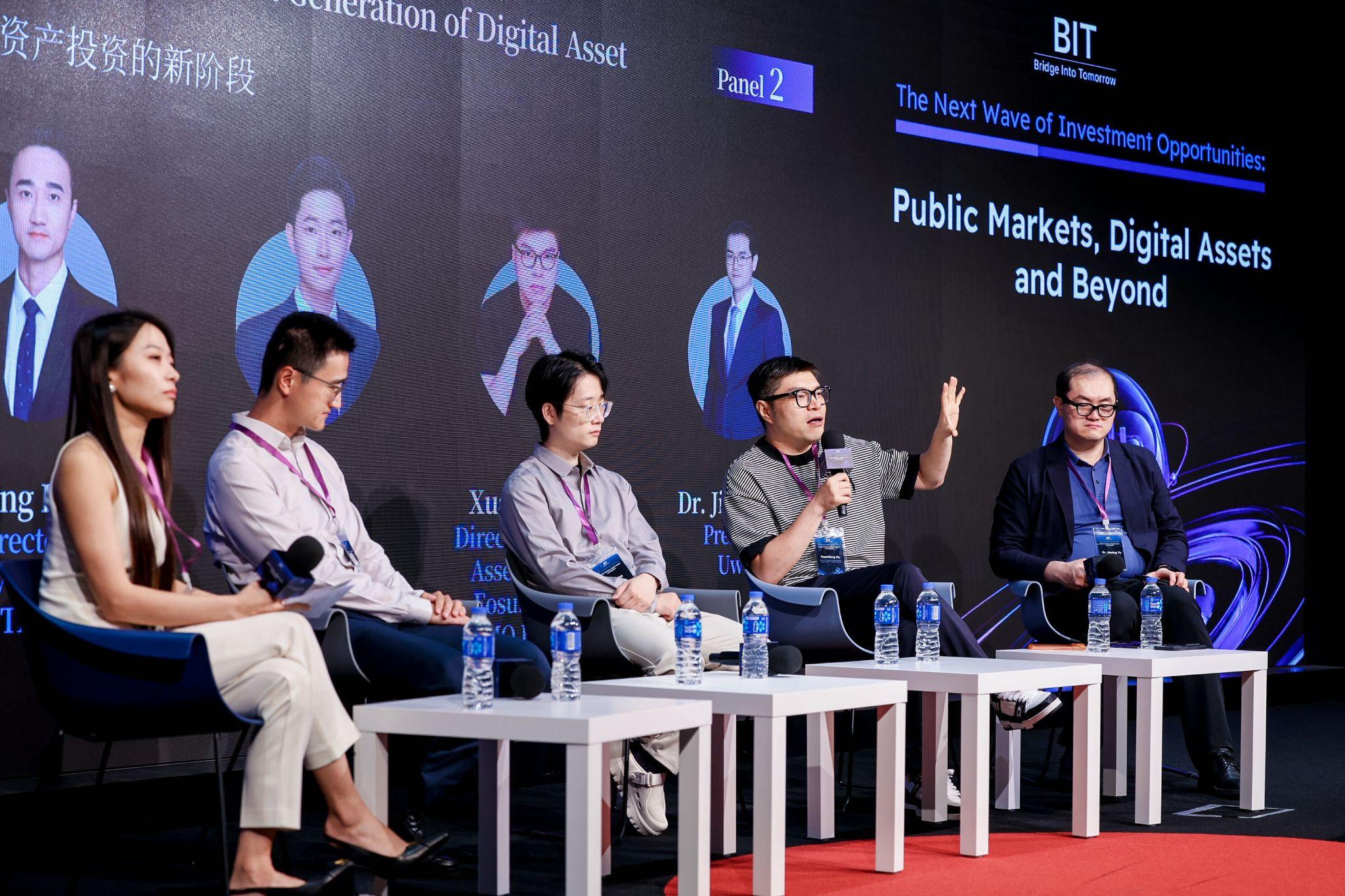
Megan Xiao said in closing that digital-asset allocation is no longer a simple Buy & Hold exercise. She described it as a dynamic management process built around structured tools, where identifying the trend matters, but choosing the right tool and execution path determines whether investors can ride through the cycle. She said BIT’s structured products package volatility management and yield-enhancement strategies into products that can make institutional-style payoff structures more accessible.
Closing conversation: Phyrex on the Fed, bitcoin above $80,000 and leverage
The forum’s final segment featured a conversation between Elio Cui and Phyrex, a well-known Web3 KOL and analyst focused on on-chain data and macroeconomics.
On the policy path for the Federal Reserve and the U.S. Treasury in the second half of the year, Phyrex offered a view he said differs from the mainstream expectation. He expects the Fed to stay on hold this year, saying it will “neither raise rates nor cut rates.” He framed that view through factors closer to the real economy: supply-chain transmission from oil prices, the drag from deportation policy on employment data, and a U.S. debt burden that is already too high to withstand further tightening. He also said the new Fed chair has quietly scrapped forward guidance.
Asked why bitcoin suddenly moved above $80,000 in recent days, Phyrex said trading volume in this rally has not been especially high. A more accurate description, he said, is that fewer people are selling while more people are buying, creating a supply-demand imbalance that pushed prices up without an explosive wave of new money entering the market.
On where the cycle bottom may sit, he said the base structure is largely in place. Even if the market retests lower levels, he said the likely range is around $57,000 to $58,000, with a break below $51,000 looking unlikely. He tied that view to spot bitcoin ETF flows and institutional positioning: ETF flows have shifted from earlier net outflows to sustained net inflows, most high-net-worth institutions and listed companies that hold bitcoin have not materially reduced positions in recent months, and some institutions that had previously cut exposure have stopped selling and stabilized.

On the question of whether young people should use leverage, Phyrex said he would not lecture from above. For young investors with limited capital, he said, leverage can be one of the few practical ways to amplify returns within their risk tolerance. The real issue is not whether to use leverage, but whether they can preserve the ability to stay in the game over time. He also said he has been using options leverage and margin tools on BIT’s U.S. equities platform to dollar-cost average into index ETFs such as VOO and QQQ, adding that BIT’s leverage settings allow him to improve capital efficiency.
About BIT
BIT, formerly Matrixport, was founded in 2019 and is headquartered in Singapore, with offices in seven countries and regions. The company describes itself as a global digital-asset financial services group connecting traditional finance and digital assets through governance, technology and compliance operations.
BIT provides trading, custody, asset management, liquidity and financing services for institutions and professional investors, while also supporting the on-chain introduction and use of real-world assets. Entities under the group hold licenses and operate under regulation in Singapore, Hong Kong, Switzerland, the U.K., the U.S. and Bhutan, including a Major Payment Institution license in Singapore and a collective asset management license issued by Switzerland’s FINMA.
BIT said it currently has more than $6 billion in assets under management, over $7 billion in monthly trading volume, more than $2 billion in cumulative interest paid to clients, and a valuation above $1 billion. The company said it was included in the Hurun Global Unicorn Index 2024 and the Singapore Fintech Unicorn list for 2025.
The original article carried a disclaimer saying markets involve risk, investors should act with caution, and the article does not constitute investment advice.