
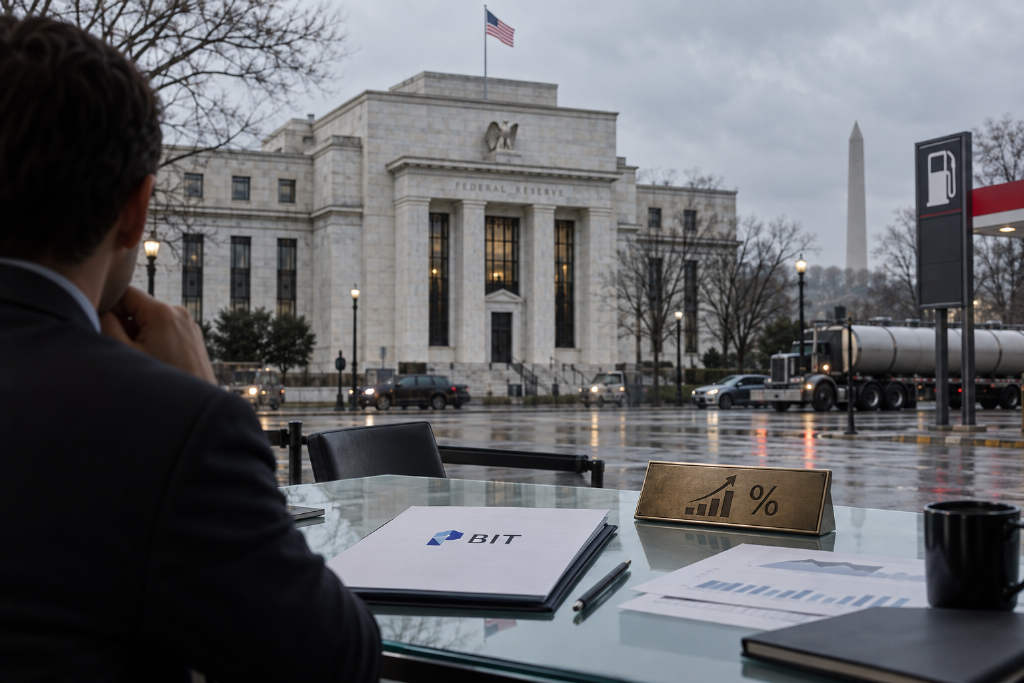
BIT Research said the Federal Reserve has formally begun a new hiking cycle, and the market focus has shifted from whether rates would rise to how many more increases may follow. The latest rate projections show that most officials still expect additional hikes this year, while markets have already priced in roughly three more moves. At the same time, oil has climbed back toward $100 a barrel, with higher energy and transportation costs becoming a major driver of recent inflation pressure.
This tightening backdrop looks different from 2022
According to the report, the current setup differs sharply from 2022. Back then, markets had already priced in eight rate hikes before the Fed even started tightening. This time, the market had priced in about 3.8 hikes before the first move. BIT Research said the more important distinction is that inflation pressure is now concentrated in supply-side factors such as oil prices, while core CPI excluding energy is still falling on a year-over-year basis and has not shown clear broad-based spillover.
Stocks often come under pressure in the first three months after the first hike
Looking back at previous Fed hiking cycles, U.S. equities usually remained relatively firm in the first week after the initial rate increase, then started to pull back. On average, the S&P 500 fell about 2.5% after one month, 5% after two months, and 5.4% after three months. From the fourth month, the market typically began to recover, and by the sixth month it had turned slightly positive.
In five previous hiking cycles, four saw the S&P 500 trade above its starting point one year after the first hike. The report described 2022 as the clear exception. In that cycle, markets had priced in aggressive tightening in advance, and the S&P 500 fell 8.5% over the following six months and was still down 7.1% after 12 months.
BIT Research said the gap between market expectations for future hikes and the Fed's policy path is smaller this time. Combined with inflation pressure that is more concentrated in oil and other supply-side factors, the current cycle looks closer to a relatively orderly repricing centered on oil and the bond market, rather than a sharp 2022-style tightening shock.
Historical data showed gains for gold and Bitcoin after six months
Historical data cited in the report showed that six months after the first hike, the median return for U.S. equities was +1.7%, largely recovering the earlier drawdown. Gold rose 11.5%, Bitcoin gained 7.9%, bond yields increased by 44 basis points, and the U.S. dollar weakened. On that basis, BIT Research said markets may not remain under pressure from the Fed's hawkish stance for an extended period. The more important question is the path of future hikes and whether inflation pressure starts to ease.
Oil and the midterm elections are the key variables for the next six months
The report said oil remains one of the biggest swing factors. If energy prices keep rising and spread into other inflation components, the Fed may need to maintain a stronger tightening stance. If oil peaks and turns lower while core CPI continues to improve, the central bank would have more room to slow the pace of hikes.
The U.S. midterm elections could also affect market direction. The report cited prediction market pricing that implied about a 61% probability that Democrats would control both the Senate and the House. If oil prices begin to fall after the election, that could remove one important source of market volatility.
The first month after liftoff is a key observation window
BIT Research said the current hiking cycle is materially different from 2022 because the market's expectations for future tightening are closer to the Fed's projected path, while recent inflation pressure is more concentrated in energy. Historical performance suggests the first month after the initial hike is an important window to watch. If risk assets remain relatively stable during that period, drawdowns in the second and third months are often more limited, with markets typically starting to recover from month four and turning positive by month six.
The report added that oil prices and the midterm election outcome will be the two main variables to watch over the next six months. If oil retreats, the Fed would gain more room to slow the pace of hikes. Historically, a slower hiking path has tended to be more supportive for stocks, gold, and Bitcoin, while putting pressure on the U.S. dollar.
Some of the views cited in the article came from BIT on Target. The original piece also included a disclaimer saying the content does not constitute investment advice and that digital asset trading may involve significant risk and volatility.