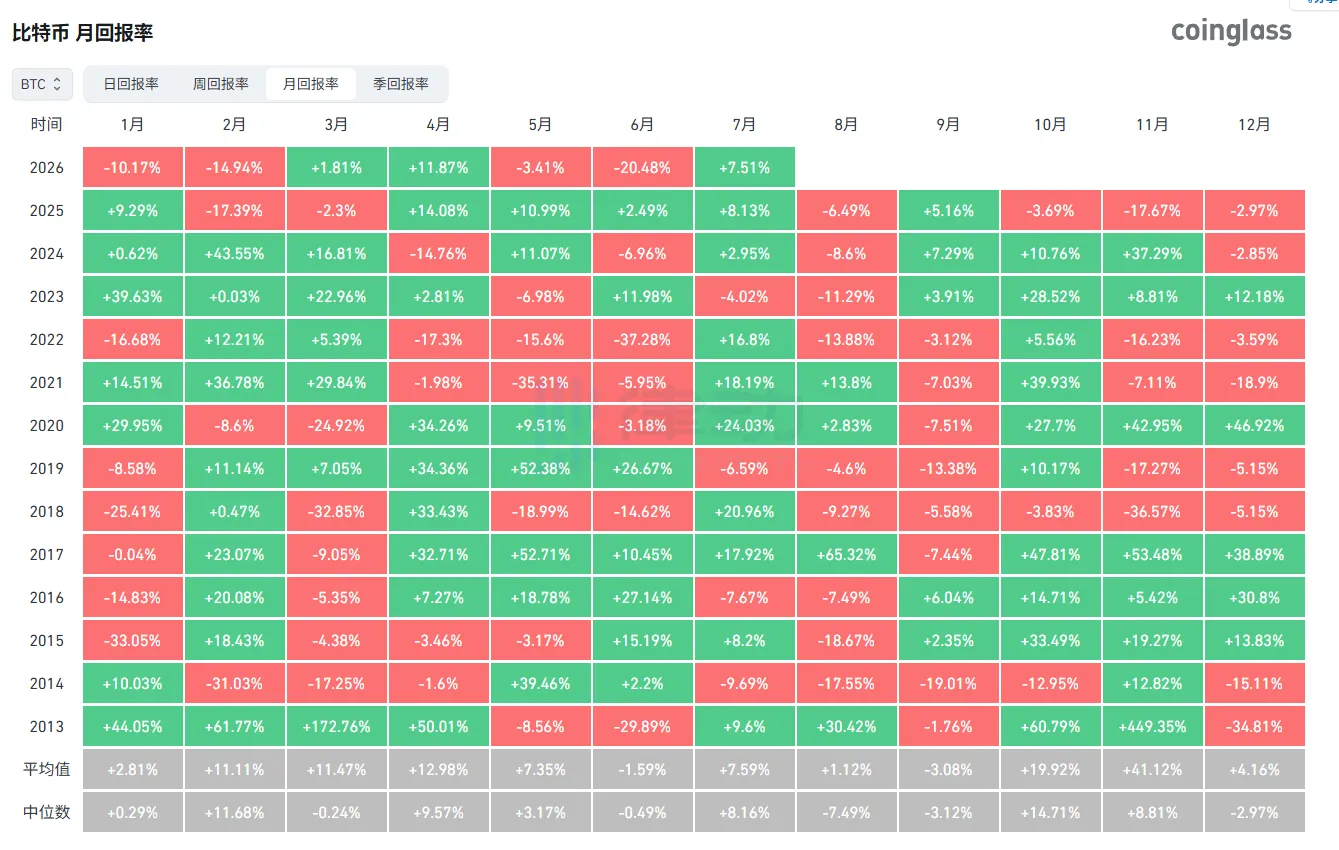
Bitcoin closed July with a 7.51% monthly gain even after dropping more than 3% on the final day under what BlockBeats described as the "FOMC curse." Looking ahead to August, the historical record has been weaker. Since 2013, Bitcoin has gone through 13 August trading periods, finishing lower in 9 of them and higher in 4. While the average return for the month stands at 1.12%, the median return is notably lower at -7.49%, pointing to a tendency for weaker August performance despite a few strong upside outliers. The best August in the sample came in 2017, when Bitcoin rose 65.32% for the month. The worst August was in 2015, when it fell 18.67%. The figures were cited by BlockBeats in a market update published on Aug. 1.
Bitcoin was broadly steady through July, and still posted a 7.51% gain for the month, even after falling more than 3% on the final day in a move BlockBeats linked to the "FOMC curse."
August has been a weaker month historically
According to BlockBeats, Bitcoin has recorded 13 August trading periods since 2013. Of those, 9 ended in decline and 4 finished with gains.
The average return for August was 1.12%, but the median return came in at -7.49%.
The strongest August in the dataset was August 2017, when Bitcoin rose 65.32% over the month. The weakest was August 2015, when it fell 18.67%.
This article was originally published by Bit.Fan. For more cryptocurrency news and market insights, visit www.bit.fan. Disclaimer:
The market information, project data, and third-party content displayed on this platform are for industry information sharing only and do not constitute any form of investment advice or return commitment.
Cryptocurrency trading carries high risks. Users should fully assess their risk tolerance and make independent decisions. All profits, losses, and legal responsibilities are borne by the users themselves.