

Bitcoin approaches a first in its trading history
Bitcoin is nearing a historical first that would mark a break from its record of annual returns: two consecutive calendar years of losses.
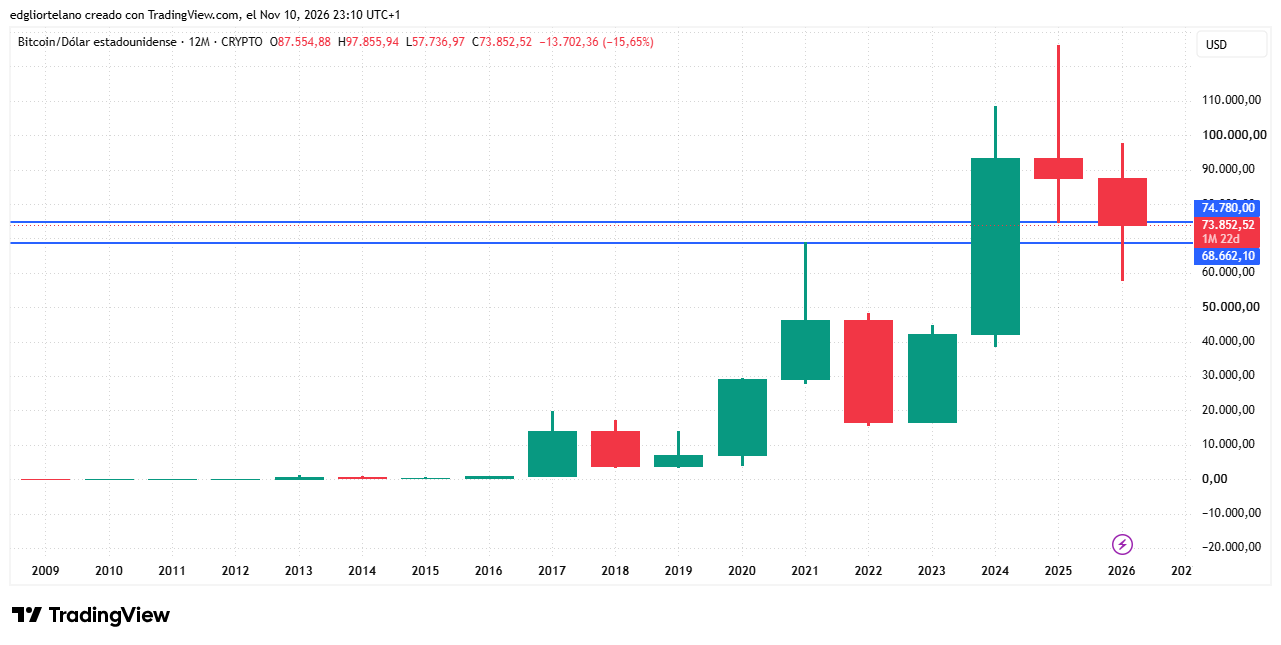
The largest cryptocurrency ended 2025 down 6.34%. Through November 10, 2026, it had fallen another 15.65% and was trading at about $73,850. Bitcoin opened 2026 at roughly $87,500. If it does not recover that level before December 31, the asset will finish two straight calendar years in the red for the first time in its 18-year history.
Bitcoin has suffered several severe crashes since its creation, but each previous negative calendar year was followed by a positive one. Even the bear markets of 2018 and 2022 did not produce back-to-back annual losses.
The current streak is mild by comparison
A two-year losing sequence does not necessarily describe the scale of the damage. Bitcoin’s earlier annual crashes were far more severe than its current decline. The cryptocurrency plunged 73.56% in 2018 and fell another 64.27% in 2022, wiping out most of the value held by investors during each year.
Bitcoin’s 6.34% decline in 2025 was relatively modest by comparison. Adding the roughly 16% decline recorded in 2026 produces a combined loss of approximately 21% after compounding.
That is only a fraction of the losses recorded during previous crypto winters, even if Bitcoin ends up posting a longer run of negative annual returns. The 2024 result also changes the picture for investors who measure their position from the start of that year. Bitcoin rose more than 120% in 2024, so a buyer who entered at the beginning of the year would still hold substantial gains after the later decline.
A peak-to-trough measure tells a harsher story
The picture becomes considerably different when losses are measured from the market’s actual peak rather than from one calendar-year opening price to the next.
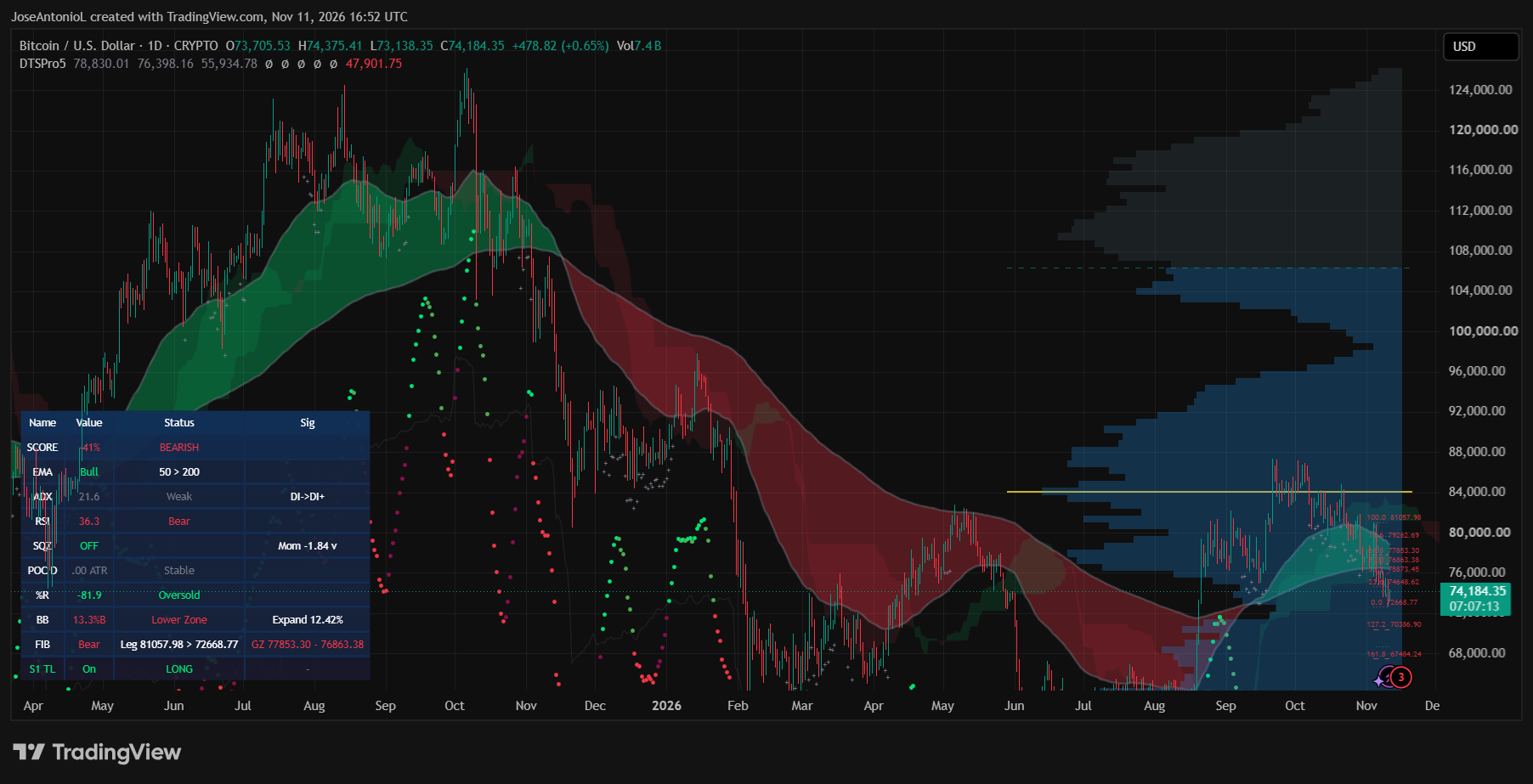
Bitcoin reached approximately $126,000 in October 2025 before dropping below $58,000 during 2026. That represents a decline of more than 50%, making the move significantly more painful than the roughly 21% combined loss shown by the two annual candles.
The report points to Bitcoin’s expanding institutional investor base, spot exchange-traded funds and deeper market liquidity as possible explanations for comparatively smaller bear-market drawdowns.
Those structural changes may help explain why the current market cycle differs from earlier ones. They have not removed the possibility of major price crashes.
Duration and severity are separate measures
The length of a losing streak is not the same as the severity of the losses. A market can decline gradually across several calendar years without causing the damage associated with one catastrophic annual selloff.
Bitcoin has also shown that a bad year does not automatically lead to a prolonged downturn. After its 2018 collapse, the cryptocurrency gained roughly 92% in 2019. Following its disastrous 2022 performance, it surged more than 155% in 2023.
Bitcoin has 50 days left in 2026 to avoid its first back-to-back annual losses. A decline in 2027 would extend the run to a third consecutive year, but that remains hypothetical.
At the November 10 price of approximately $73,850, Bitcoin would need to gain about 18.5% to recover its 2026 opening price and finish the year in positive territory.



