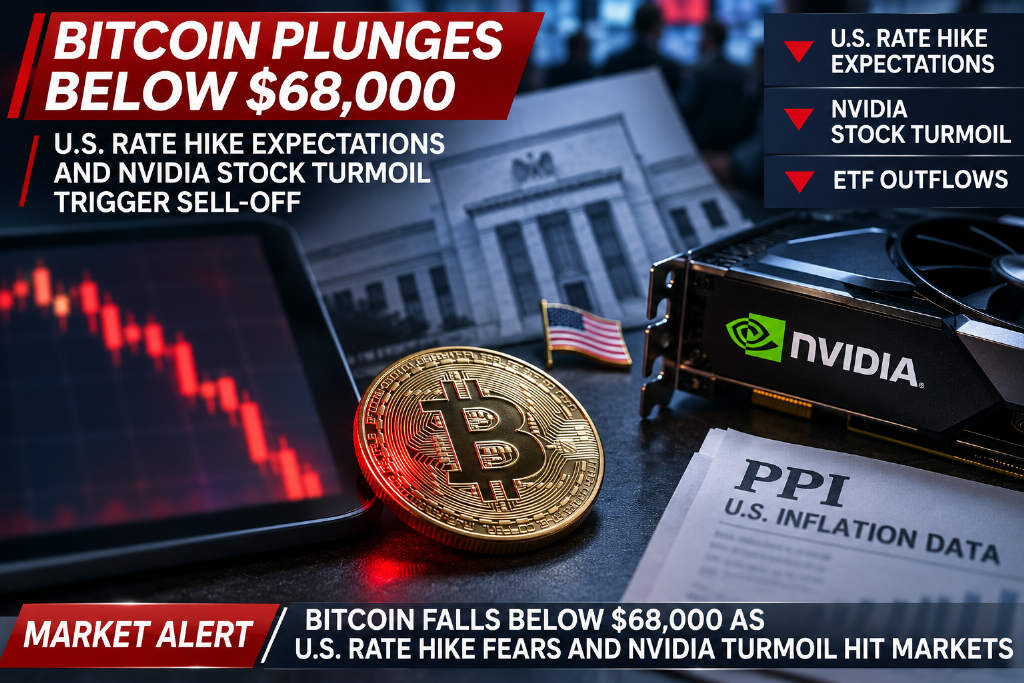
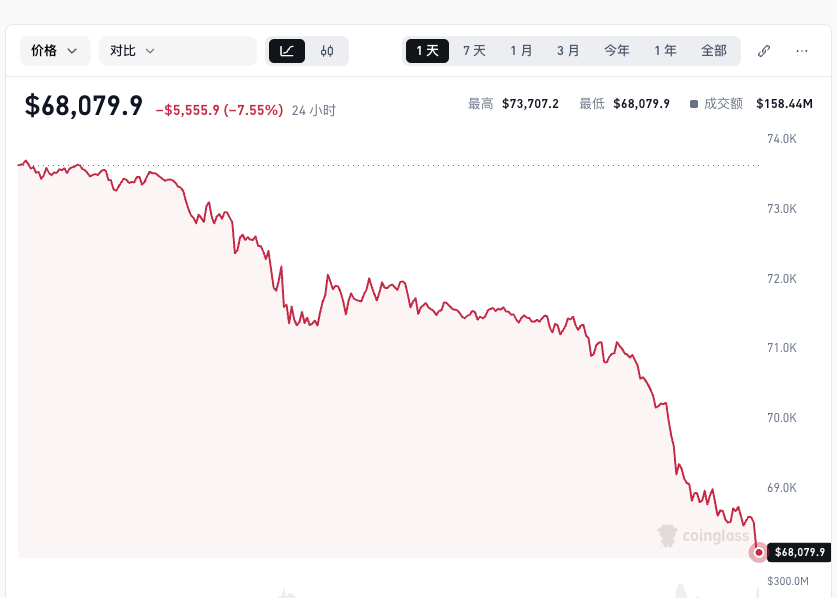
Bitcoin fell below $68,000 on November 13, less than 10 days after trading above $80,000. CoinGlass data put the token at about $68,079 around midday, down roughly 7.55% over 24 hours, after touching a low of $67,568. Bitcoin reached $87,392 on September 21; at the quoted price, it had fallen more than 20% from that high.
The decline followed a sharp move in Nvidia shares. The night before, the company’s founder, Jensen Huang, resigned as chief executive. Nvidia fell as much as about 14% intraday after the announcement. Its losses narrowed by the US close, but Bitcoin continued lower early on November 13, bringing the $70,000 level into focus.
Farside Investors had published partial flows for US spot Bitcoin exchange-traded funds (ETFs) on November 12. Bitwise’s BITB recorded a $26.4 million net outflow, while ARK and 21Shares’ ARKB saw $18.5 million leave. Data for BlackRock’s IBIT and other funds had not yet been released, so the full daily net flow could not be calculated.
Nvidia news and rate expectations weigh on risk assets
Nvidia announced late on November 12 that Huang was stepping down as president, chief executive and a director. Chief Financial Officer Colette Kress was named interim chief executive. Nvidia shares closed down about 4.3%. The Associated Press reported that, as of the November 12 close, the stock was 30.5% below its record high set on October 6.
US stocks fell after the open before paring losses. The S&P 500, Nasdaq Composite and Dow Jones Industrial Average each ended the session down about 0.4%. The VIX, a measure of expected US equity volatility, rose about 6.9% to close at 18.70.
Bond yields were another factor for technology shares. The US 10-year Treasury yield rose to 5.12% on November 12, up from 4.98% at the previous bond-market close. Higher borrowing costs can raise the financing burden for companies investing in data centers and affect how investors value future earnings. After US October inflation came in above expectations, bets on a Federal Reserve rate increase in December strengthened.
Bitcoin has shown some connection with US technology stocks in recent trading. Bitcoin services provider Swan calculated, using data from Coin Metrics and the Federal Reserve, that the correlation between Bitcoin’s daily returns and the Nasdaq 100’s over the 90 trading days through November 11 was 0.48, indicating an overall positive relationship.
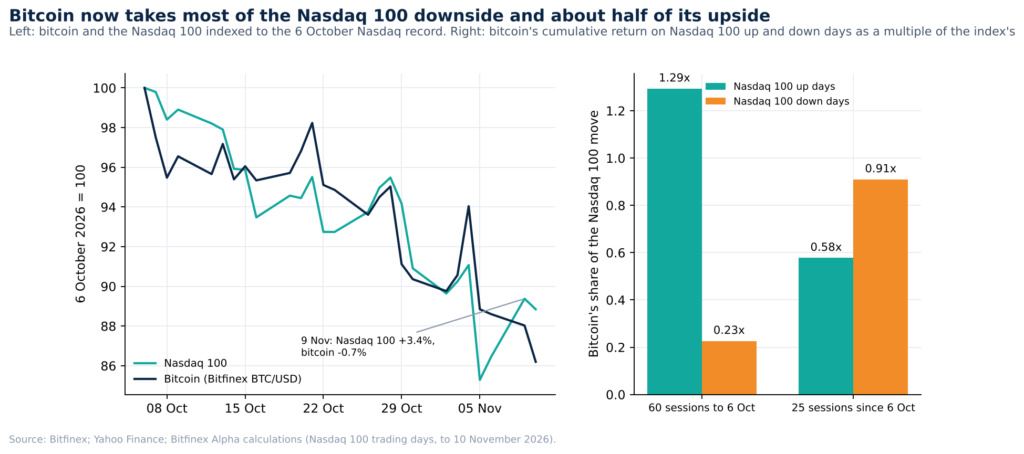
In a November 11 report, crypto exchange Bitfinex compared the 25 trading sessions after the Nasdaq 100 set a high on October 6. On days when the index fell, Bitcoin’s decline was equivalent to 91% of the Nasdaq 100’s loss. On days when the index rose, Bitcoin’s gain equaled 58% of the index’s advance.
On November 9, the Nasdaq 100 gained 3.4%, while Bitcoin fell 0.7% from its close on the previous US trading day. Bitfinex said weaker ETF and corporate treasury buying left Bitcoin without additional demand during the equity rally. When risk assets weaken, liquidations of leveraged longs can add to pressure on crypto markets, the firm said.
Long liquidations mount as futures open interest remains elevated
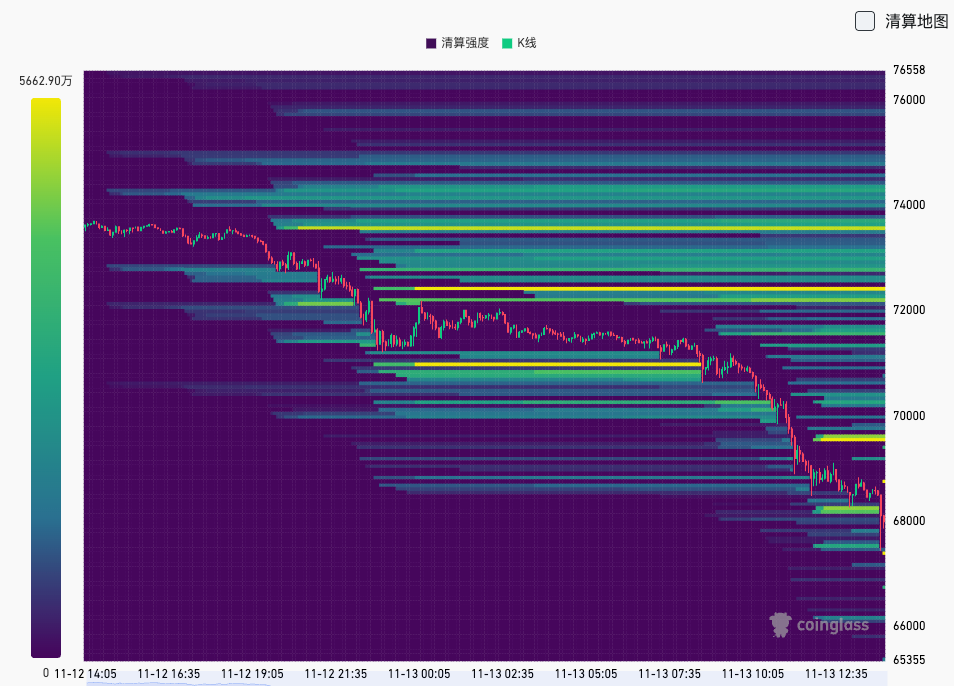
CoinGlass data showed about $1.623 billion in liquidations across the crypto market during the 24 hours through roughly 2 p.m. on November 13. Long positions accounted for about $1.459 billion and shorts for about $164 million. More than $901 million in long positions were liquidated in Bitcoin futures markets.
Despite the liquidations, the dollar value of Bitcoin futures open interest remained around $50 billion. CoinGlass put it at about $50.44 billion around 10 a.m. on November 13, down 1.28% over 24 hours. Measured in Bitcoin, however, open interest rose 2.66% over the same period.
The liquidation heatmap showed relatively few liquidation positions remaining below the market.
Options expiry, US PPI and Fed rate bets in focus
Bitcoin traders also faced an options expiry. Data from Deribit compiled by PerpFinder showed that options with a notional value of about $2.36 billion were due to expire on November 13. As of early morning, the ratio of put to call open interest was about 0.48. The contracts were scheduled to expire at 4 p.m.
The United States was due to release its October Producer Price Index (PPI) later that day. CME FedWatch data available on the morning of November 13 showed an 85.5% market-implied probability of a 25-basis-point Fed rate hike in December and a 14.5% probability of a 50-basis-point increase. The probability of a 50-basis-point move had been zero a week earlier. A further rise in producer prices could prompt markets to revise rate expectations, while cooler data could ease some concerns about monetary tightening. Traders were also watching activity around $70,000, complete US spot Bitcoin ETF flow data and Nvidia’s quarterly results, scheduled for early November 18.
Binance futures deleveraging and shrinking stablecoin supply
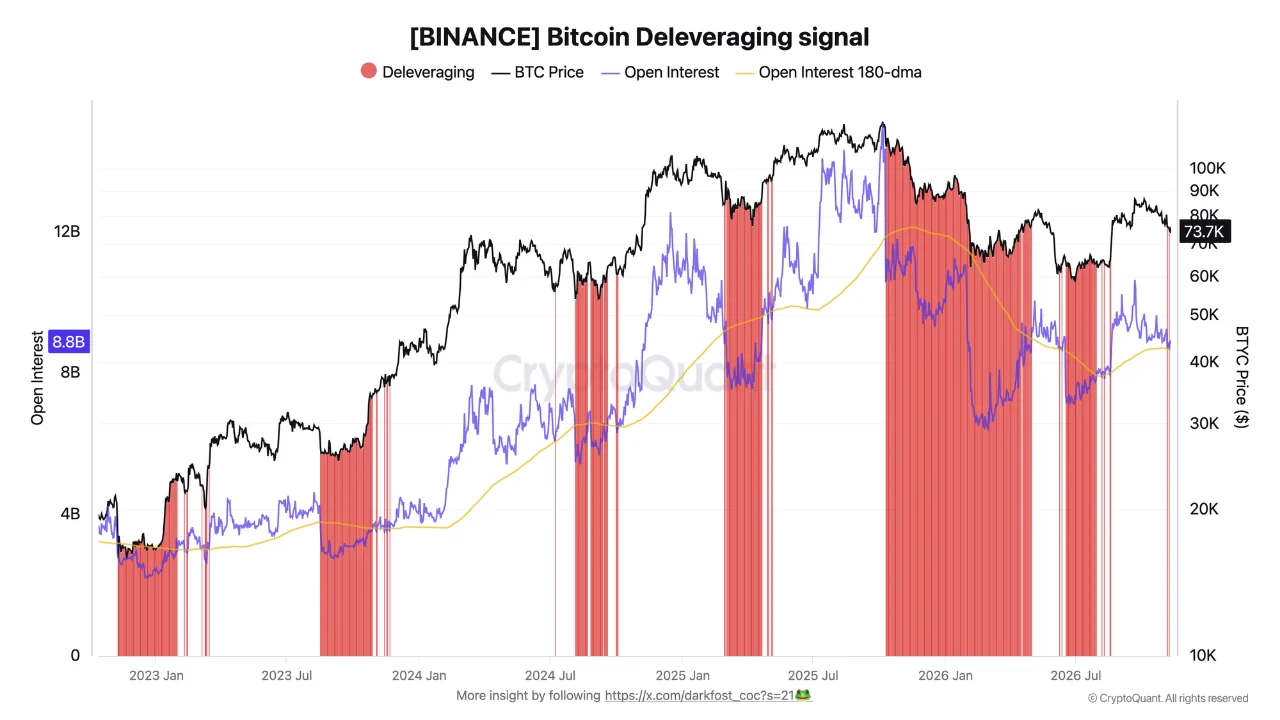
CryptoQuant analyst Darkfost said the dollar value of open interest in Binance Bitcoin futures had fallen from $10.6 billion to $8.8 billion in less than a month, a decline of about 17%. Open interest can fall when traders close positions voluntarily or when positions are forcibly liquidated.
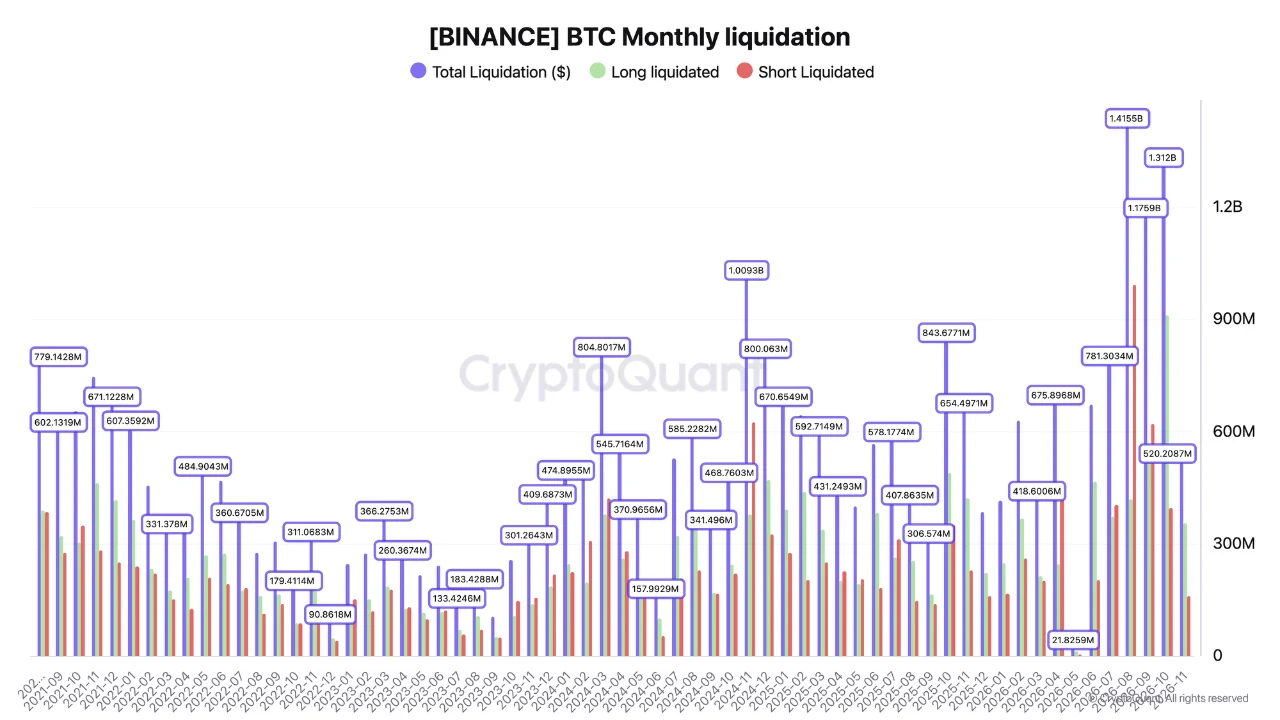
Bitcoin futures liquidations on Binance exceeded $1.4 billion in August, reached about $1.1 billion in September and about $1.3 billion in October. Darkfost’s tally showed that liquidations on the exchange had already surpassed $520 million in November by the time the analysis was published.
Darkfost said lower leverage can reduce the risk of cascading liquidations and leave spot buying with greater influence on price. A similar deleveraging signal appeared in June this year, when Bitcoin traded below $60,000 before later rebounding above $87,000. He also cautioned that deleveraging can continue for months during a bear market.
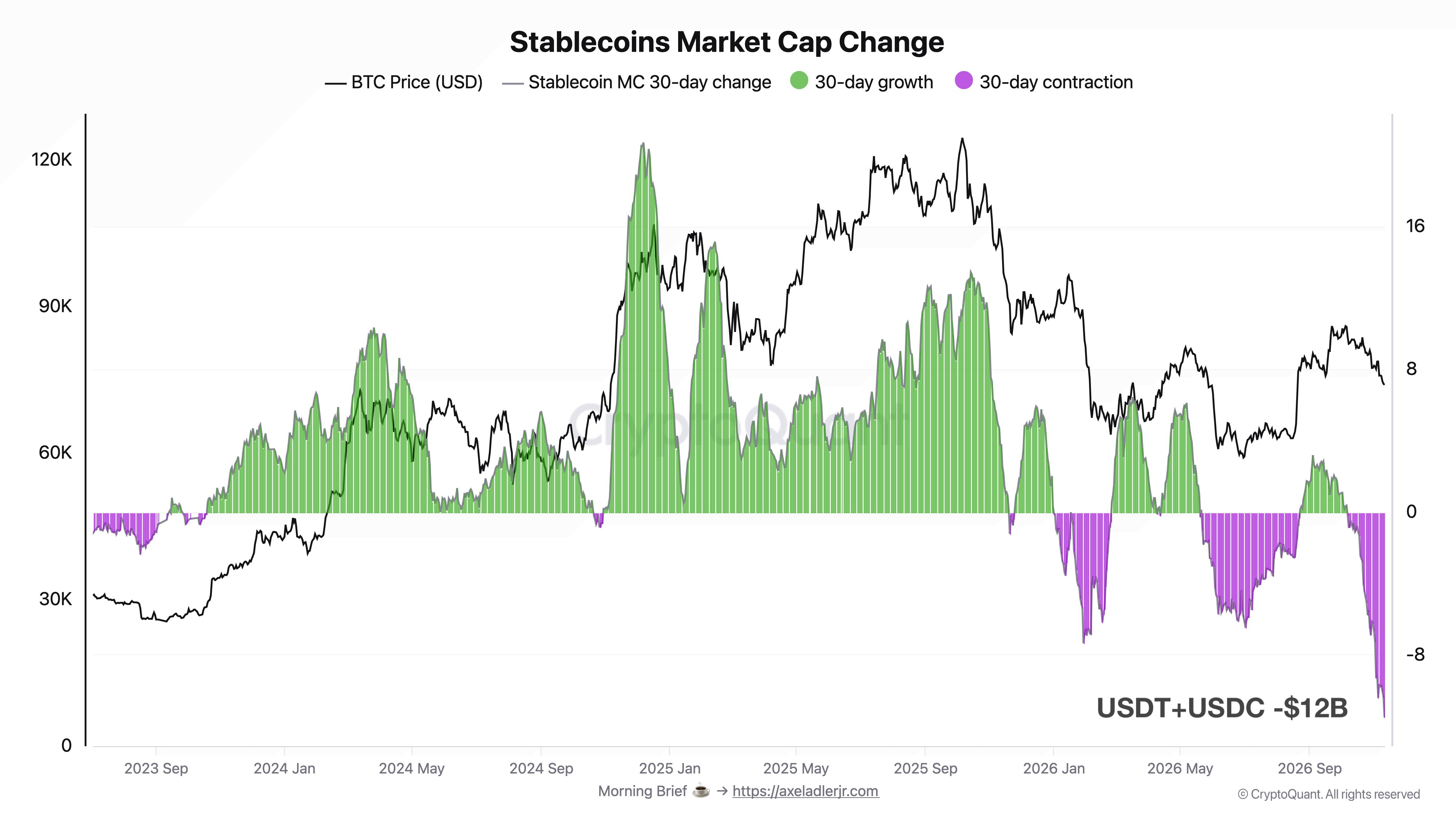
Spot-market funding presents another headwind for a recovery. A CryptoQuant chart showed that the combined market capitalization of USDT and USDC had fallen by nearly $12 billion over the previous 30 days. The pool of dollar liquidity was contracting, weakening the outlook for a recovery.
This article is not investment advice. Crypto markets carry risk. Readers should assess whether any views or conclusions discussed here suit their circumstances and bear responsibility for investment decisions made on that basis.