Bitcoin fell below $74,000 after the release of U.S. October inflation data, dropping more than 3% during the day and reaching roughly $73,200. The hotter-than-expected figures weakened expectations for Federal Reserve easing and put broad pressure on crypto markets.
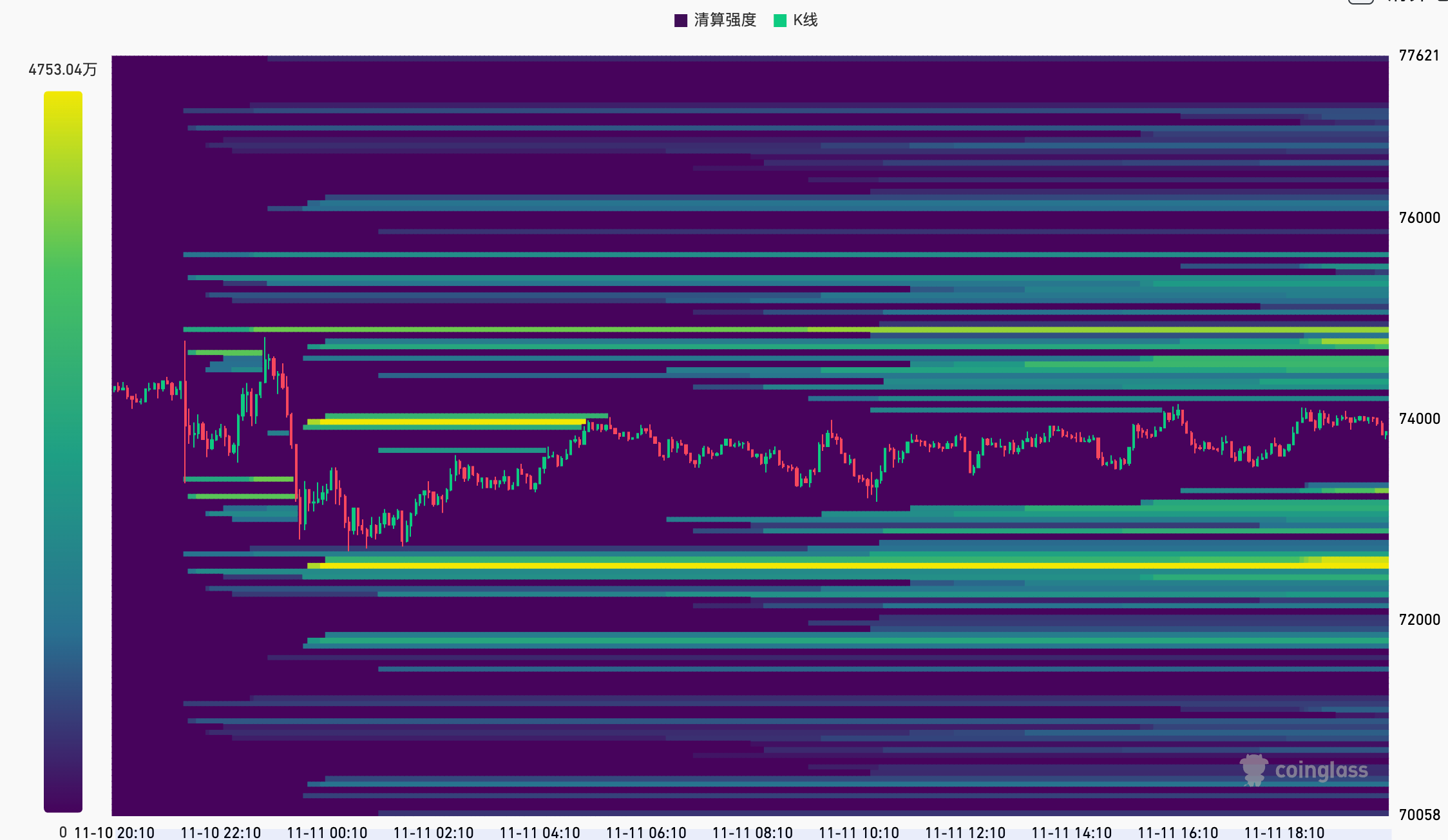
According to The Block, Bitcoin slid rapidly from its intraday high, breaking through the $75,000 and $74,000 levels in succession. Coinglass data showed total liquidations across crypto assets reached $184 million over the past four hours, with long positions accounting for more than 82% of the total.
CME FedWatch pricing showed that traders cut the implied probability of a 25-basis-point Federal Reserve rate cut in December to 56% after the CPI release, from 81% the previous day. Pricing for a pause, or for rates to remain high for longer, rose at the same time.
Core inflation weakens rate-cut expectations
Data from the U.S. Bureau of Labor Statistics showed October CPI rising 2.6% year over year, in line with the rebound trend. The monthly reading and core inflation, though, both came in above market expectations. The figures pointed to continued resilience in services and housing costs, disrupting the market’s earlier expectation of steadier inflation.
Bloomberg reported that the U.S. Dollar Index, or DXY, jumped nearly 40 points in the short term after the inflation data was published. The 10-year Treasury yield quickly approached 4.45%, a high for the current period. Reuters, citing analysts, said that when Treasury risk-free yields remain elevated and continue to strengthen, rate-sensitive assets such as cryptocurrencies and growth technology stocks come under pressure first, with capital moving toward defensive positions.
Bitcoin had previously held at elevated levels with support from institutional funds. The inflation release weakened expectations for continued monetary easing and rapidly reduced the easing premium created by rate-cut bets. Traders who chased the market at high levels were also exposed to direct pressure from the unwinding of leverage.
$73,000 becomes the first buffer
Bitcoin’s break below $74,000 moved the market’s technical focus lower. The Block, citing a market research analyst at BRN, reported that a level that had shifted from resistance to support had been breached. The analyst identified $73,000 as the first buffer. If spot buying cannot rebuild two-way trading above that level, the path lower could open further.
The larger test sits at $70,000. In its latest market brief, 10x Research described the level as a historical concentration of positions from the previous breakout and a key strike price for a large amount of institutional over-the-counter options. The Coinglass liquidation heat map also showed the largest concentration of leveraged long liquidation levels and passive buy orders in the $70,000 to $70,800 range.
A break below $70,000 would damage the structure of the previous breakout and could trigger a chain reaction involving institutional stop-loss orders and additional liquidations.
Derivatives deleveraging drives the move
Deleveraging in derivatives was the immediate catalyst for the decline. Glassnode monitoring showed that Bitcoin open interest remained in a historically elevated range before the CPI release. Funding rates had also stayed above 15% annualized for several consecutive days. Once the macroeconomic negative catalyst arrived, that highly leveraged structure became vulnerable to rapid liquidations.
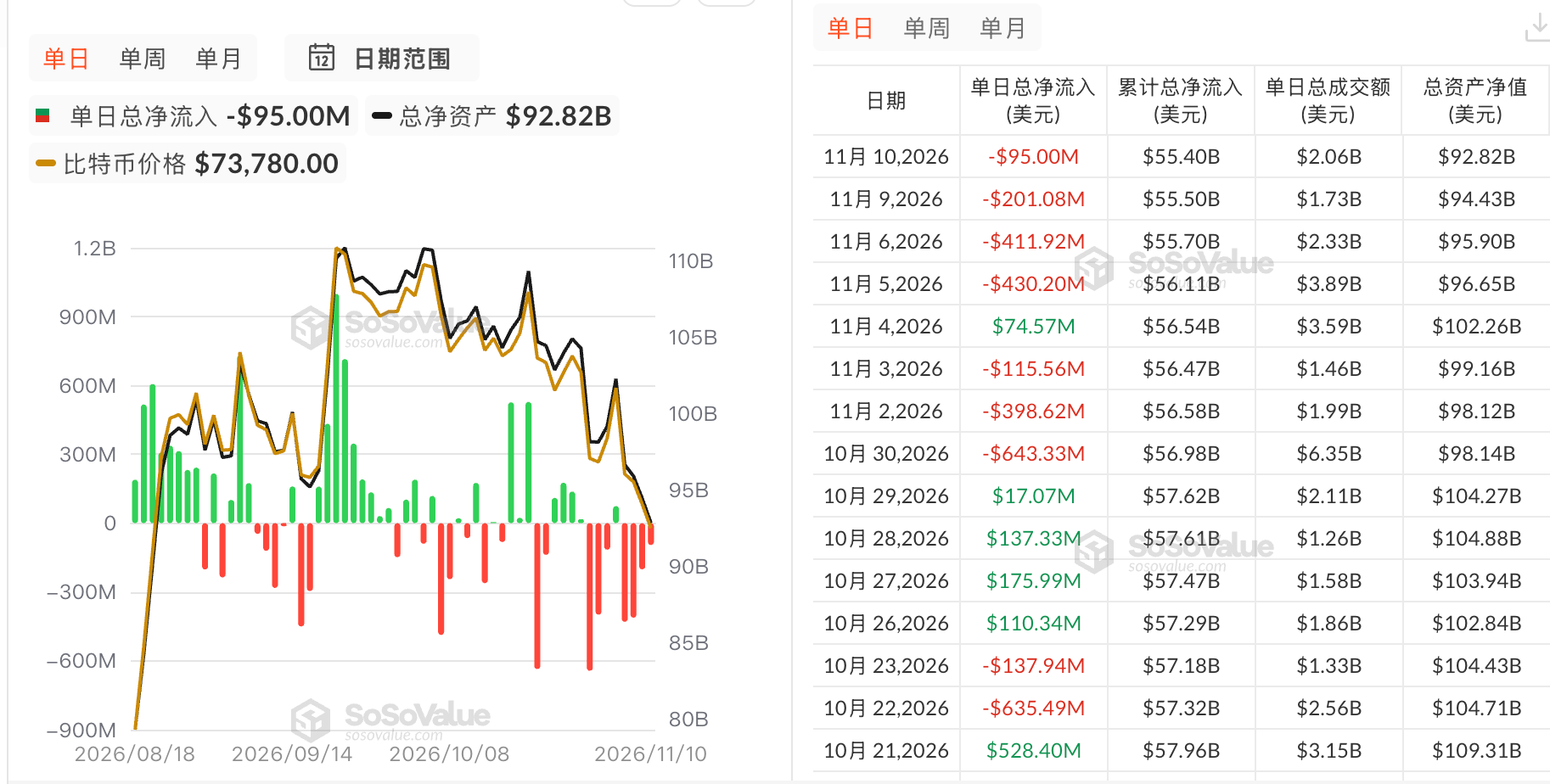
The ability of spot ETFs to absorb selling is another factor for the next phase of the market. SoSoValue data showed that the pace of inflows into U.S. spot Bitcoin ETFs had slowed significantly from its earlier peak. If spot ETFs turn to net outflows after the inflation shock, native on-chain capital alone may struggle to absorb the selling pressure quickly.
For leveraged longs, the above-expectations inflation reading has already produced a round of forced closures. For spot holders, $70,000 has become the stated defensive threshold. TechFlow Post described the sharp decline as a recalibration of macro expectations rather than the end of the bull-market cycle.