
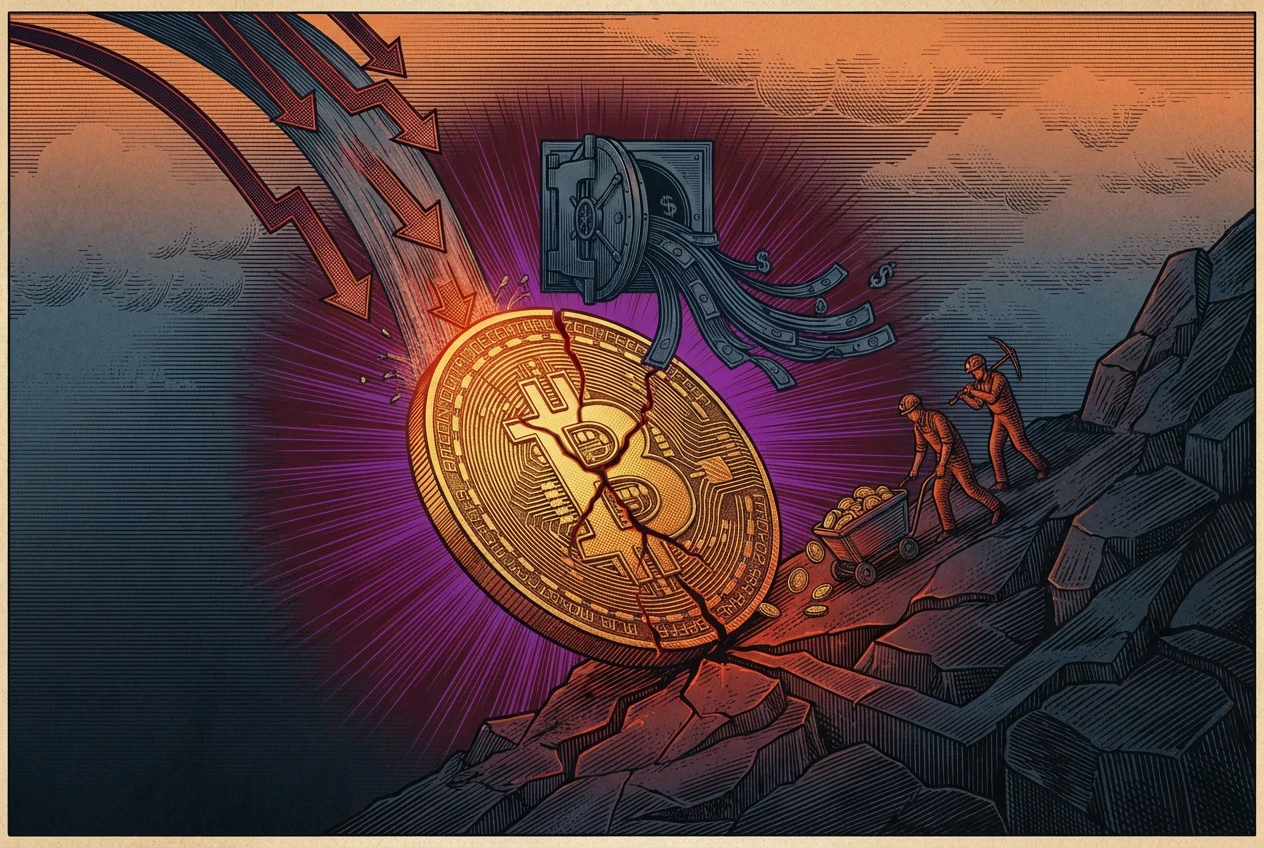
Bitcoin extended its losing streak on Monday, dipping below $63,000 during Asian trading hours to around $62,800 at press time, a 4% decline in 24 hours. The price is now nearly halved from its all-time high of approximately $126,000 set in October 2025. The entire month of February has seen extreme fear grip the crypto market, with the Fear & Greed Index hitting as low as 5.
Triple Whammy: Leverage, ETFs, Miners
Matthew Sigel, head of digital assets research at VanEck, attributed the sell-off to a confluence of factors rather than a single catalyst. Open interest in futures and perpetual contracts had been elevated, leading to cascading liquidations of long positions. Over the past week, total crypto liquidations reached $3-4 billion, with bitcoin futures accounting for an estimated $2-2.5 billion.
Meanwhile, U.S. spot ETFs have turned net sellers this year, reversing the strong institutional buying trend seen in 2025. Additionally, miners pivoting to AI computing have been hit by the tech stock rout, forcing them to sell BTC to fund capital expenditures and operations, adding to spot selling pressure at a fragile moment.
Record Fear in February, On-Chain Bloodbath
Bitcoin has suffered its worst start to a year on record, dropping 23% in the first 50 trading days of 2026. The Fear & Greed Index has remained in “extreme fear” territory for most of February, bottoming at 5, reminiscent of the 2022 bear market. On-chain data shows that in the worst single-day sell-off, short-term holders realized losses of about $1.14 billion, while long-term holders lost roughly $225 million, pushing daily net realized losses to $1.5 billion.
Analysts Eye $56k-$60k Before Bounce
CryptoQuant analysts noted that bitcoin has been in a technical bear market for over two months, breaking below its 365-day moving average. They expect the price to test the $56,000-$60,000 range before a meaningful recovery can occur. Bloomberg strategist Mike McGlone is more bearish, predicting a drop to $50,000 in 2026 and potentially as low as $10,000. However, some bulls argue that extreme fear could signal a reversal, urging investors to watch Fed policy and ETF flows for bottom signals.