
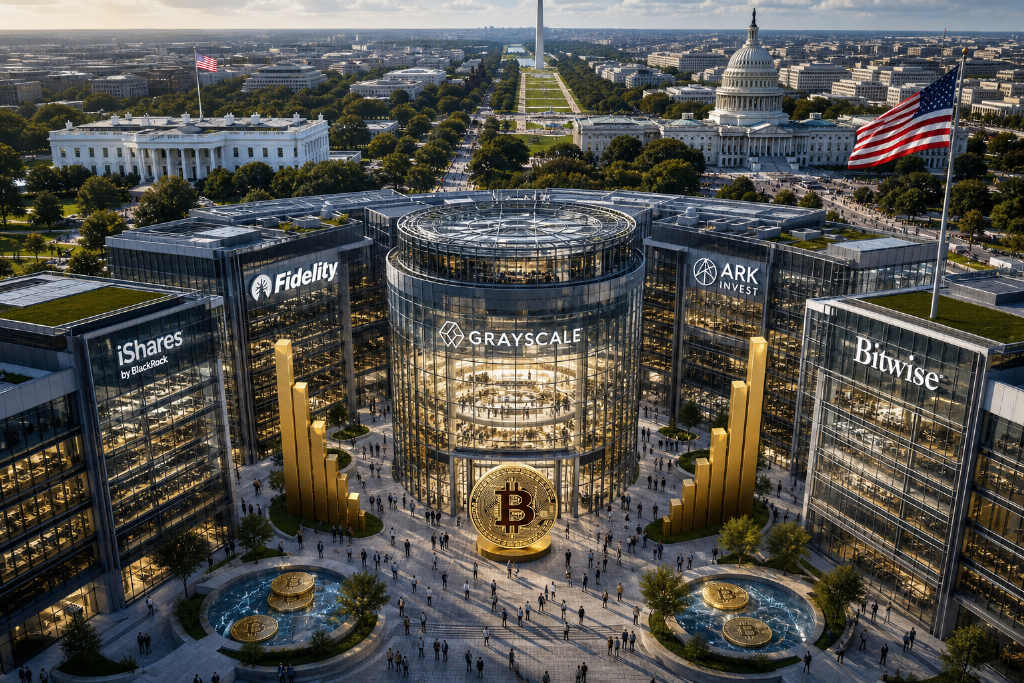
US spot Bitcoin exchange-traded funds recorded $337.6 million in net inflows on Aug. 24, marking a sixth straight trading day of positive flows. Across those six sessions, total net inflows reached $2.255 billion, the biggest amount for any continuous inflow streak in 2026. Over the same period, Bitcoin climbed more than 20%, traded at $79,941, and touched an intraday high of $81,160, its highest level since May 15.
There was a longer streak earlier this year, from April 14 to April 24, when spot Bitcoin ETFs posted inflows for nine straight trading days totaling $2.111 billion. Even so, the latest six-session run brought in more money overall, making it the largest continuous buying stretch of the year by value.
ETF demand began before the White House catalyst
Much of the market has treated Aug. 19 as the starting point for the current rally. On that day, Donald Trump convened crypto industry executives and regulators at the White House and pushed the stalled market structure bill known as the Clarity Act. In the same hour, more than $1 billion in short positions were liquidated, and Bitcoin jumped from $64,920 to an intraday high of $72,496. After that, Securities and Exchange Commission Chair Paul Atkins introduced the proposed "Reg Crypto" framework, laying out boundaries for token fundraising.
But ETF buying had already started two trading days earlier.
- Aug. 17: net inflow of $297.5 million; Bitcoin closed at $62,853
- Aug. 18: net inflow of $189.3 million; Bitcoin closed at $64,455; Fear and Greed Index at 41, still in fear
- Aug. 19: net inflow of $517.2 million; Bitcoin closed at $64,664; index at 46, still in fear
- Aug. 20: net inflow of $606.3 million; Bitcoin closed at $69,418; index at 62, shifting to greed
- Aug. 21: net inflow of $307.5 million; Bitcoin closed at $73,098; index at 72
- Aug. 24: net inflow of $337.6 million; Bitcoin closed at $77,678; index at 73
Before the White House meeting took place, spot Bitcoin ETFs had already taken in $486.8 million. At that point, the Fear and Greed Index still showed fear, and Bitcoin was trading in the $62,000 to $64,000 range. By the time sentiment turned to greed, the price had already moved above $69,000.
BlackRock and Fidelity dominated the six-day inflow stretch
By issuer, BlackRock’s IBIT brought in $1.5397 billion over the six sessions, accounting for 68% of the total. Fidelity’s FBTC added $397.7 million, or 18%. Together, the two funds captured 86% of all inflows in the period. Grayscale’s GBTC, by contrast, posted just $21.2 million in net inflows and was largely absent from this round of buying.
Spot Ether ETFs also posted six straight sessions of inflows during the same stretch, with cumulative net inflows of $808 million.
Year-to-date outflows are narrowing after steep losses in May and June
According to Farside Investors, US spot Bitcoin ETFs are still down about $2.48 billion on a net basis for 2026 so far, but that deficit has been shrinking quickly.
June alone saw $4.51 billion in net outflows, the worst month since these products launched. May also recorded net outflows of $2.406 billion. July barely turned positive, with $173 million in net inflows. In August, however, the funds have brought in $2.736 billion over 16 trading days so far, the strongest month of the year with several trading days still left in the month. Based on the figures cited by BlockTempo, August alone has already recovered nearly 40% of the money lost in May and June combined.
Derivatives did not show the usual leverage build-up
A rally of more than 20% would often leave a clearer mark in derivatives positioning. This time, the data moved in the opposite direction.
On Binance, BTCUSDT perpetual open interest measured in US dollars rose from $6.98 billion on Aug. 17 to $8.47 billion on Aug. 25, an increase of about 21%. Measured in BTC terms, though, open interest fell from 110,943 BTC to 107,216 BTC, down 3.4% over the same period. The report said the expansion in dollar-denominated open interest was driven almost entirely by Bitcoin’s higher price, while the actual amount of BTC committed to contracts declined.
Funding also stayed at a baseline 0.01%, showing that longs were not paying an added premium to maintain positions. With price up more than 20% while BTC-denominated open interest fell 3.4%, BlockTempo described the move as one led by spot demand rather than leverage.
Price levels in focus
On the chart, the nearest level overhead is the Aug. 25 intraday high of $81,160. Above that sits $82,018, the high from May 11. The report said a sustained move above that level would amount to a break from the top of the consolidation range that has held since May.
On the downside, the first support level is $77,086. If that gives way, the next level to watch is the Aug. 21 close at $73,098, followed by $69,418, the level where the latest upswing began.
Key figures from the six-session run
- Aug. 24 net inflow into US spot Bitcoin ETFs: $337.6 million
- Length of inflow streak: 6 trading days
- Total net inflows over six sessions: $2.255 billion
- BlackRock IBIT inflows: $1.5397 billion, 68% of total
- Fidelity FBTC inflows: $397.7 million, 18% of total
- Grayscale GBTC inflows: $21.2 million
- Spot Ether ETF inflows over the same period: $808 million
- 2026 year-to-date net flow for spot Bitcoin ETFs: about -$2.48 billion
- August inflows so far: $2.736 billion
- Bitcoin intraday high: $81,160