
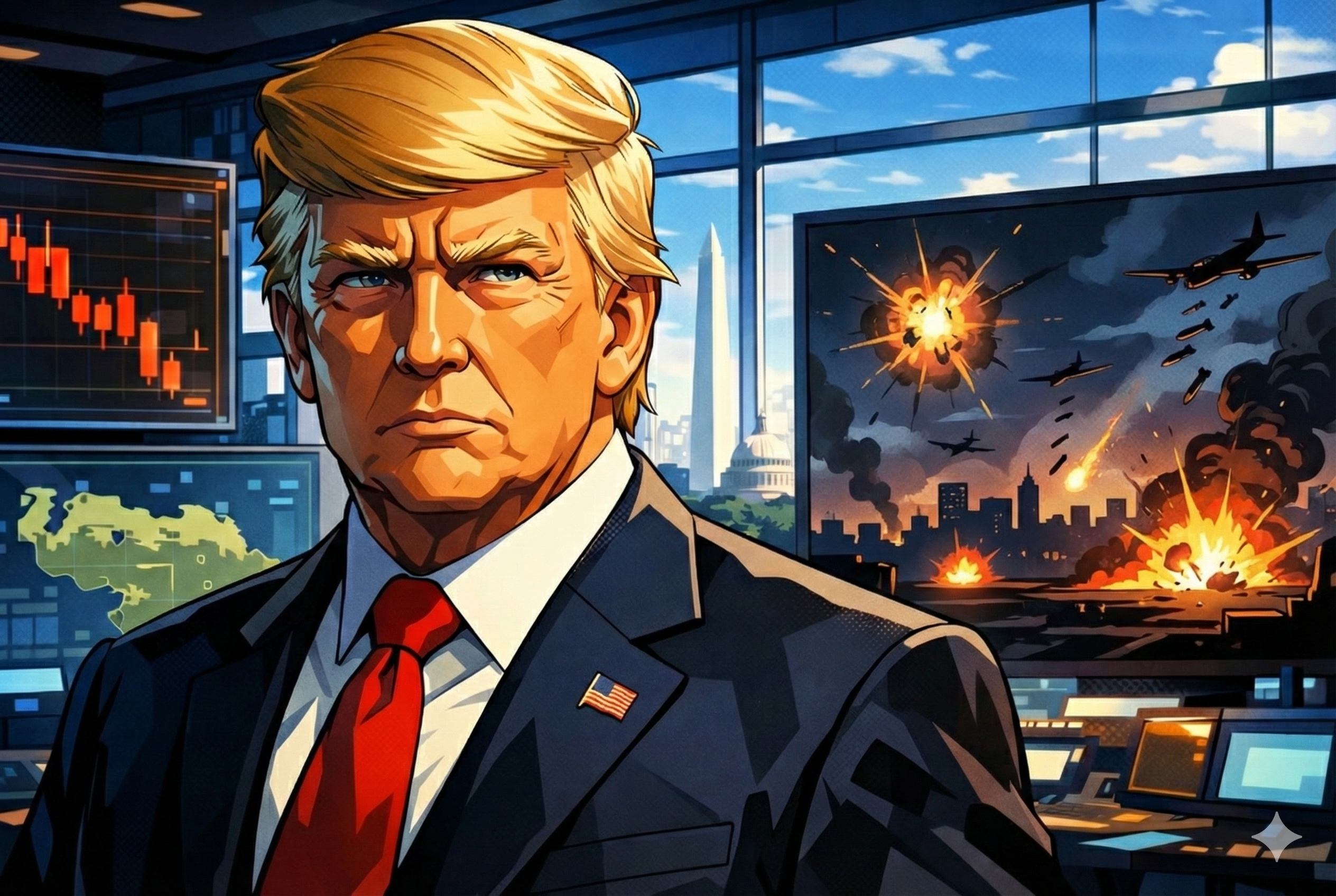
Bitcoin dropped below $90,000 after explosions were reported in Caracas in the early hours of January 3, according to the source material. The selloff pushed BTC down to $88,766 before it later traded at $89,900. Ether was quoted at $3,106, with both assets down more than 2% from the previous day’s high.
The report said strikes hit Fort Tiuna army base and La Carlota air base in the Venezuelan capital. The White House later confirmed that the operation was carried out by a naval task force deployed in the Caribbean and described the targets as drug-linked. CBS, cited in the source, reported on January 3 that U.S. officials called the action limited, while Trump described it as a “precision removal.”
Later, Trump said on social media that Venezuelan President Nicolas Maduro had been captured by U.S. forces. He also said Maduro and his wife had been taken out of the country and sent to the United States, adding that the mission was conducted in coordination with U.S. law enforcement. Maduro, according to the same source, declared a wartime state of emergency and accused Washington of serious aggression.
Risk sentiment turned lower across crypto
Once news of the blasts spread across social platforms, the crypto market reacted with rapid deleveraging. The source said a large number of leveraged positions were liquidated, and the narrative of a “2026 rebound mood” faded quickly. Bitcoin’s move back to $89,900 still left it below the key round-number threshold it had lost earlier in the session.
At the same time, perpetual futures funding rates remained positive rather than flipping into a short-term bearish structure. That left a mixed picture: a clear spot-price shock, but no full reversal in derivatives positioning based on the figures provided in the report.
Payment disruptions could hit Venezuela’s crypto use
The source also pointed to a more immediate local effect. After years of hyperinflation eroded the purchasing power of the bolivar, dollar stablecoins and bitcoin had become widely used in daily transactions and cross-border remittances, forming what the article described as a parallel financial system.
If military action continues and causes power outages, telecom damage, or tighter controls, blockchain nodes and on-chain payments could be disrupted. Over the past three years, Venezuela’s P2P over-the-counter market handled about $45 million in daily volume on average, accounting for nearly 30% of local retail payments, according to the source. If internet outages last longer, cash and physical U.S. dollars may again become the main medium of exchange.
The report added that markets are now watching whether the UN Security Council will pass any condemnation or sanctions measures, which could shape how much room the U.S. has for its next move.