
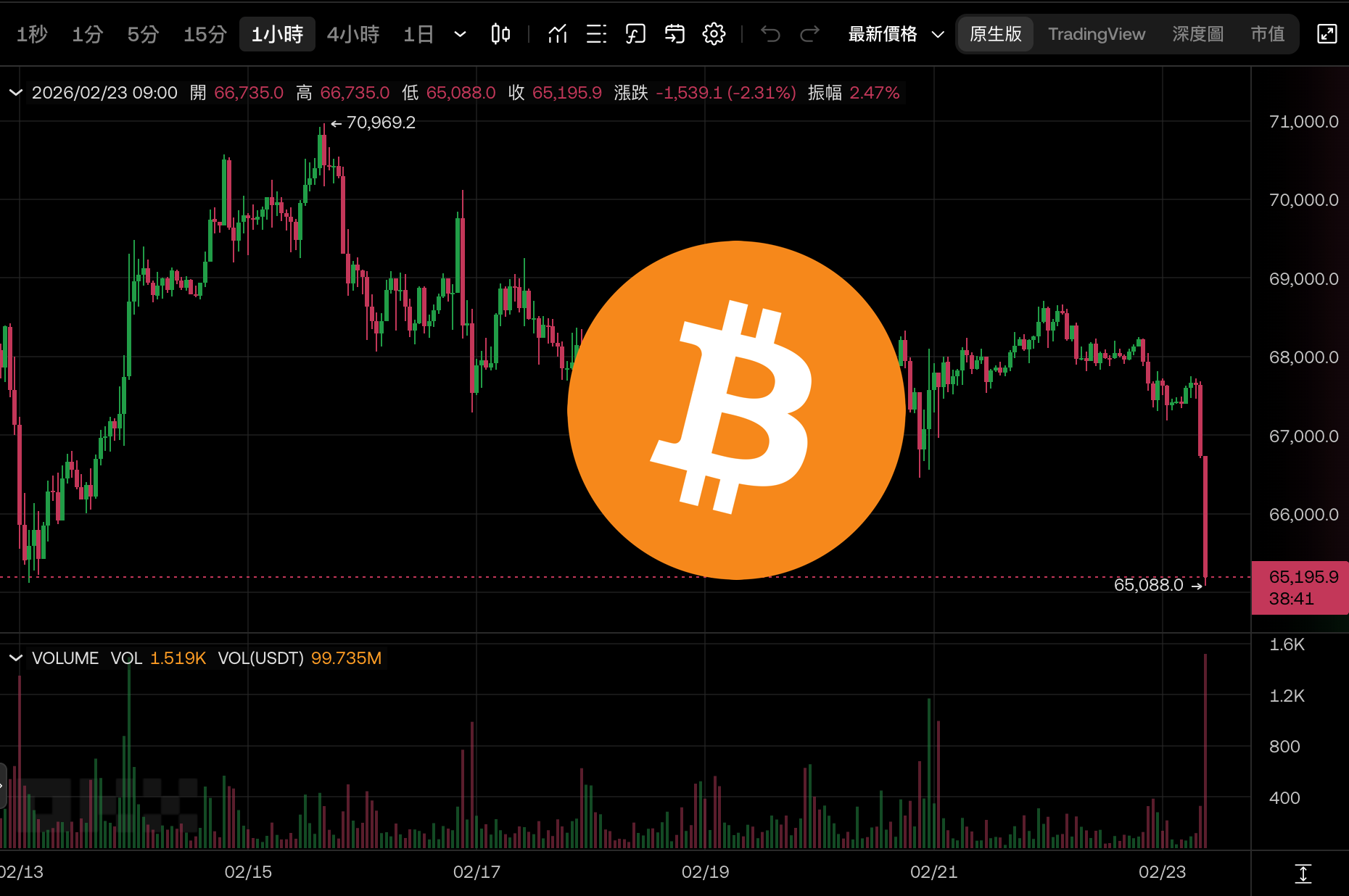
The crypto Fear & Greed Index has dropped back to 6, with the market spending the whole of February 2026 in the “extreme fear” zone. Prices reflected that pressure. Bitcoin started sliding sharply after 8 a.m. and fell as low as $65,088, down 4.3% over 24 hours, while Ether lost the $1,900 level and traded at $1,873, down more than 5% on the day.
Fear this time is persistent rather than event-driven
The report draws a contrast with earlier cycles in 2020 and 2022. Back then, extreme fear was tied to clear shock events, which hit quickly and then faded. February 2026 looks different. There is no single collapse driving sentiment, yet the market has stayed under sustained pressure without finding relief.
According to the source, several factors are feeding the weakness. Bitcoin has remained soft for four months since its rebound high in the fourth quarter of 2025. Altcoins have fared even worse. A recent DWF Labs report said more than 80% of tokens fell below their issue price within 90 days of listing, with losses typically ranging from 50% to 70%. For retail traders, that means much of what was bought over the past six months is still underwater.
Macro uncertainty is pushing funds toward traditional havens
Macro conditions are adding to the strain. The article says that after the Supreme Court ruled his tariffs unlawful, Trump moved to reimpose a 15% global tariff under another legal basis. Risk-off sentiment picked up, with gold rising to $5,140 and silver climbing to $87. Capital has been moving into traditional safe-haven assets, while crypto has not attracted the same flow.
Buying extreme fear has never guaranteed an immediate bottom
The idea of buying when others are fearful remains popular in crypto, but the historical record is less straightforward. The report points to March 2020, when a fear reading near the lows was later followed by Bitcoin’s move from $5,000 to $69,000. It also cites June 2022, when the index fell to 6. Buying Bitcoin then meant an entry around $20,000, but after the FTX collapse in November, the price dropped to $15,500, leaving that trade down about 25% at one point.
The article also argues that market structure in 2026 is different from prior cycles. With CME futures and spot ETFs already in place, institutional participation is higher, leverage tools are broader, and liquidation mechanisms are more efficient. In that setup, a “fear bottom” may no longer match retail capitulation. It may instead reflect institutional risk pricing.