

Bitcoin briefly dropped below $63,000 during the previous session, marking its lowest level in nearly 10 days, before bouncing quickly near $62,700. Even after that rebound, it remained below a key resistance area as markets headed into the Federal Open Market Committee meeting.
The article was jointly produced by PANews and BIT US Stocks. BIT US Stocks says it offers access to more than 10,000 listed US stocks and ETFs, supports stablecoin deposits and withdrawals as well as traditional USD wire transfers, and includes shareholder rights, dividend entitlements and voting rights.
Bitcoin holds below resistance before the Fed meeting
On the technical side, traders broadly kept a cautious stance. The report identified $64,000 to $64,400 as an important near-term resistance zone. If the rebound stalls there, price could revisit the $60,000 to $62,000 liquidity band.
Analyst Killa said the broader structure remains range-bound and tilted bearish unless BTC can reclaim $65,700 and the weekly open. In that view, a loss of $63,700 would open the way for a test of $61,800. Analyst Wulf said monthly support has already been broken, but there is still visible spot buying around $62,700. He added that a technical rebound ahead of the FOMC meeting cannot be ruled out, while the more meaningful directional move may be triggered after the meeting.

The report also highlighted the historical backdrop. In the past nine FOMC meetings, BTC fell after the meeting eight times. In the previous instance when price rose ahead of the FOMC, Bitcoin later formed a lower high and fell about 14%. BTC’s current MVRV stands near 1.21, still above the 2018 bear-market low of 0.69 and the 2022 bear-market low of 0.75. By that historical capitulation gauge, the market has not yet entered an extreme bottoming phase, though cyclical volatility has been narrowing.
CryptoQuant analyst Darkfost said BTC funding rates have returned to historically low levels again. He compared the setup to late 2022 and the period before the move that began in September 2024, saying the reading suggests bearish sentiment may be nearing an extreme and could create conditions for a recovery over the coming months.
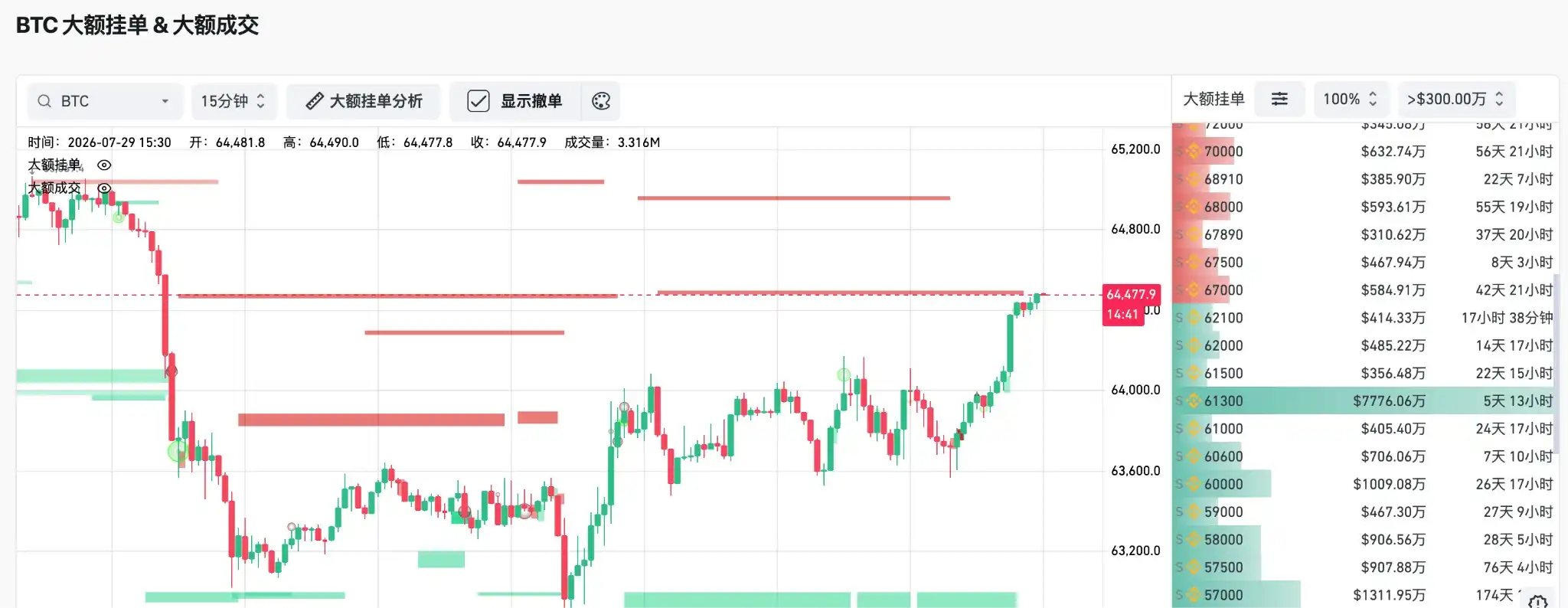
Liquidity data in the report showed heavy long-side liquidity stacked between $60,000 and $62,000, including a $77 million BTC bid at $61,300. On the other side, significant short liquidity was clustered between $64,000 and $68,000. The FOMC decision was described as the most likely catalyst to break that balance.
Key items on the day’s calendar
- DeFi platform Dango will wind down its project, halt trading on July 29 and shut its blockchain network on Aug. 13.
- Binance will support the Polygon (POL) network upgrade and hard fork on July 29.
- The Polygon Ithaca hard fork will go live on mainnet on July 29 to improve payment reliability.
- Serenity said SK Hynix ADRs were trading at a premium of more than 25% to the Korean shares, creating an arbitrage window tied to conversion on July 29.
- DEX aggregator Odos said it will stop operating, with all services to be permanently shut down starting July 30.
- South Korea will raise single-stock leveraged margin requirements to 30 million won and limit them to cash only, with the rule brought forward to July 31.
- FTX said it will begin a fifth round of distributions on July 31, totaling about $900 million, while preferred shareholders will receive a second payment.
- Falcon Finance (FF) will unlock about 102 million tokens worth about $6.2 million.
- Kamino (KMNO) will unlock about 229 million tokens worth about $4.1 million.
- Upbit’s 24-hour trading-volume ranking was META2, BTC, XRP, ETH and EUL.
- Spot Bitcoin ETFs posted a net outflow of $49.7544 million, extending the streak to four days.
- Spot Ethereum ETFs saw a net inflow of $14.53 million.
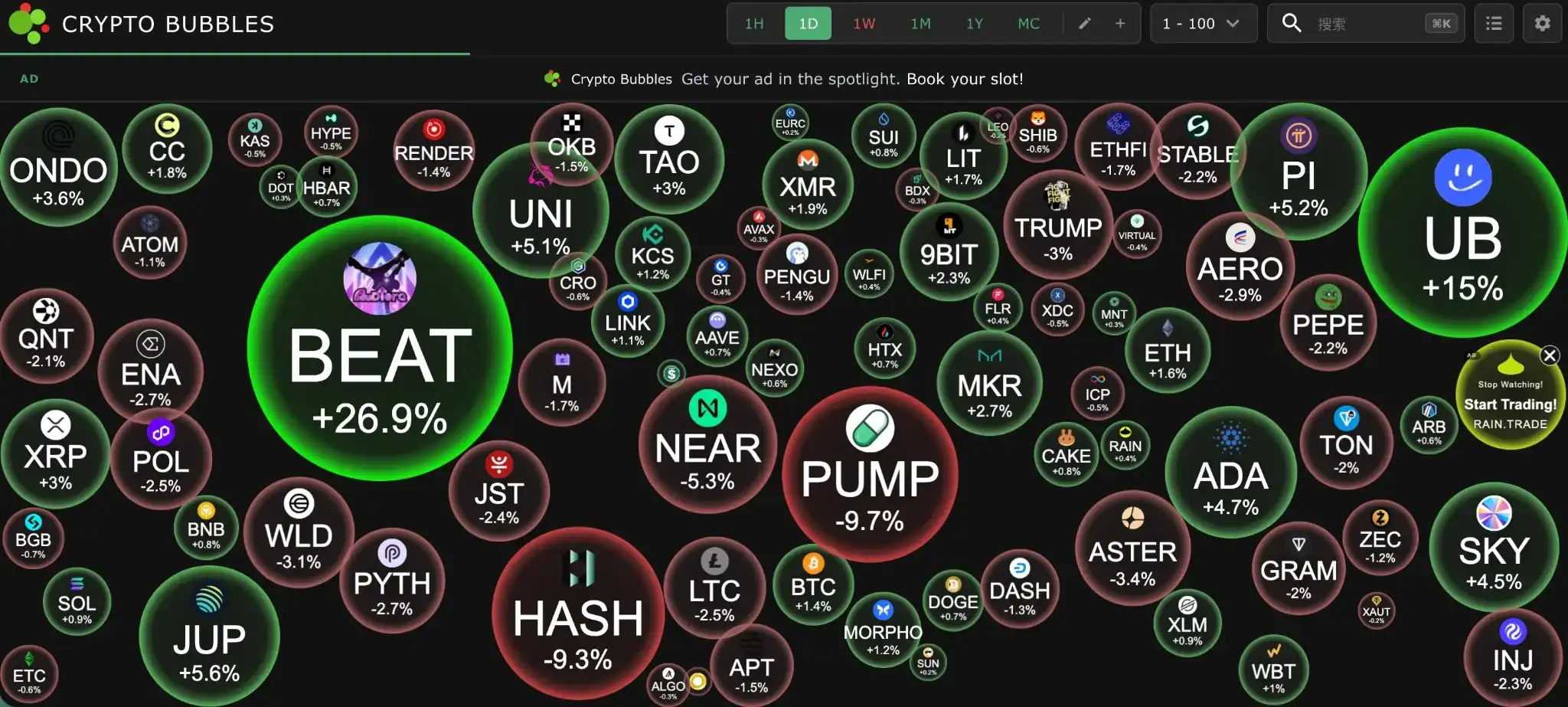
Among the top 100 tokens by market capitalization, the biggest gainers on the day were BEAT, up 26.9%, UB, up 15%, JUP, up 5.6%, PI, up 5.2%, and ADA, up 4.7%.
US index futures edge higher, but memory names stay weak
US equity index futures traded cautiously ahead of the FOMC meeting. Nasdaq 100 futures were up 0.1%, Dow futures gained 0.03%, and S&P 500 futures rose 0.22%.
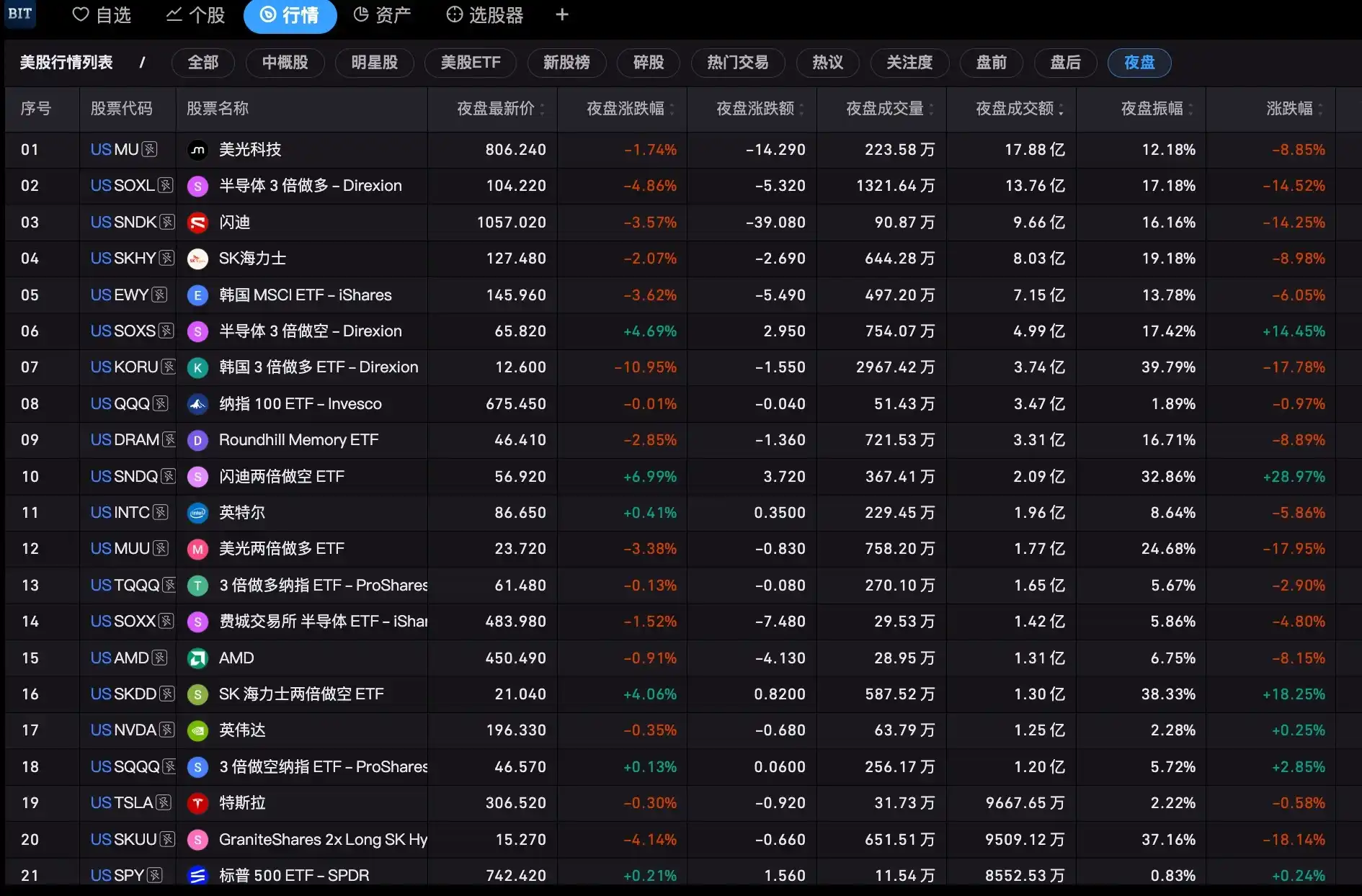
According to BIT late-session trading data, semiconductor and memory stocks kept falling. Micron dropped 1.74%, SanDisk lost 3.57%, SK Hynix fell 2.07%, the DRAM storage ETF fell 2.85%, and the semiconductor ETF declined 1.52%.
There were a few exceptions. Seagate Technology rose 4.91% in late trading after quarterly revenue beat expectations and grew by nearly 50%, with gross margin jumping above 50%. Ford climbed more than 5% after stronger-than-expected second-quarter profit and a full upward revision to its 2026 full-year guidance. Bloom Energy gained more than 13% after quarterly revenue topped $1 billion and the company sharply raised its full-year revenue outlook. Teradyne rose more than 10%, with strong results and third-quarter revenue guidance above expectations offering one of the few brighter spots in the semiconductor equipment chain.
AI hardware selling intensifies as software and old-economy names attract flows
With the Fed decision, GDP data, core PCE data and earnings from Microsoft, Meta and other large technology companies all due in a short window, the US stock market has shifted into a heavily event-driven phase. The report described the previous night’s dominant theme as a buyer strike in AI hardware.
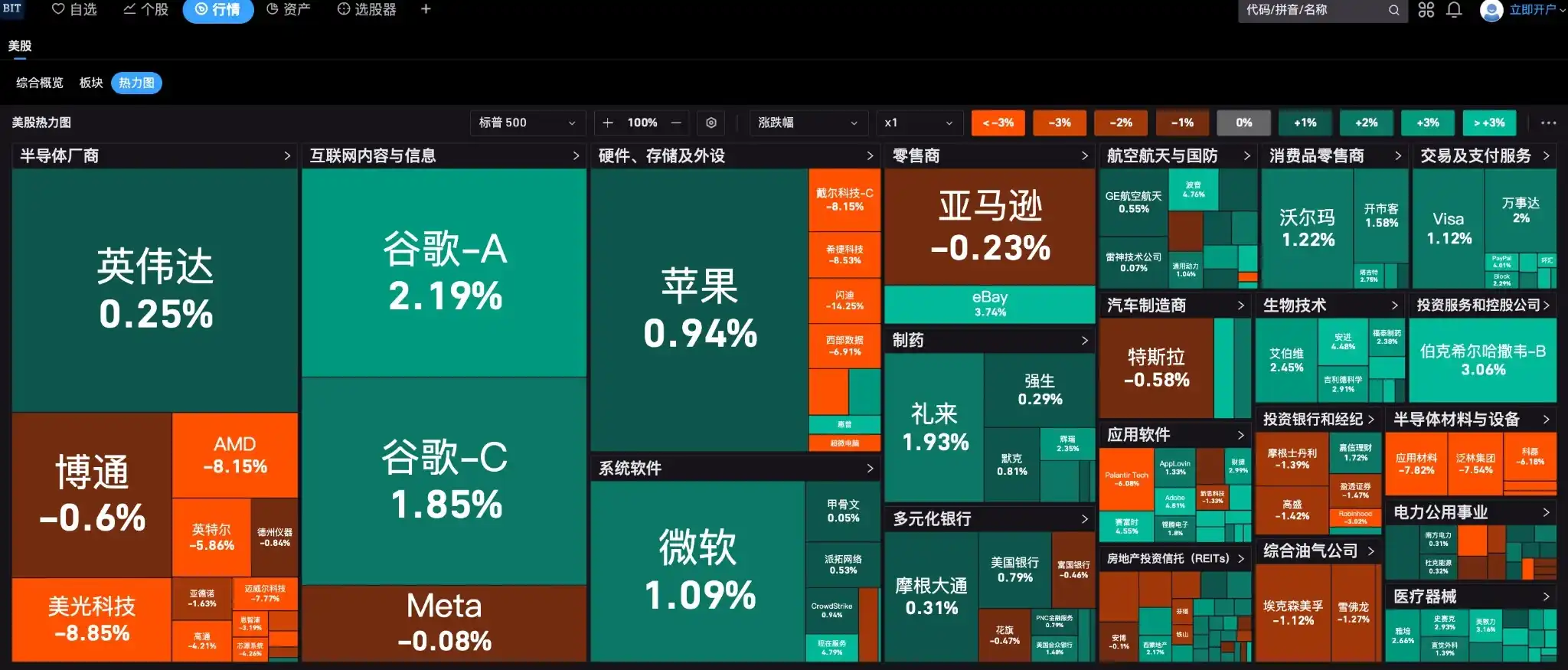
The Philadelphia Semiconductor Index fell 4.49% and at one point dropped more than 6.5%, losing the key 11,200 level. Memory names became the center of the selloff. Micron fell 8.85%, SK Hynix ADRs dropped nearly 9%, SanDisk extended its three-day slide to more than 10% and is down more than 50% in July, AMD lost more than 8%, and Corning fell more than 12%.
The report said the market was not reacting to a sudden collapse in AI demand. Instead, investors have begun asking whether hyperscale cloud companies can keep up AI capital spending, whether hardware orders were pulled forward too aggressively, and whether free cash flow can absorb the investment burden.

Software and application-layer names became a relative shelter. Workday rose more than 8%, Adobe gained nearly 5%, ServiceNow rose nearly 5%, Salesforce added more than 4%, and Shopify gained nearly 3%. The market, the report said, is rotating from the sellers of picks and shovels to companies with clearer AI monetization. It also noted that Apple’s market value crossed $5 trillion for the first time, and that its strong cash generation and more restrained AI spending strategy led investors to treat it as a scarce defensive asset.
Crypto-linked stocks and miners move lower with the broader tape
Crypto-linked equities broadly moved with the wider adjustment. BIT data showed Strategy down 2.52%, Robinhood down 3.02%, Coinbase up 0.24%, and Circle down 2.06%.
Among miners, Canaan fell 7.25%, Cipher dropped 10.34%, Hut 8 lost 6.53%, MARA fell 5.09%, and CleanSpark declined 6.98%. In another section, the report said mining stocks were being pulled in two directions at once, by the AI-transition narrative and by the selloff in semiconductors. There it listed MARA down 3.31% and Hut 8 down 3.3%, with Riot Platforms, CleanSpark and Cipher Mining generally off 4% to 8% in recent trading.
Ionic Digital rose about 26% on its first day of trading on Nasdaq. Core Scientific said second-quarter AI/HPC hosting revenue reached $136.7 million and had become its largest business line, but the company posted a net loss of $1.15 billion because of changes in the fair value of warrants, and its shares fell more than 4% after the earnings release.
Korea triggers circuit breakers, Japan weakens, and some flows shift toward China’s chip story
Volatility surged across Asia-Pacific markets, where heavyweight semiconductor stocks drove a broad liquidity squeeze. South Korea’s KOSPI closed down 5.99% after falling more than 12% intraday, and circuit breakers were triggered for a second straight session, sending the index to its lowest level since April 7.
The report linked the South Korean selloff to several factors at once: weaker US semiconductor stocks, disappointing SK Hynix earnings, and the impact of ChangXin Memory Technology’s capacity expansion on global memory-pricing logic. Retail sentiment in Korea was described as shifting from FOMO to JOMO, while leveraged positions were hit by large-scale stop-loss selling. Citi estimated cumulative losses on leveraged ETFs held by Korean retail investors at about $38.7 billion.
At the single-stock level, SK Hynix closed down 9.6% after earnings and was off more than 17% at its worst point intraday, setting a record for its largest one-day drop. The stock is now down more than 58% from its historical high, and the company’s market capitalization was put at about $686.2 billion. Samsung Electronics fell 5.2%. Korean brokerage Mirae Asset cut its target price on SK Hynix to 2.8 million won but kept a buy rating, saying memory prices still have near-term support.
Related leveraged products in Hong Kong also saw sharp swings. CSOP 2x Long SK Hynix was down more than 28% at one point intraday and has dropped more than 80% since the start of July. In Japan, the Nikkei 225 closed down 1.49%, Kioxia Holdings fell as much as 18%, and SoftBank dropped 9.74%. The report said SoftBank plans to issue 90 billion yen in bonds to support AI investment, and that higher financing costs have raised concern over pressure from AI capital spending.
The yen also remained under pressure. Dollar-yen traded around 163 to 164, near a 40-year low. Markets are focused on Friday’s Bank of Japan rate decision. If Governor Kazuo Ueda fails to deliver a sufficiently hawkish signal, the yen could slip through 165. Against that backdrop, the report said Asia-Pacific markets are seeing a structural rotation, with some global funds pulling back from Korean semiconductor positions and moving toward Hong Kong technology stocks and China’s domestic semiconductor narrative. ChangXin Memory Technology rose 12.66%, lifting its market value to 3.54 trillion yuan, or about $523.4 billion. The report said Asia-Pacific markets remain in a deleveraging phase in the short term, but China’s memory supply chain is gradually becoming a more important variable in global pricing.
What markets are watching next
- July 30, 02:00 Fed rate decision: Markets are pricing about a 70% chance of no change and about a 30% chance of an unexpected 25-basis-point hike. A surprise hike could send the dollar and Treasury yields sharply higher and weigh on BTC, the Nasdaq, semiconductors and high-valuation growth stocks. If rates are left unchanged but the statement is hawkish, markets may still price in September hike risk.
- July 30, 02:30 Fed Chair Waller press conference: If Waller emphasizes energy inflation, AI capex inflation and anti-inflation credibility, long-end yields could keep rising. If he stresses data dependence and a wait-and-see window, BTC and US growth stocks could see a short-term repair.
- July 30 earnings slate: Microsoft, Meta, Qualcomm, Arm, Lam Research and Robinhood are due to report. Microsoft’s Azure growth, Copilot monetization and AI capital spending are expected to shape sentiment on cloud computing. Meta’s advertising and AI spending will affect internet-platform valuations. Qualcomm, Arm and Lam Research may determine whether the semiconductor selloff stabilizes. Robinhood is described as a key window into tokenized stocks and crypto-trading activity.
- July 30, 09:00 Samsung Electronics full Q2 report: Markets will be watching HBM, advanced process technology, foundry orders, capital spending and long-term supply agreements. If Samsung confirms strong AI memory demand, that could help stabilize the memory chain including SK Hynix, Micron and SanDisk. If margin or capex guidance is cautious, Asia-Pacific semiconductor stocks may remain volatile.
- July 30, 20:30 US Q2 GDP annualized first estimate and June core PCE: If GDP is strong and core PCE remains sticky, markets may reprice the rate path, pressuring both tech valuations and BTC. If growth slows and inflation moderates, Treasury yields could fall and risk assets may get a technical rebound.
- July 31 Bank of Japan rate decision: Markets mostly expect no change, but the yen is near a 40-year low. If Ueda is not hawkish enough, dollar-yen could test 165 and raise the risk of FX intervention. If yen weakness triggers a reversal in carry trades, liquidity pressure could spread to global risk assets and crypto markets.
- July 31 earnings slate: Apple, Amazon, Coinbase, Strategy, Kioxia, Roblox, Rivian, Exxon Mobil, Chevron and AbbVie are scheduled to report. Apple will test whether iPhone demand, services revenue and discipline on AI capital spending can justify its $5 trillion market value. Amazon will shape expectations for AWS growth, AI model strategy and retail margins. If both companies show AI investment remains controllable and profits stay resilient, technology stocks could see style repair. If capex keeps rising while the path to returns remains unclear, pressure on AI hardware may continue.