

Bitcoin is moving back into a gold-like trading regime. Citing Talos CM market data, the article says Bitcoin’s 90-day correlation with gold has climbed to +0.56, the highest level since 2020. Over the same period, its correlation with the Nasdaq 100 and the U.S. dollar has fallen back toward zero.
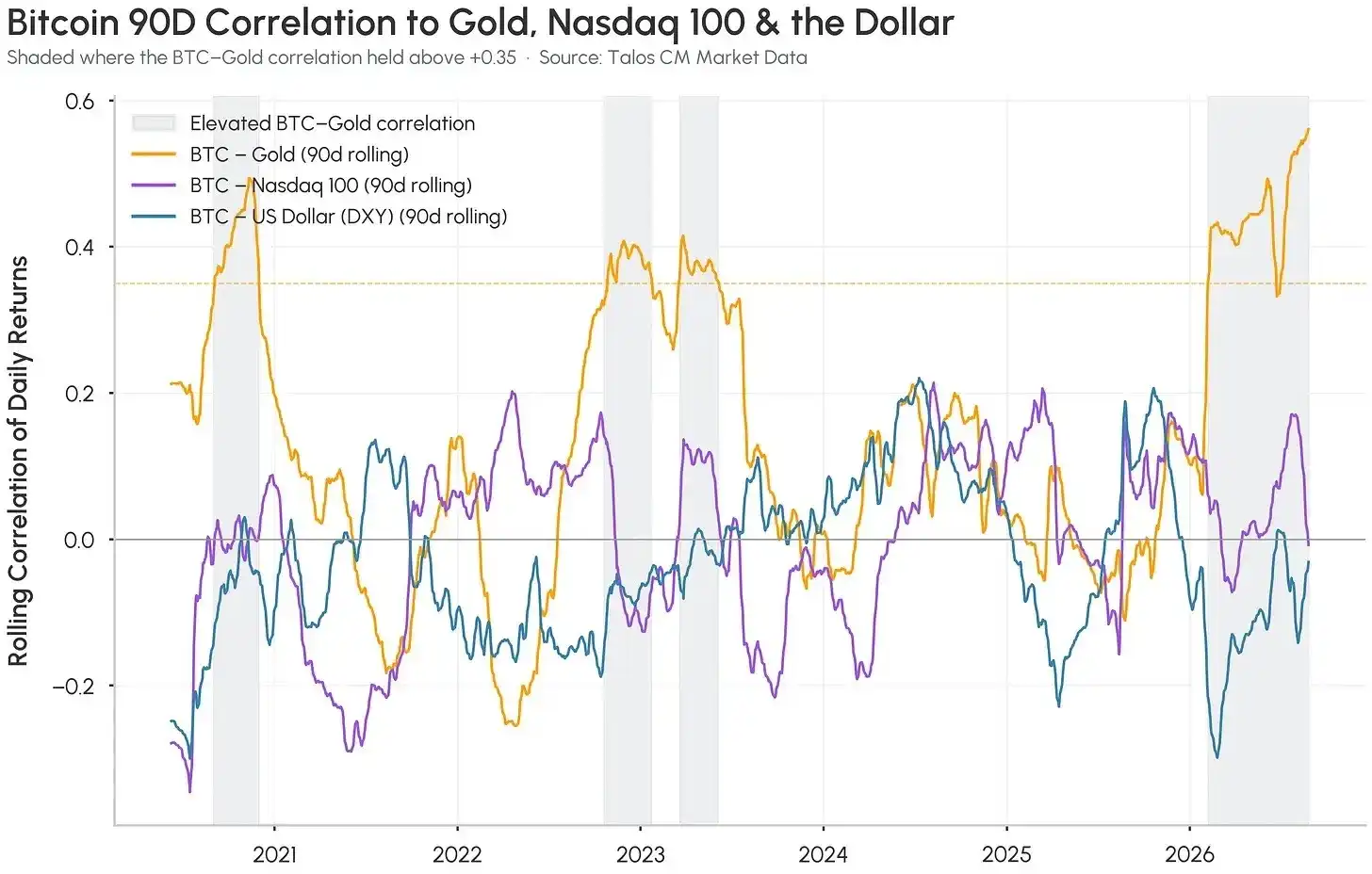
That shift suggests Bitcoin is no longer being driven mainly by tech-stock risk beta. Instead, recent price action has tracked the same macro forces that support gold, including concern over currency debasement, sovereign debt, and the path of real yields.
Bitcoin’s relationship with gold, equities, and the dollar changes across market cycles
The article argues that Bitcoin’s linkage with traditional assets is not fixed. In some periods, it trades more like a growth or technology stock. In others, it behaves more like a scarce, non-sovereign store-of-value asset.
Looking back at earlier periods of elevated Bitcoin-gold correlation helps frame the current market. In 2020, Bitcoin fell alongside other risk assets during the initial COVID liquidity shock. It then rebounded sharply with gold after emergency Federal Reserve easing and fiscal intervention pushed yields lower.
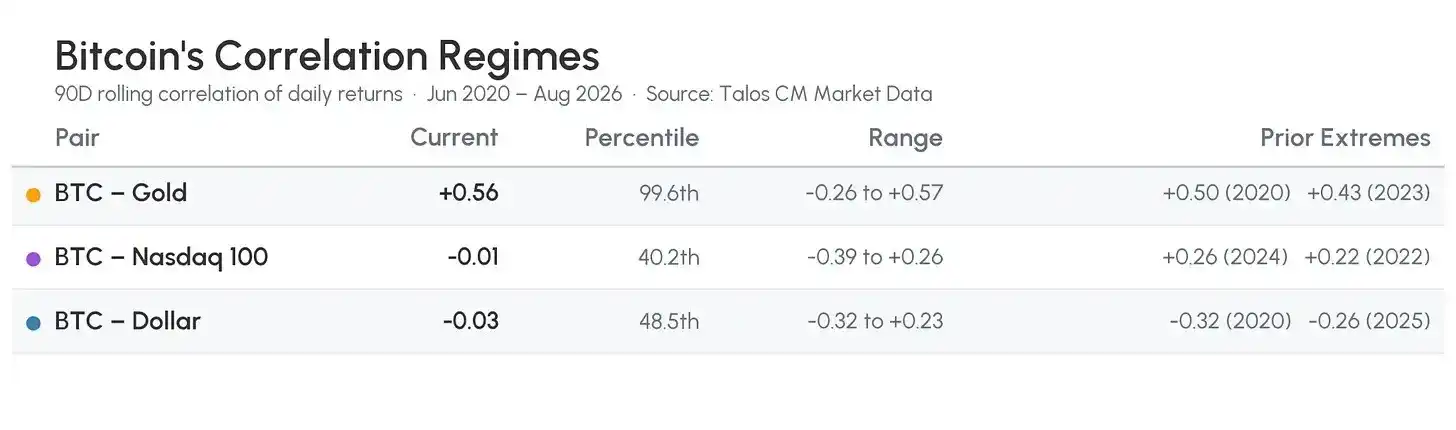
In 2023, several U.S. regional banks collapsed and the Federal Reserve rolled out emergency liquidity tools. Markets began pricing renewed financial-system stress and rate cuts, and both Bitcoin and gold benefited.
The article says the current backdrop carries features of both episodes. Problems in the U.S. Treasury market have brought renewed focus to the dollar’s long-term purchasing power, which supports scarce assets. At the same time, real yields remain high, limiting the Fed’s room to cut rates. If rates keep rising, Bitcoin could still face pressure.
Two opposing macro forces are shaping this rally
The article describes the current move as the product of two macro forces pulling in opposite directions.
One comes from the U.S. Treasury. After the Treasury announced a larger long-dated bond buyback program to support market liquidity, Bitcoin and gold both moved higher. According to the article, the step pushed down long-end yields and weakened the dollar, bringing fiscal deficits, debt issuance, and the dollar’s long-term purchasing power back into focus. While bond buybacks are not direct stimulus, the article says they revived a "currency debasement trade" that favored scarce assets such as gold and Bitcoin.
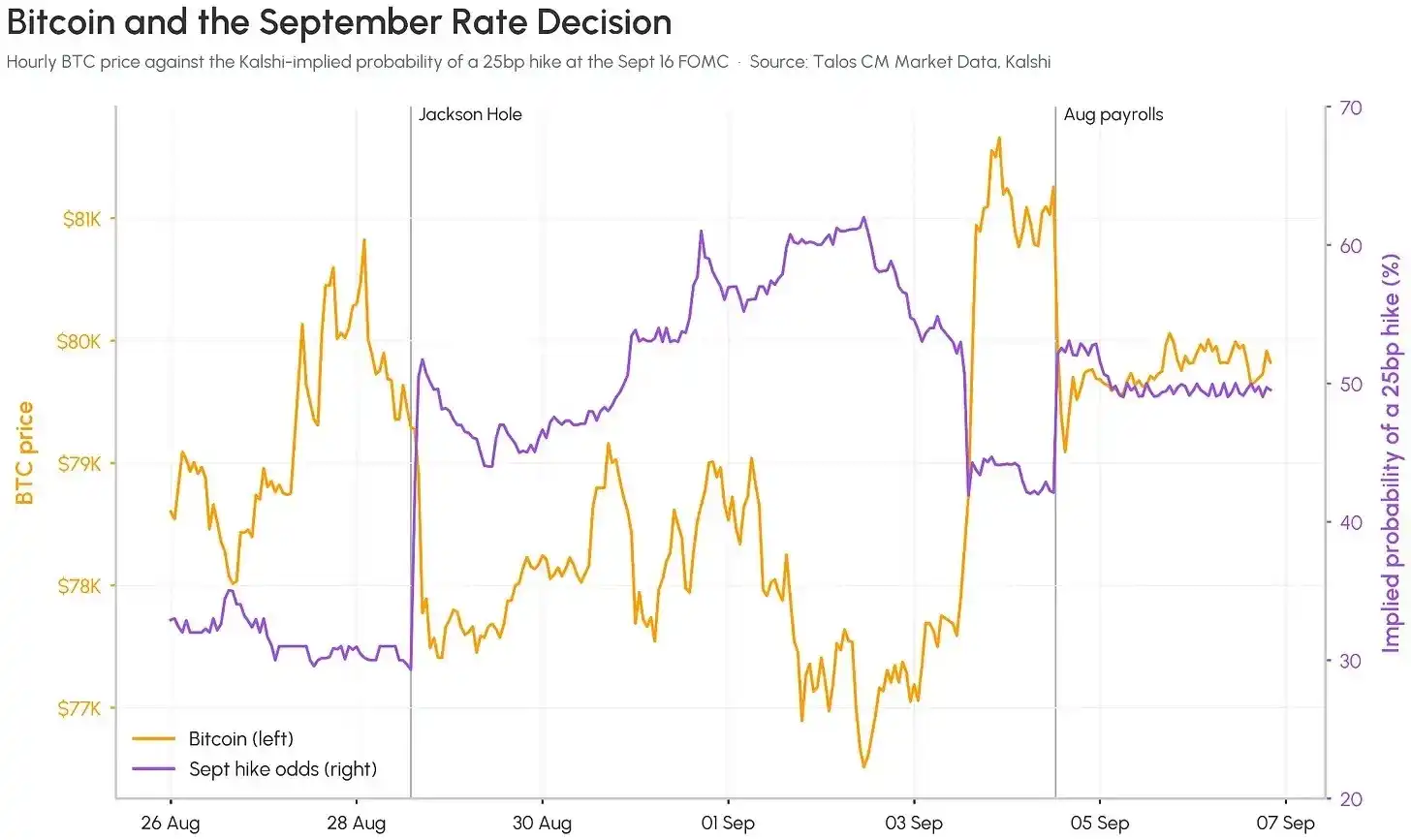
The second force comes from the Federal Reserve. Strong labor-market data and ongoing inflation concerns can keep rates higher for longer and lift real yields, reducing the appeal of non-yielding assets such as Bitcoin.
The article uses the Sept. 4 nonfarm payrolls release as a clear example. It also notes that after the Jackson Hole meeting, the implied probability of a 25-basis-point rate hike at the September Federal Open Market Committee meeting rose from 29% to 51% within four hours, while Bitcoin fell 1.8% over the same period. A similar sell-off followed the initial release of the August payrolls report before the market absorbed the change in rate expectations.
Jobs data, CPI, and FOMC decisions remain the main short-term catalysts
The article examines average absolute Bitcoin price moves around macro events from January 2025 through September 2026 and compares them with periods that had no major event risk. The measure captures the size of moves, not direction.
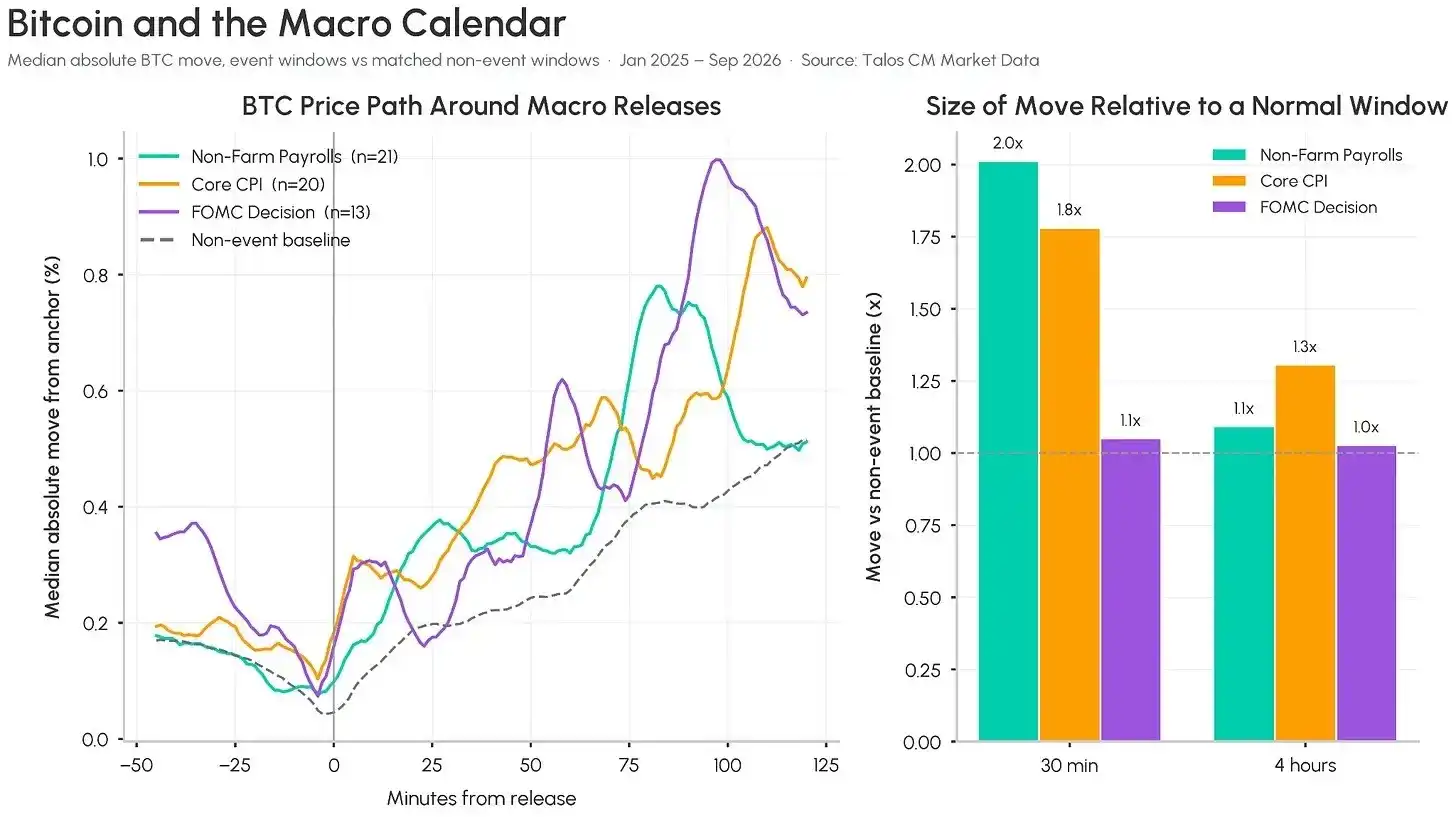
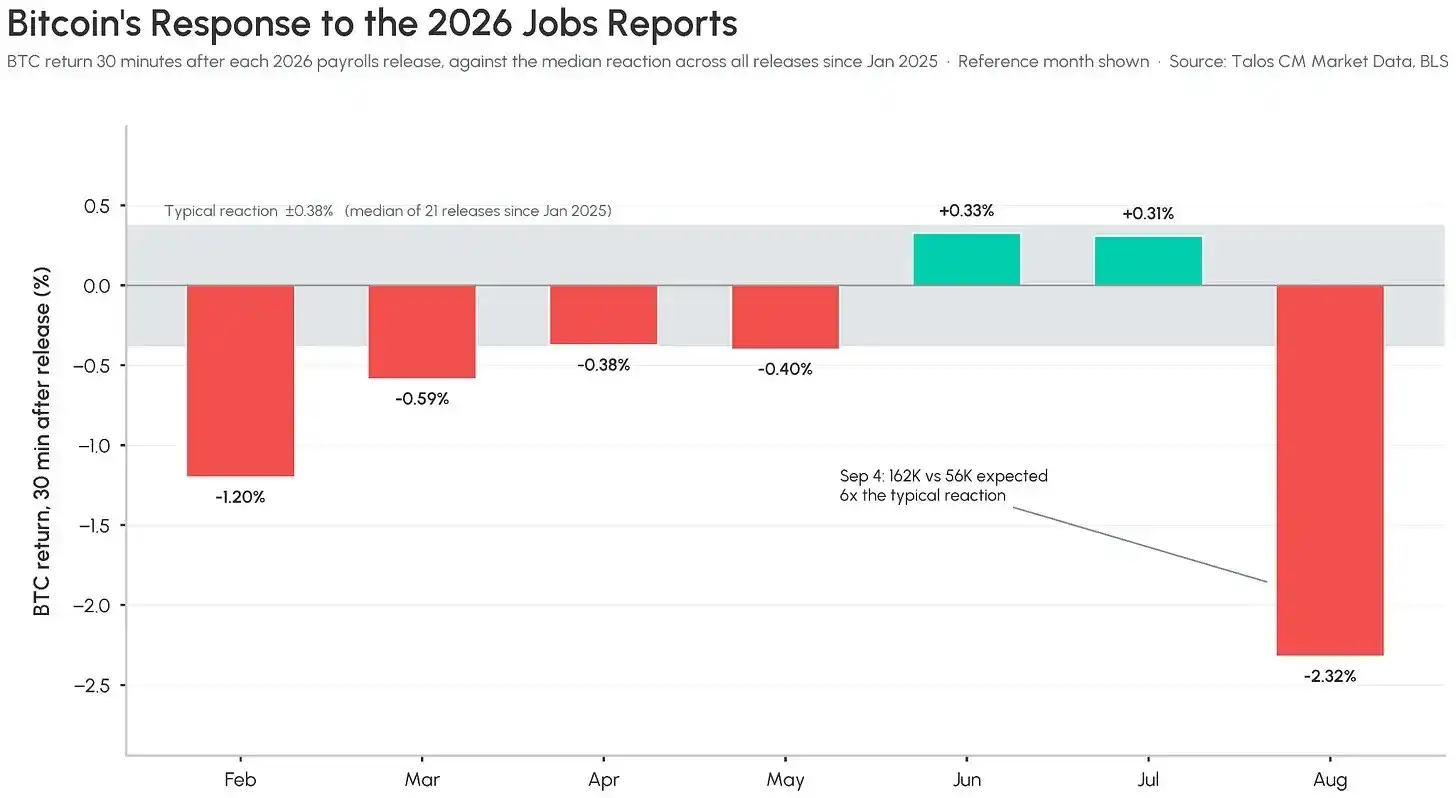
Among those events, the immediate reaction to payrolls data was the strongest. In the first 30 minutes after release, Bitcoin’s move was twice the size of a normal period. Core CPI produced moves 1.8 times the normal level over the same window, with effects that lasted longer. By contrast, volatility around FOMC rate decisions was broadly close to baseline.
Bitcoin fell 2.32% in 30 minutes after the Sept. 4 payrolls report
The Sept. 4 payrolls release is presented as a key case study. August payrolls increased by 162,000, well above the market expectation of 56,000. Within 30 minutes of the release, Bitcoin fell 2.32%, and the magnitude of the move was about six times the usual reaction seen around payrolls events.
The article says macro data set the initial direction, while perpetual futures positioning, funding rates, open interest, and liquidations amplify the move and affect how long it lasts. In the 30 minutes after the Sept. 4 release, Bitcoin open interest dropped 3%. Long-to-short liquidations ran at roughly 5:1, totaling $119 million and $24 million, respectively.
Sept. 11 CPI is the key data point ahead of the September FOMC meeting
The article says the CPI report due on Sept. 11 is the most important forward-looking data point before the September FOMC meeting. Rate expectations are in a delicate balance. A higher-than-expected CPI print would strengthen the case for tighter policy, while softer inflation would ease pressure and support Bitcoin, gold, and broader risk appetite.
Bitcoin remains the market’s risk barometer, but digital assets extend beyond BTC
In the article’s closing section, Bitcoin is described as the core barometer of risk appetite in crypto markets. A shift by the Fed toward a tighter policy path would likely weigh on Bitcoin, altcoins, and leveraged positions. A more favorable inflation and rate backdrop, by contrast, would help risk appetite recover across the market.
At the same time, the article says Bitcoin should not be treated as a proxy for the entire digital-asset sector. On-chain trading, tokenization, settlement, and prediction markets are creating their own sources of volume, fees, and liquidity. It points to Hyperliquid’s expansion in equity and commodities perpetuals and the HIP-4 prediction market, early progress on Robinhood Chain, and continued growth in tokenized asset issuance as signs that ecosystem development is not fully dependent on Bitcoin’s price trend.
Even if the macro backdrop remains under pressure, the article says demand can still grow for stablecoins, on-chain yield, tokenized assets, settlement services, and 24/7 trading infrastructure. Bitcoin may shape short-term market mood, but the digital-asset industry still has room to expand across different macro cycles.