
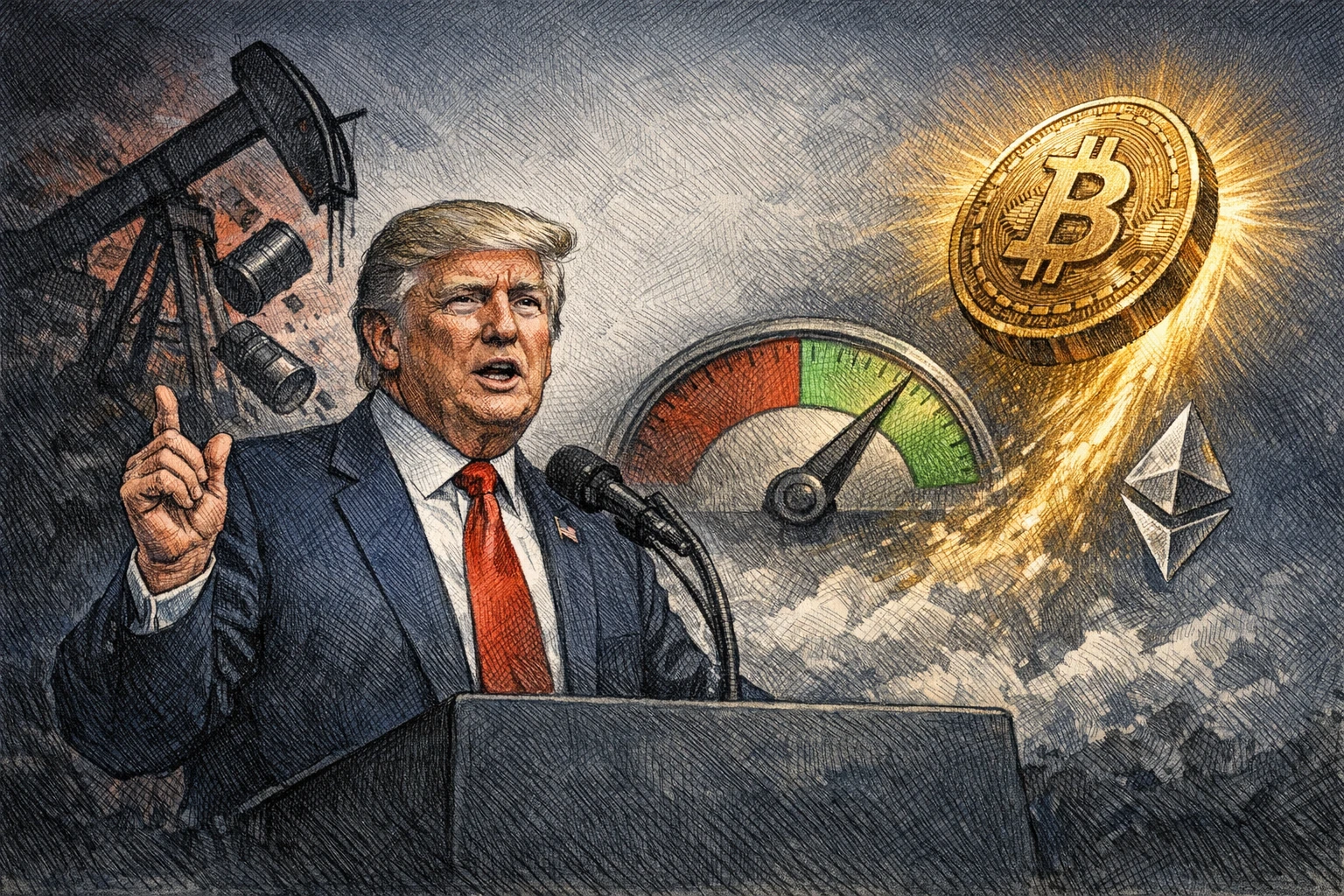
Bitcoin climbed to $69,537 in early trading and was last quoted at $69,160 at the time of writing. Ether briefly reached $2,053 before easing to $2,019. In derivatives markets, total liquidations over the past 24 hours came to $342 million. The move followed comments from US President Donald Trump on oil sanctions and the Iran conflict.
Trump says some oil sanctions will be lifted temporarily
At a press conference in Miami, Florida, on Monday, Trump said the United States would temporarily remove some oil-related sanctions to ensure adequate supply and bring down prices. He said the measures would apply to some countries until shipping through the Strait of Hormuz resumes, though he did not provide operational details.
Trump also said military action involving Iran would end “soon” and added that the rise in oil prices had not become as severe as he had feared. After those remarks, crude retreated sharply from a high near $120 to around $85, a drop of more than 25%. That reversal quickly shifted short-term market expectations tied to inflation and liquidity.
Crypto rebounds as oil prices reverse
According to the source material, Bitcoin started moving up from around $67,000 the previous night and reached $69,537 at about 3 a.m., marking a gain of roughly 3.4%. Ether moved in the same direction and briefly traded above $2,053. As volatility picked up, both sides of the futures market were hit: short positions were forced out during the rebound, while some late long positions were also liquidated during the swings.
The report linked the crypto rally to the decline in oil prices. Lower crude prices can ease immediate inflation pressure and change how traders view the Federal Reserve’s room to cut rates. For digital assets, oil has become a key macro signal. Higher oil prices tend to support inflation expectations, tighten the outlook for rate cuts, and strengthen the dollar; falling oil prices remove part of that pressure from risk assets.
White House weighs several options to curb oil prices
Two people familiar with the matter said Trump could review a broader package of oil-price measures as early as Monday. Options under discussion include a coordinated release of strategic petroleum reserves with G7 economies, restrictions on US oil exports, intervention in oil futures markets, partial federal tax relief, and removing Jones Act requirements that domestic fuel be transported on US-flagged vessels.
The report also said the US had already issued a temporary 30-day waiver last week allowing Russian oil currently stranded at sea to be sold to India, with the aim of easing pressure on global supply. The White House is concerned that oil staying above $100 a barrel because of the US-Iran war could hurt American businesses and consumers, especially ahead of the November midterm elections.
Strait of Hormuz remains the key variable
Analysts cited in the report said US policy tools may have only limited impact on global oil prices as long as the conflict continues to disrupt shipping through the Strait of Hormuz. The waterway carries about 20% of global oil transport, and supply tightness could persist until normal traffic fully resumes.
Trump also warned that if Iran disrupts oil supplies, the US would respond more aggressively. He added that he was “disappointed” with Iran’s new leadership choice. For markets, the next immediate focus is whether shipping in the Strait of Hormuz normalizes and whether Washington releases more specific policy steps.