

Bitcoin trades in a tight $78,000-$81,000 band
Bitcoin briefly slipped below $78,000 overnight, falling to around $77,600 before recovering to the area near $79,000. The report identifies $78,000 to $81,000 as the market’s core near-term range.

Several traders in the piece treated the area around $78,300 as short-term support. If BTC loses that level on a weekly basis and then fails on a rebound, the report says room could open toward $75,000 and even $70,000. On the upside, price would first need to reclaim $79,500, with $81,000 to $82,000 marked as the next zone.
Trader Kaz said BTC may retest $78,500 before trying higher again. If the $74,000-$75,000 area holds, he said Bitcoin could still make a run toward $90,000-$95,000. KillaXBT leaned toward the view that a bottom may already be in, though he also said the $70,000-$74,000 range could offer a better entry. Ardi’s setup was more conditional: long above $83,000, short below $76,700, and stay out in between.
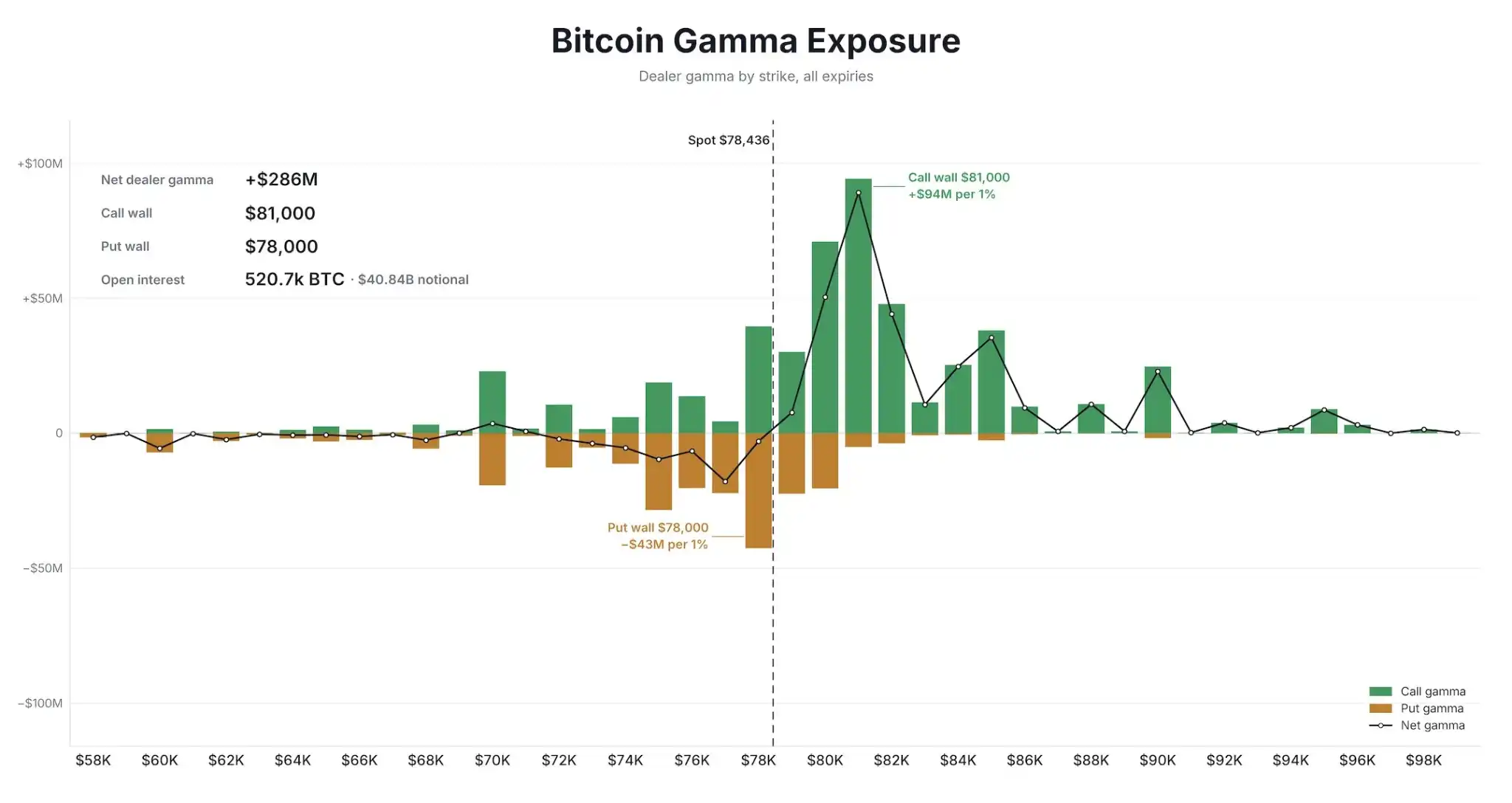
$40.8 billion in options open interest is keeping BTC pinned
The report says the options market is also helping contain spot movement. BTC options open interest now stands at about $40.8 billion, with a large amount of positioning clustered around the $78,000 and $81,000 levels.
In simple terms, as price gets closer to $81,000, market makers are more likely to sell BTC and cap upside. As price nears $78,000, they are more likely to buy BTC and cushion the downside. That has left Bitcoin looking boxed into a relatively narrow range over the past few sessions.
Technical signals and on-chain readings are not aligned
On the chart side, Coin Bureau said BTC has formed its first golden cross since November 2025, with the 50-day moving average crossing back above the 200-day moving average. The report added that after the previous three comparable signals, Bitcoin rose by about 50%, 45%, and 60%.
Benjamin Cowen offered a more cautious interpretation. He said the key issue is not the golden cross itself, but whether BTC can print a higher high after the signal and then reclaim the 50-week moving average.
On-chain data looked more restrained. CryptoQuant said MVRV is nearing a key test, and if it can stay above the 365-day moving average, the setup would turn more constructive. If not, Bitcoin may still be in a repair phase. ARK Invest analyst David Puell also said BTC needs to produce a higher high and a higher low before a real bottom can be confirmed.
Long-term holders control about 14.74 million BTC
Murphy’s research, as cited in the report, said Bitcoin’s volatility has been shrinking because a large amount of supply is being held by long-term holders rather than moving through the market. Long-term holders now control about 14.74 million BTC, equal to roughly 74% of circulating supply.
That ownership structure, the report said, means BTC is unlikely to slide easily into an extreme drawdown toward $30,000-$40,000 unless long-term holders begin selling in size.
Key crypto developments for the day
- Binance has stopped supporting withdrawals for ALCX, ARDR, NFP, and POND.
- Canary’s staked TRX ETF is set to list on Cboe on Sept. 9 under the ticker TRXS.
- The son of former U.S. President Joe Biden is set to launch the meme coin LAPTOP, which is planned to go live on the Base network on Sept. 9.
- A vice president of technology at the Solana Foundation said the V1 trading system will go live on Sept. 9, with shorter block times.
- Linea (LINEA) will unlock about 960 million tokens worth about $2.6 million.
- Upbit’s 24-hour trading volume ranking was XRP, SOPH, BTC, VVV, and WAVES.
- Spot Bitcoin ETFs saw net outflows of $46.6464 million, the first net outflow after three straight days of net inflows.
- Spot Ethereum ETFs posted net outflows of $24.2921 million.
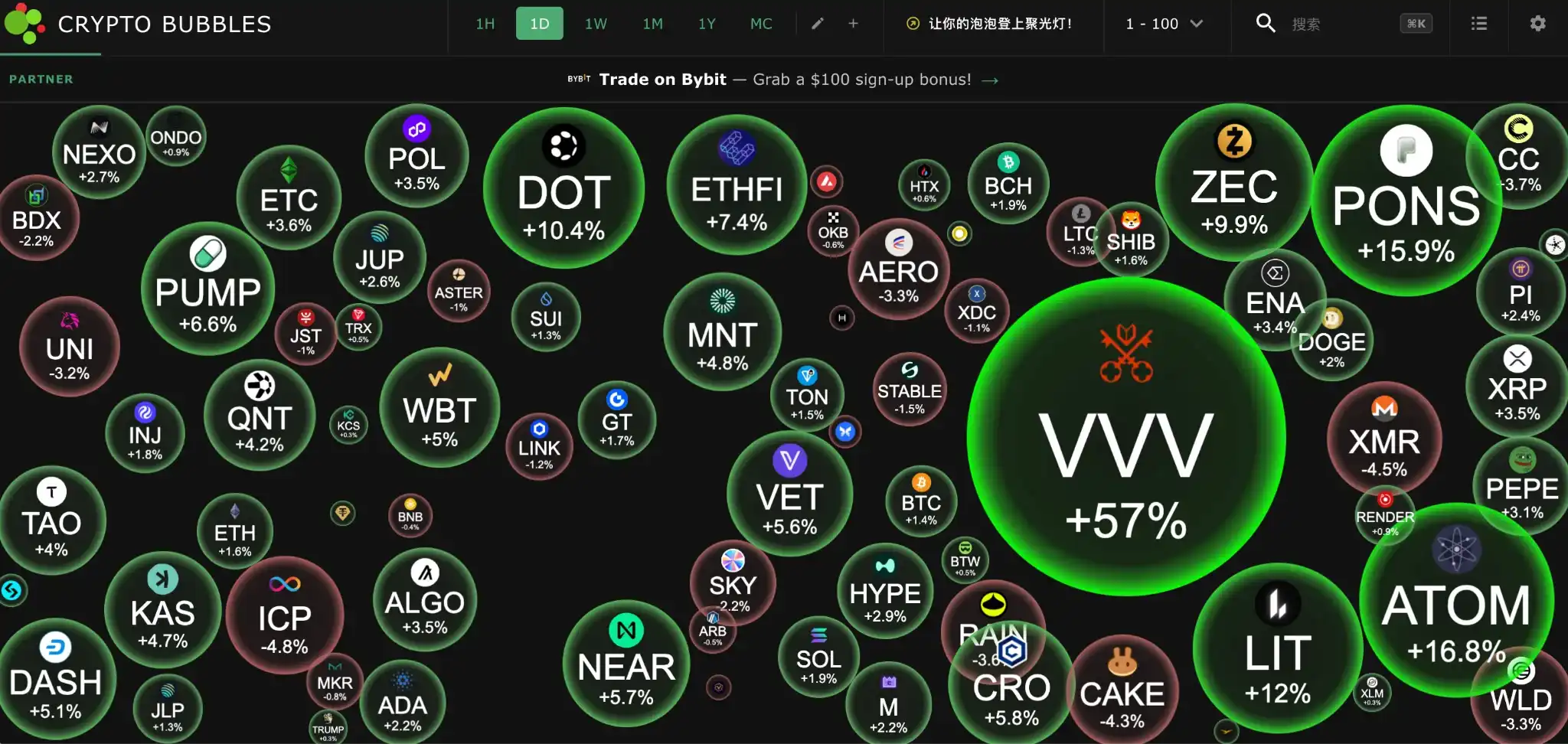
Among the top 100 tokens by market cap, the day’s biggest gainers were VVV, up 57%; ATOM, up 16.8%; PONS, up 15.9%; LIT, up 12%; and DOT, up 10.4%.
U.S. equity futures stabilize, with money moving back into chips and memory
U.S. stock index futures showed a cautious rebound in overnight trading. S&P 500 futures edged higher, Nasdaq futures followed technology sentiment with a mild bounce, and Dow futures remained under pressure from oil prices and interest rates.
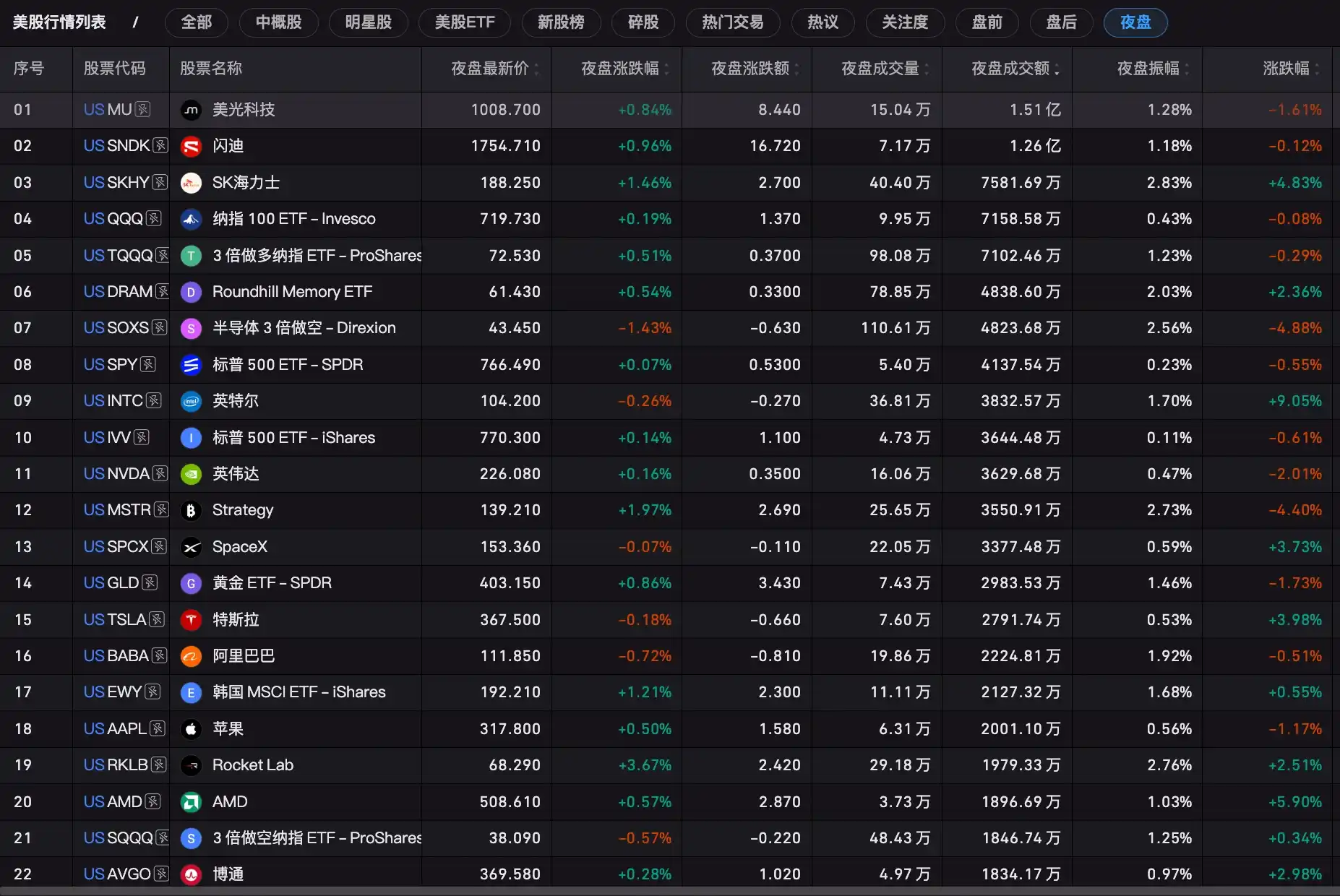
BIT overnight data showed the strongest moves were again in chips and memory. Micron rose 0.90%, Sandisk added 1.03%, SK Hynix ADR gained 1.46%, NVIDIA climbed 0.20%, AMD rose 0.65%, and Broadcom added 0.35%. Rocket Lab advanced 3.67% after introducing germanium-free solar cells for space applications. With Zcash making another record high in price, the Grayscale ZEC ETF rose another 7.5% in overnight trading after gaining about 9.5% in the prior session.

Before tonight’s U.S. session, the market is watching NVIDIA, AMD, Qualcomm, Intel, Apple, and the memory complex. NVIDIA is a major focus because the company is set to appear at Goldman Sachs’ technology conference, where investors are looking for comments on Vera Rubin production, data center demand, CPU strategy, memory supply, and U.S. chip export restrictions. If management sounds constructive, the report says AI chips and optical networking names could keep running.
Oil-driven inflation trade weighs on indexes while semis and optical names rally
U.S. stocks fell for a second straight session overnight. The report said tensions in the Middle East escalated quickly, with U.S. military action and Houthi attacks pushing WTI crude toward $94 and Brent toward $100. That added to inflation pressure, and the market has now priced the probability of a Federal Reserve rate hike this month at above 60%.
Macquarie and others moved forward their forecast for the first rate hike, while Bank of America said a hotter-than-expected core PCE reading would test the Fed’s anti-inflation resolve. Gold, after three consecutive declines, fell below $4,400. Copper extended gains to fresh records as the AI data center buildout and power grid upgrades continued to support demand. Citi said copper could rise to $15,000 per ton by year-end, and as high as $17,000 per ton if AI demand outstrips supply.
At the same time, the U.S. 10-year Treasury yield remained around 4.8%. Markets are closely watching the U.S. Treasury’s announcement at 23:00 on the maximum buyback amount for 10-year to 20-year Treasuries. Institutions cited in the report expect a single-operation ceiling of $5 billion to $10 billion, aimed at calming bond market volatility.
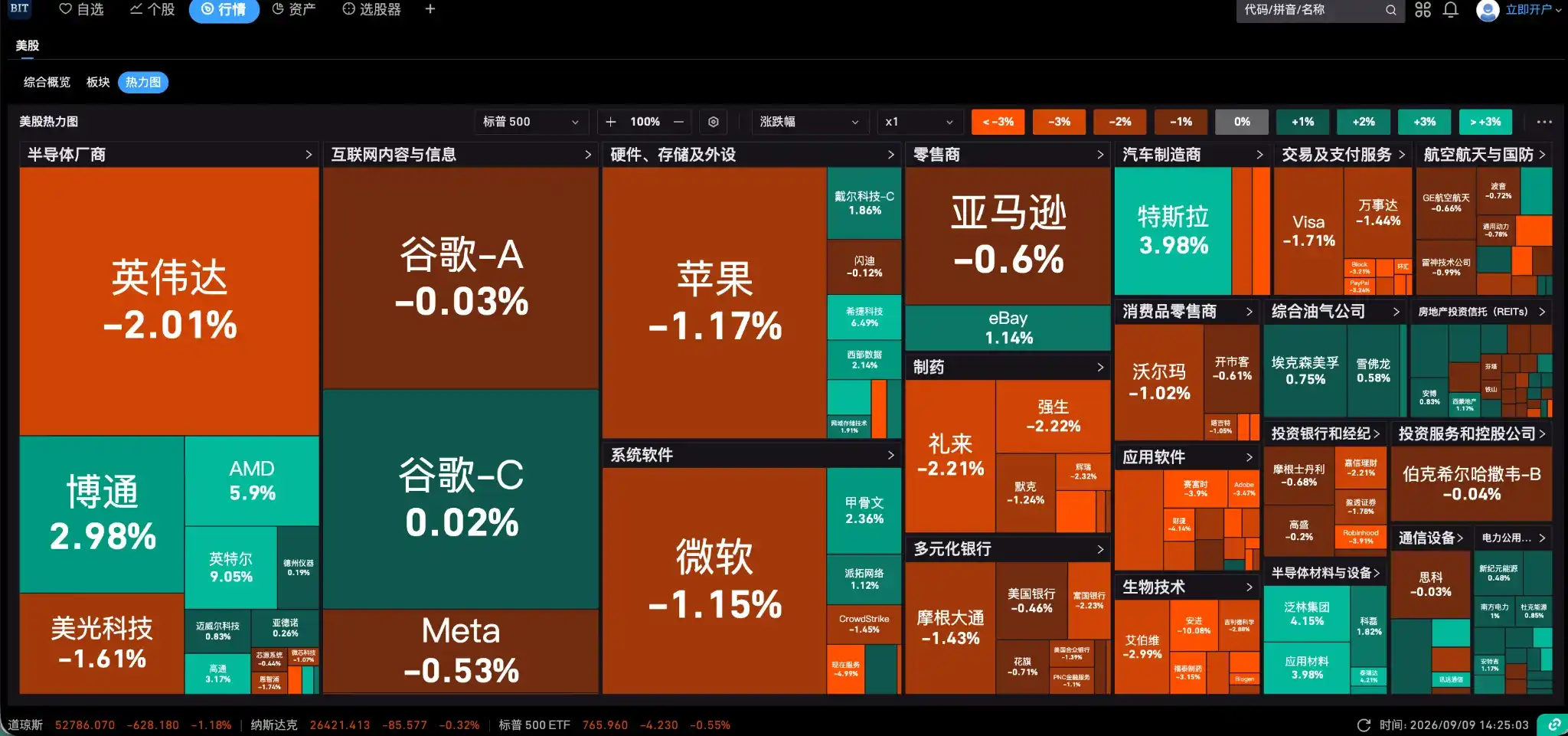
Against that backdrop, AI compute, optical networking, and semiconductor shares moved higher. OpenAI said its model had solved a world-class mathematics problem, which the report framed as another example of AI’s heavy compute demands. IREN’s CEO said global compute supply will never catch up with the pace of AI development, helping lift companies tied to that theme, including CoreWeave. Intel jumped 9.05% on reports of higher pricing. AMD rose 5.9% on expectations that its total addressable market could double and on stronger-than-expected Helios orders. Qualcomm added 3.17% after reaching a custom AI chip agreement with Amazon worth up to $60 billion and receiving 25 million warrants.
Optical communication was one of the market’s main focal points overnight. Lumentum surged 11.04%, while Corning and Coherent rose 7.56% and 7.10%, respectively. The report attributed that move to demand for high-speed optical interconnects tied to Qualcomm’s AI chip partnership and to Corning’s multibillion-dollar long-term supply agreement with Verizon.
Crypto-related equities fall, miners outperform
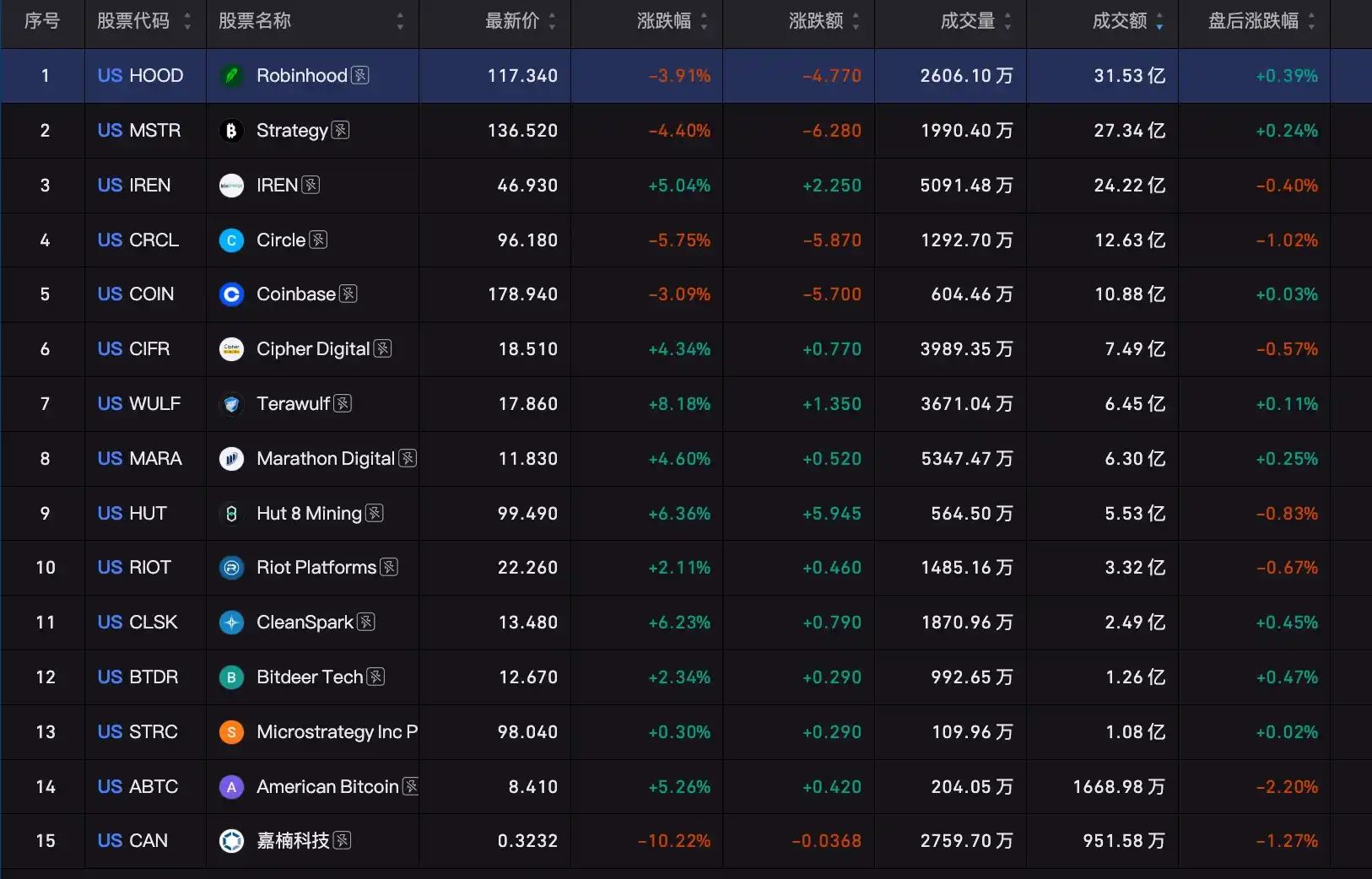
Crypto-linked stocks broadly declined. According to BIT U.S. equities data cited in the report, Strategy fell 4.40% before rebounding 1.96% in overnight trading, as the market continued to digest BTC weakness and pressure from its preferred stock STRC trading below par. Coinbase dropped 3.09%, Circle fell 5.75%, and Robinhood lost 3.91%. Exchange and stablecoin-related names were weighed down by Bitcoin’s pullback and weaker risk appetite.
Robinhood still drew support from some on Wall Street. StoneX gave the stock a buy rating and a $170 price target, implying about 45% upside from Tuesday’s close of $117.34. The rationale in the report was that Robinhood Chain and prediction market operations could create new revenue streams.
Bitcoin miners, by contrast, mostly rose. The report said investors are no longer treating them only as BTC proxies, but increasingly as power-plus-AI-compute assets. Terawulf gained 8.18%, Hut 8 rose 6.36%, CleanSpark climbed 6.23%, American Bitcoin added 5.26%, IREN rose 5.04%, Marathon Digital gained 4.60%, Cipher Digital rose 4.34%, Riot added 2.11%, and Bitdeer climbed 2.34%.
Canaan also reported Q2 results, with both revenue and net profit missing expectations. The stock fell 10.22% and later rebounded 2.29% in overnight trading. The report said hardware suppliers are still dealing with order-cycle pressure and margin pressure.
Asian equities diverge, yen hits a seven-month high
South Korea’s KOSPI rose 1.4% and climbed back above a key technical level. The KOSPI 200 is trading at a forward price-to-earnings ratio of just 6.2, placing it in the first percentile of its own 10-year history. The report said slower foreign selling, a stronger won, and deeply discounted valuations have shifted the market story from crisis mode to bottom-fishing.
This rebound has been driven mainly by memory chips and shareholder returns. Korean brokerages said Samsung Electronics and SK Hynix have less than 10 days of sellable memory inventory, and actual available supply next year may be clearly insufficient. Global cloud companies could raise AI infrastructure spending to $1.3 trillion in 2027, up 60% year over year. S&P Global Market Intelligence also expects SK Hynix could announce a buyback plan worth 20 trillion to 40 trillion won in the fourth quarter, giving fresh support to Korea’s value-up trade.
SK Hynix rose 3.51% and Hanmi Semiconductor gained 2.45%. Mohammad Hassan, head of Asia-Pacific equity dividend forecasts at S&P, said routine buybacks at SK Hynix, together with Samsung’s treasury share cancellation and large dividend payouts, could set a new governance benchmark for Korea’s capital market.
Japan’s Nikkei 225 slipped 0.19%. Stronger-than-expected wage data reinforced the case for further Bank of Japan rate hikes, and USD/JPY briefly fell toward 152.89, sending the yen to its strongest level in nearly seven months. SoftBank rose nearly 4% and has gained more than 37% over the past five trading days.
Mainland Chinese equities were mixed. The Shanghai Composite rose 0.28%, the Shenzhen Component added 0.15%, and the ChiNext Index fell 0.14%. More than 3,500 stocks across the Shanghai, Shenzhen, and Beijing markets declined. Coal, shipping, defense, and gold shares led, with Yunmei Energy posting a second straight limit-up move. Nanjing Port, China Merchants Energy Shipping, and several other shipping names also hit limit up, while Hunan Gold and other precious-metal shares turned active in afternoon trade.
Hong Kong equities also closed lower. The Hang Seng Tech Index fell 0.17%, and the broader tech gauge dropped 0.76%. Optical communication was the strongest theme, with Xizhi Technology up more than 20% at one point, Haiguangxin up more than 30% intraday, YOFC up more than 13%, and Zhongji Innolight up more than 4%. The report linked the move to the opening of the CIOE exhibition in Shenzhen and the rollout of products tied to 1.6T and CPO/NPO.
On the individual stock side, UDI Robot rose nearly 160% on debut at one point. Haidilao fell more than 9% after shareholder SPNP sold 259 million shares at a discounted HK$10.62 apiece. Zhipu fell for a seventh straight trading day, dropping 10.02% on Sept. 8 and losing the HK$1,000 level. Jefferies sharply raised its forward revenue forecast, but cut the valuation multiple for Zhipu’s cloud business from 50x ARR to 30x.
What markets are watching next
Sept. 9 (Wednesday)
- From Sept. 9 to 10, the U.S. Republican midterm election conference will be held. The report said markets are watching Donald Trump and the Republican Party for signals on tariffs, fiscal policy, immigration, and energy. A tougher policy tone could affect the dollar, energy, defense, manufacturing reshoring, and pricing across global trade chains.
- From Sept. 9 to 10, the Paris Space Summit will take place. Blue Origin, SpaceX, StokeSpace, and Starcloud are reportedly expected to skip the event. Markets will watch for political or commercial friction in U.S.-Europe aerospace cooperation and for any sentiment impact on commercial space and satellite communications stocks.
- At 23:00, the U.S. Treasury will release the maximum amount for long-dated Treasury buybacks in the 10-year to 20-year sector. The report said that if the size is clearly above $4 billion and closer to $6 billion-$10 billion, it could pull long-end yields lower in the short run and support growth stocks and AI valuations. If the amount stays at the floor, the market may read the signal as insufficient and long-bond selling pressure could return.
Sept. 10 (Thursday)
- At 01:00, Apple will hold its fall product launch. Markets are focused on foldable iPhone pricing, Pro-series price increases, shipment plans, gross margin protection, and progress on AI features. The report said accepted pricing could benefit foldables, memory, display, hinge, and precision-manufacturing names. If pricing is seen as too high, Apple and the consumer electronics supply chain could come under pressure.
- At 01:00, the U.S. will auction $39 billion in 10-year Treasuries. Bid-to-cover, indirect bidder demand, and the tail will determine whether long-end rates can stabilize. A weak auction could push the 10-year yield closer to 5%, while solid demand could give risk assets some relief.
- At 20:30, the U.S. will release August PPI on both monthly and annual bases. The report said the market expects monthly PPI to rise to 0.4% and annual PPI to about 5.2%-5.3%, with energy and transportation costs as the main variables. A hotter print could bring forward rate-hike pricing before CPI; a softer result could ease pressure across stocks and bonds.
- NVIDIA will appear at Goldman Sachs’ communications and technology conference. Investors will focus on Vera Rubin production, data center revenue contribution, CPU strategy, HBM and memory supply, and the effect of export controls. If management signals smooth supply and strong demand, AI chips, optical networking, memory, and liquid-cooling power plays could keep advancing.
Sept. 11 (Friday)
- Oracle and Adobe will report after the U.S. close. For Oracle, the focus is on cloud infrastructure orders, AI data center contract conversion, and capital spending. For Adobe, the question is whether generative AI features including Firefly can translate into faster subscription growth and higher revenue per user. The report said the two companies will serve as separate tests of AI infrastructure monetization and AI application monetization.
- At 01:00, the U.S. will auction $22 billion in 30-year Treasuries, the final sale in a three-day wave of Treasury supply and the one that most directly tests long-duration investor demand.
- CME will extend 100-ounce silver futures to 24-hour trading. The report said longer trading hours will improve Asian and weekend liquidity, make price discovery in precious metals more continuous, and potentially lift silver volatility and cross-market arbitrage activity.
- From Sept. 11 to 13, the 2026 China Computing Power Conference will open in Langfang. The event will focus on compute infrastructure and AI buildout, with possible catalysts for servers, data centers, liquid cooling, optical modules, switches, power supplies, domestic chips, and compute leasing.