


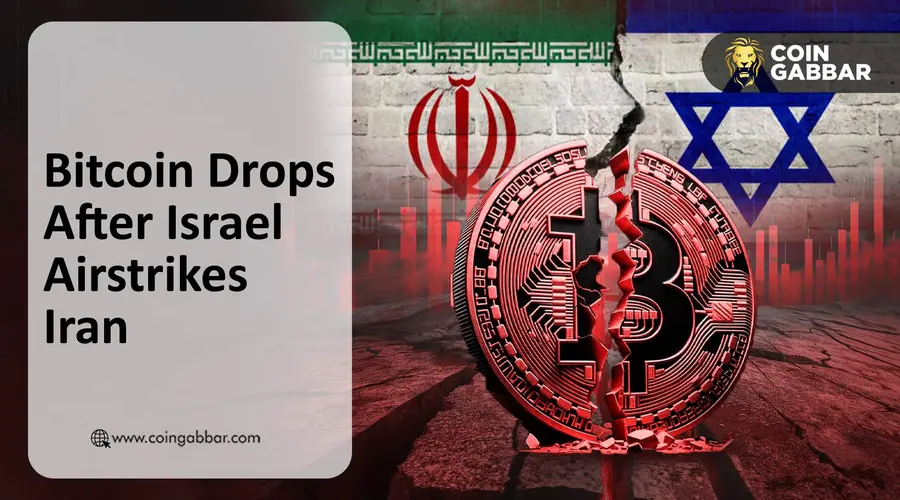
Early Saturday, Israel carried out preemptive airstrikes on Iran under the codename "Epic Fury," targeting intelligence headquarters and government facilities in central Tehran. US officials confirmed the operation was a joint action between Israel and the United States. Iran retaliated by launching missiles at a US naval base in Bahrain and attacking multiple American military installations in Kuwait, UAE, Qatar, and Bahrain. Explosions were reported across Tehran, and Iran declared a nationwide state of emergency while closing its airspace.
Financial markets reacted violently. Bitcoin plunged more than 6% within minutes, sliding toward the $60,000 level. Traders described it as a rapid crash driven by geopolitical panic. Major altcoins followed suit, wiping billions from crypto market capitalization. Unlike gold, which typically rises during crises, Bitcoin's drop shows investors still treat it as a high-risk asset amid sudden war shocks.
The strikes come as Washington increases pressure on Tehran to agree to a new nuclear deal. US President Donald Trump said Friday he was "not happy" with Iran's negotiating position. Analysts suggest rising tensions around nuclear talks may have accelerated the timing of the operation.
Bitcoin's 6% Flash Crash: Fragility of Digital Assets Under Geopolitical Fear
Bitcoin fell over 6% today, testing the critical $60,000 support level. Charts showed heavy red candles as investors rushed to cut risk. The Nasdaq 100 also weakened, trading near 24,960. The synchronized sell-off in tech stocks and crypto highlights their shared dependence on risk appetite and liquidity.
At the core of the market fear is the risk of a full-scale Israel-Iran war. Such a conflict could disrupt oil supply routes through the Strait of Hormuz, sending crude prices soaring and adding to global inflationary pressure. Higher inflation expectations may push central banks to delay rate cuts, driving money into cash, government bonds, and gold while risk assets like tech stocks and crypto face selling pressure.
The Houthi movement announced the closure of the Bab el-Mandeb Strait in the Red Sea, warning it would target US and Israeli ships. The Bab el-Mandeb is one of the world's most vital shipping lanes for oil and trade. Any disruption there could sharply lift oil prices and deepen financial market panic.
Who Gains From Rising Tensions
Geopolitical conflicts also create winners. Oil-exporting nations could earn billions if crude prices surge. Defense contractors may see rising demand for missiles, drones, and air-defense systems. However, ordinary citizens face higher fuel costs, inflation, and market uncertainty.
After the crash, Bitcoin's immediate support sits near $63,000. If that breaks, the next major level is around $60,000. On the upside, reclaiming $65,000 would restore short-term strength. The trend remains weak, with markets reacting to each headline. If tensions ease, Bitcoin might stabilize. If the conflict escalates, volatility is likely to increase further.