
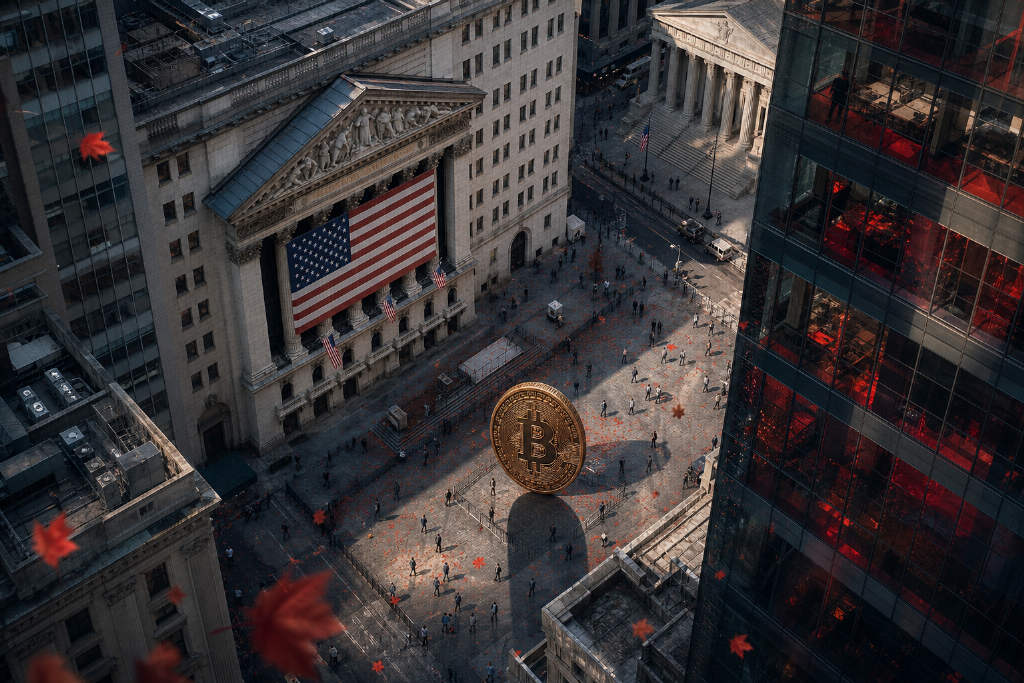
Bitcoin investors have lost money in 8 of the past 13 Septembers, and the pattern is not limited to crypto. The S&P 500 has also posted negative average September performance since 1945, while Yardeni Research traces the trend back to 1928.
Crypto traders call it “Red September.” Bitcoin did not create the pattern, but it has not escaped it either.
The data behind ‘Red September’
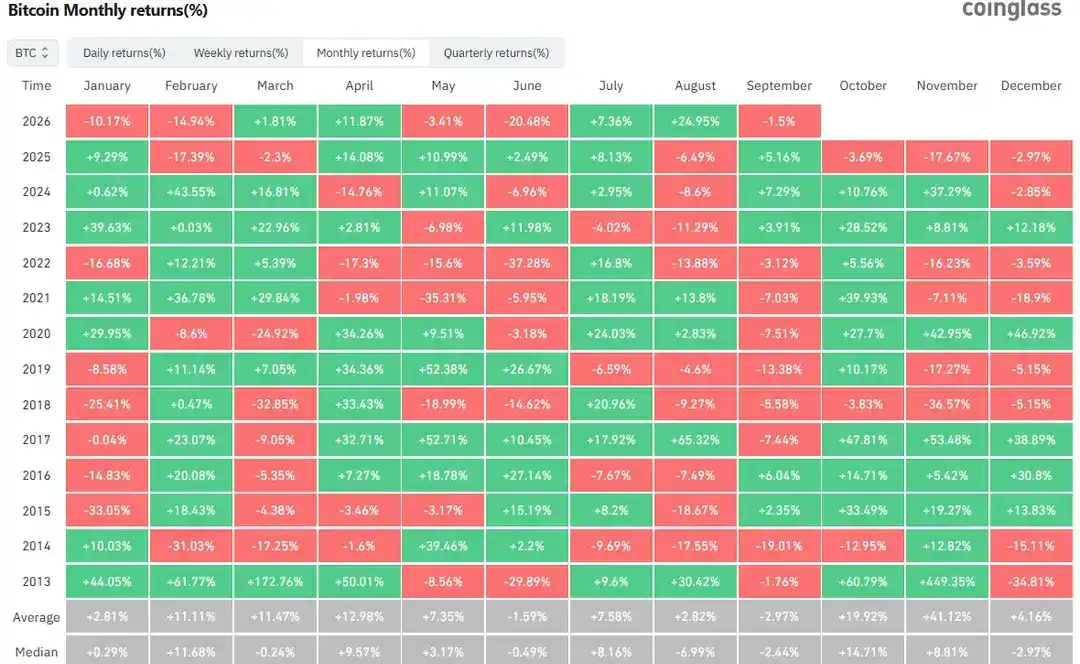
According to monthly return data tracked by CoinGlass, Bitcoin has fallen in 8 of 13 full Septembers since 2013, leaving it with a win rate of 38.5% for the month. Its average September return stands at -2.97%, and the median return is -2.44%.
That median matters. A negative median suggests September is usually weak even in ordinary years, rather than being dragged down by only a few outsized crashes.
Among the calendar months, only June comes close, with an average decline of 1.59%. Every other month shows a positive average return. October sits at the other end of the spectrum: Bitcoin’s average October return is 19.92%, with a median of 14.71%, the basis for the crypto market’s annual “Uptober” narrative.
August looks better at first glance, but the numbers are less straightforward. The average August return is 2.82%, yet the median return is -6.99%. In other words, most Augusts have been losing months, and a small number of explosive rallies pushed the average into positive territory.
Wall Street has the same seasonal pattern
Stocks have a much longer record of September weakness. JPMorgan’s market research shows the S&P 500 has averaged a decline of about 0.6% in September since 1945, making it the only month with a negative long-term average return. Extend the window back to 1928 and the average drop worsens to roughly 1.1% to 1.2%.
There is no single agreed explanation. Common theories include mutual funds selling losing positions in September ahead of their Oct. 31 fiscal year-end for tax-loss harvesting, institutional traders returning from summer and putting delayed risk-reduction trades back on, and the Federal Reserve’s mid-month policy meetings landing in the middle of volatile trading periods.
Those theories do not neatly explain Bitcoin. It has no conventional fiscal calendar and no summer break. Even so, it remains a financial asset and can still move with broader market behavior.
This year adds another variable. The report says 2026 is a U.S. midterm election year. Across the past 10 midterm cycles since 1986, the stock market’s average annual low has tended to arrive on Sept. 2, with the average drawdown before stabilization and rebound nearing 17% from the prior peak. Because Bitcoin now trades more like a high-beta tech asset than a pure safe haven, the report says that relationship cuts both ways.
What happened in September 2025
Last year’s September first followed the usual script, then reversed hard. Bitcoin opened the month near $108,000, with the RSI around 38 and in oversold territory. DYOR CEO Ben Kurland told Decrypt at the time that Red September was more “myth than math.”
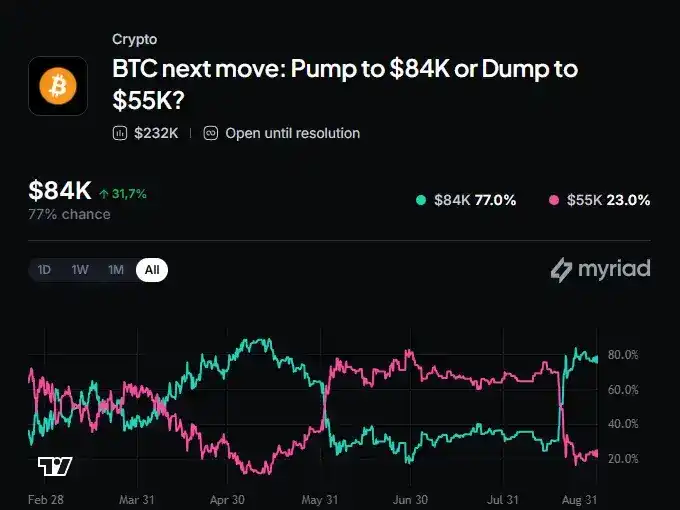
Early trading still matched the historical pattern. By mid-month, a brutal one-week slide had erased nearly $162 billion from the total crypto market cap. Bitcoin fell toward $112,000 and touched an intraday low of $111,986. Prediction markets at the time showed traders assigning close to a 60% chance that the month would finish lower.
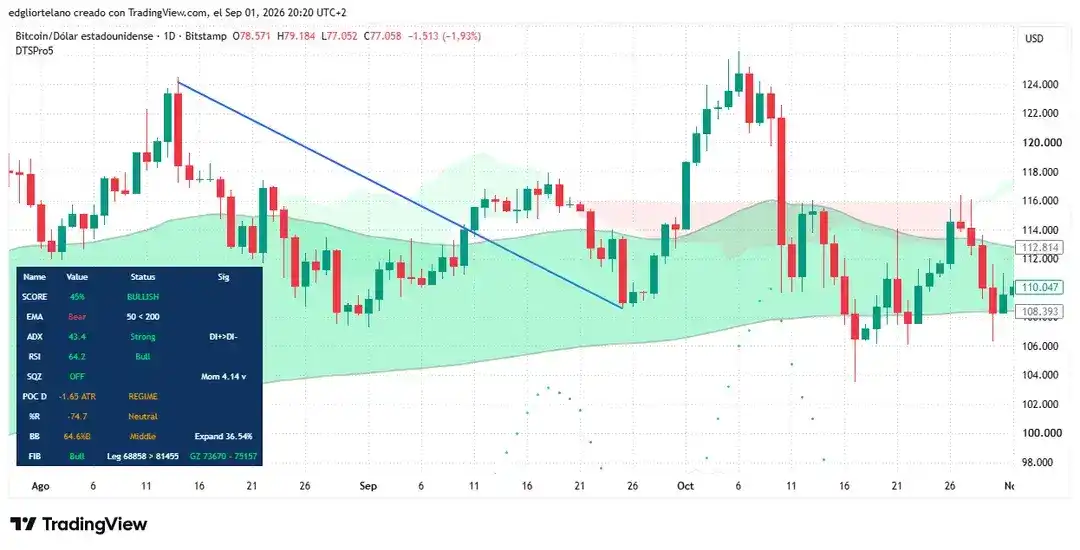
The move then turned. ETF inflows became a key factor in the rebound, and Bitcoin pushed back above $114,000. CryptoQuant viewed transfers of tokens from long-term holders into ETFs as a bullish signal. Bitcoin eventually finished the month up 5.16%, marking its third consecutive green September on record.
Then came a ‘Red October’
The rebound lasted only six days. On Oct. 6, Bitcoin set a record high above $126,000, and confidence around the Uptober trade looked strong.
That changed on Oct. 10, when U.S. President Donald Trump threatened to impose 100% tariffs on Chinese imports. Crypto, as the only market trading continuously, became the first venue to react. Within 24 hours, $19 billion in leveraged positions was wiped out and 1.6 million traders were liquidated. Market maker Wintermute said it had fully paused trading because the volatility breached its internal risk controls.
Bitcoin dropped from above $121,000 to below $102,000 that day. Altcoins fell even harder, with some Layer-2 tokens losing 70% of their market value within hours. October ended down 3.69%, becoming only the third negative October since 2013. The decline continued after that: November fell 17.67%, the worst November since 2018, and by June this year Bitcoin had slid to around $59,300, a 21-month low. Crypto traders called that period a crypto winter.
That made 2025 an unusual case: a “green September,” or “Uptember,” followed by a “Red October,” the reverse of the usual seasonal pattern.
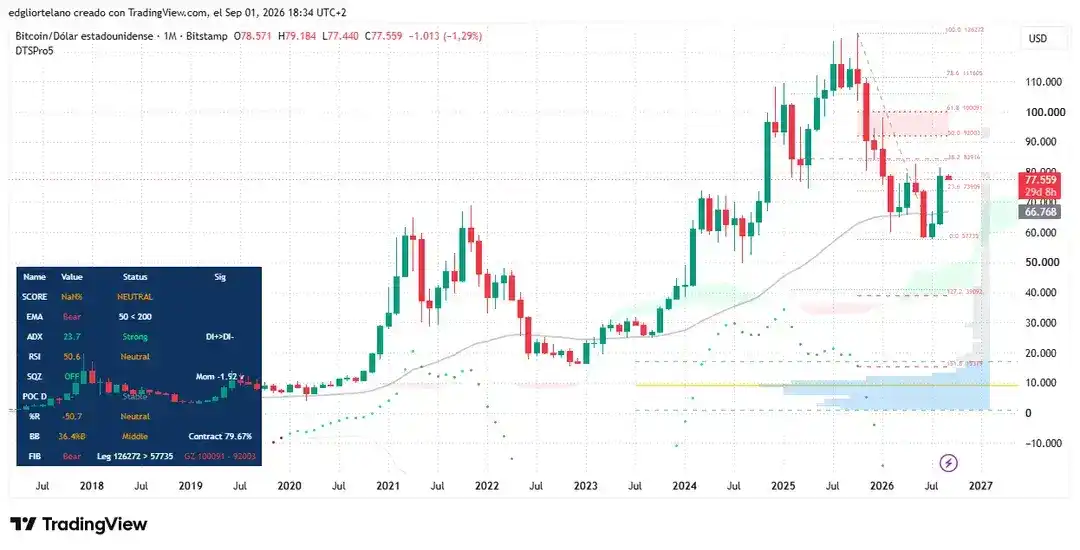
Bitcoin’s setup entering September 2026
Bitcoin entered September 2026 trading near $77,500. Before that, it had just finished an August gain of nearly 25%, its strongest August since 2021. The current rally has stalled below resistance at $81,455 to $82,538, while support is seen at $73,670 to $75,157.
The macro backdrop has shifted sharply since spring. Federal Reserve Chair Kevin Warsh warned at his first Jackson Hole conference that annual PCE inflation was running at 3.7% and had accelerated over the previous six months. CME’s FedWatch tool showed the probability of a September rate hike at 68.2%. At the same time, the 30-year U.S. Treasury yield reached 5.28% at the end of August, its highest level since the 2008 financial crisis.
Gold has recently risen alongside Bitcoin. The report says that points to a “currency debasement hedge trade” rather than a simple increase in risk appetite, with investors betting that persistent inflation will eventually force the Fed to keep printing money. Regulation has also offered a rare positive signal: on Aug. 18, the U.S. Securities and Exchange Commission published its Regulation Crypto Assets draft, which the report says has helped support sentiment in an otherwise tense market.
The next major test falls on Sept. 15-16, when the Fed will decide whether to deliver its first rate increase since the 2022-2023 tightening cycle. The report notes that same tightening cycle previously drove Bitcoin down about 65% and helped send it to a low of $15,500 in November 2022.
Written by Jose Antonio Lanz. Translated by Baihua Blockchain.