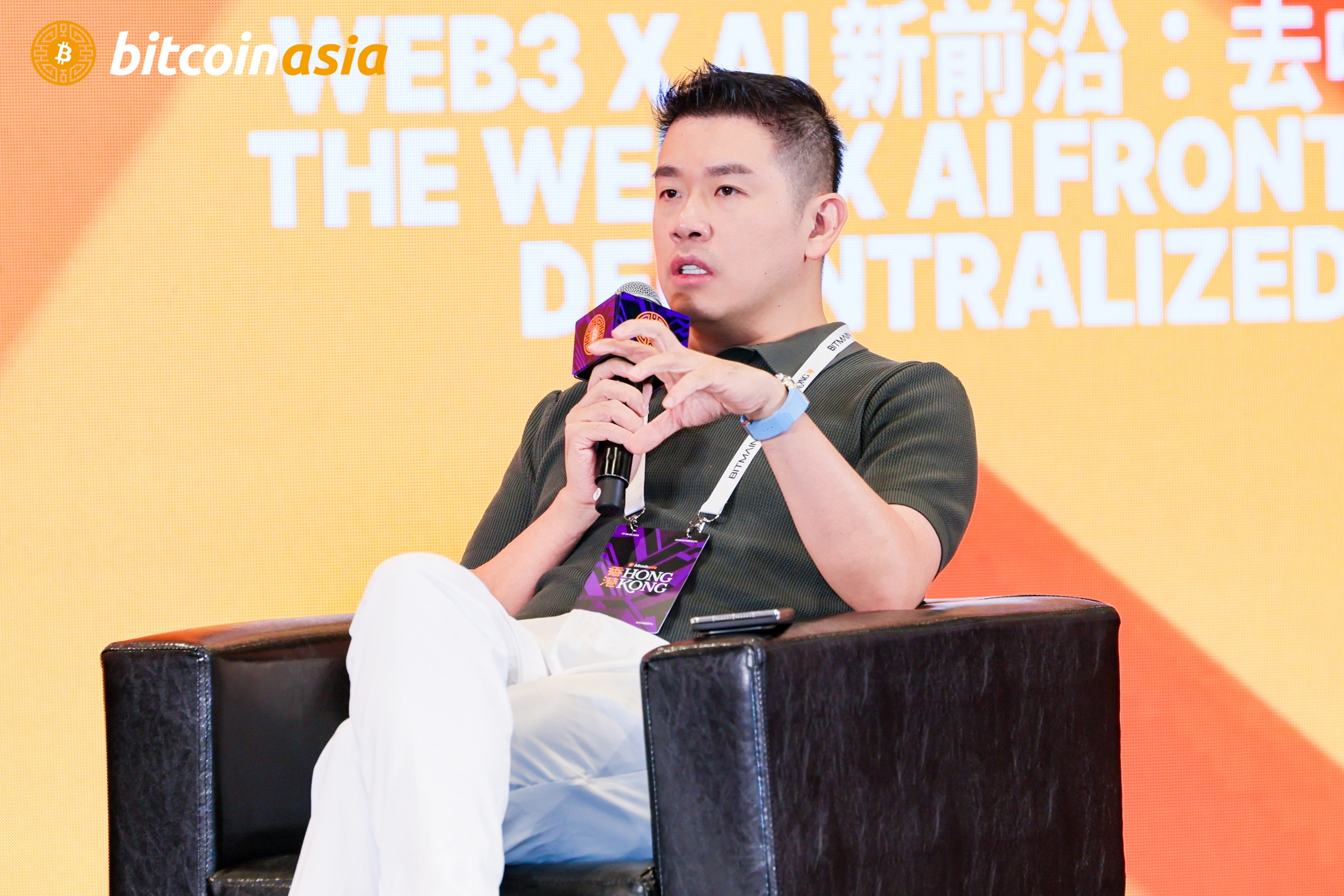
Speaking at the "AI and Crypto Deep Integration Development" roundtable during the Bitcoin Asia conference on Aug. 27 in Hong Kong, Bitfire CEO Livio Weng said the core narrative tying AI and crypto together over the next few years may focus on the "agential economy."
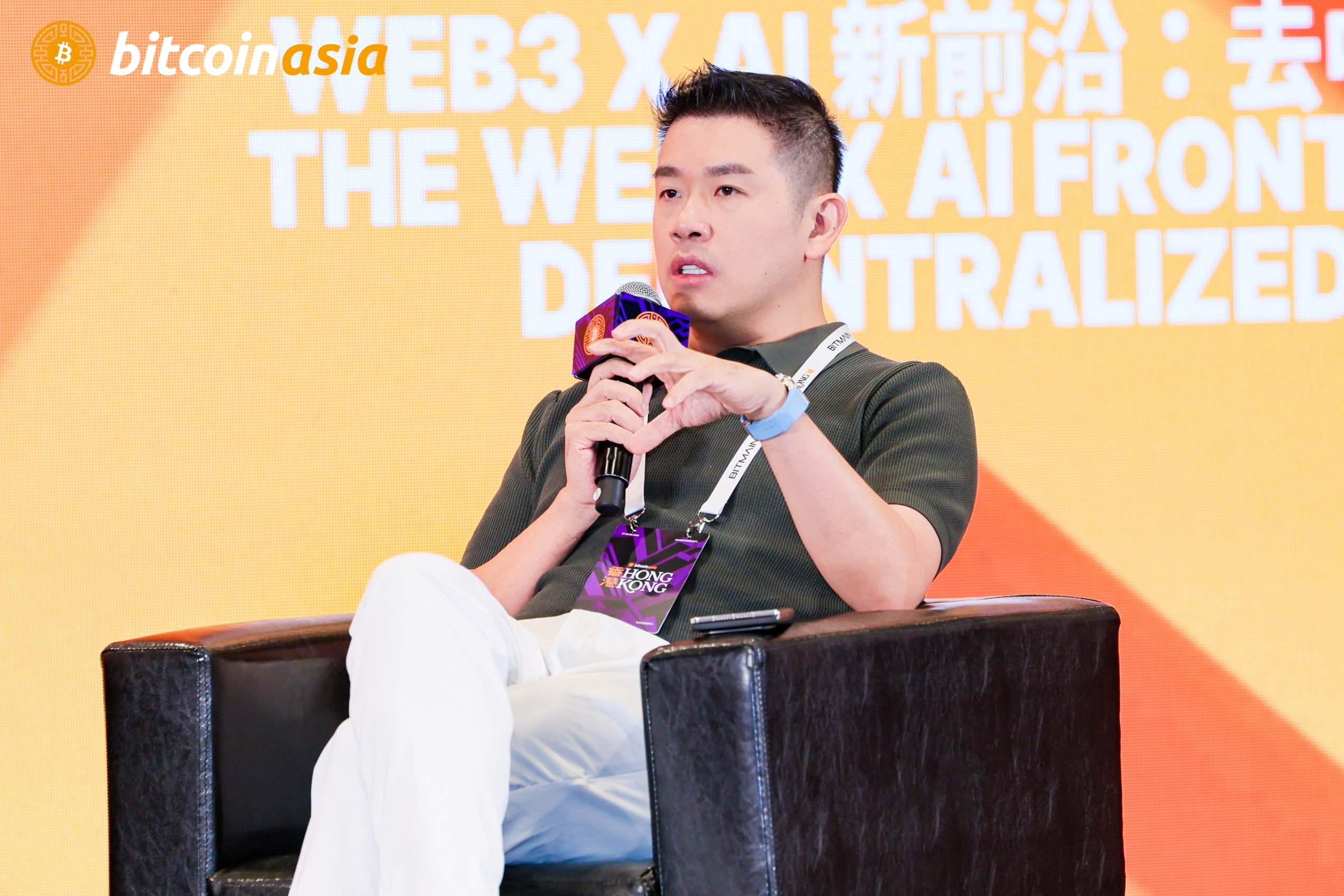
Weng said that as infrastructure such as AI identity recognition, authorized wallets, and payment protocols continues to mature, AI will gradually gain the ability to use, manage, and trade assets autonomously. He said that could bring AI into closer contact with existing crypto businesses including trading, prediction markets, asset management, and payments.
Weng says RWA could connect humans and AI
Weng said real-world assets, or RWA, could become an important bridge between what he described as "carbon-based humans" and "silicon-based AI."
On one side, he said, RWA can bring traditional assets on-chain, allowing AI to use and trade assets that exist in human society. On the other, AI compute power, AI data, and AI-generated services, which he described as "AI assets," could also be opened to human users in RWA form for purchase, analysis, and trading.
He said that process could push humans and AI into a deeper phase of integration.
The next wave of crypto users may be AI agents
"At present, the number of active crypto users globally is about 100 million to 200 million, and the next additional 100 million to 200 million crypto users may perhaps no longer be humans, but AI agents," Weng said.
He added that important infrastructure and applications in the future may also no longer be written mainly by humans, but generated autonomously by AI. As AI moves from being an information assistant to a wealth management assistant, and then gains the ability to execute tasks on its own, AI agents could become important participants in the crypto ecosystem, he said.
Settlement, identity, and accountability layers are still needed
Weng said deeper AI-crypto integration still requires more complete base-layer infrastructure. He pointed to a settlement layer that supports machine-driven autonomous trading, an identity and authorization layer that gives AI an independent identity and allows subject recognition, and a reward-and-penalty layer that establishes accountability for fraud and misconduct.
He said protocols related to X402 are exploring use cases such as autonomous machine payments, while protocols such as EIP-8004 are pushing ahead with AI identity and subject-interaction mechanisms. Even so, he said the industry still needs to address security, governance, and ethical issues.
Bitfire says it has launched RWA-related services
On business execution, Weng said the company is actively embracing RWA to capture opportunities created by the convergence of AI and crypto. He said that on Aug. 26, the company officially announced an integrated RWA operator service and released what he described as Hong Kong’s first compliant quantitative strategy for crypto assets.
According to Weng, the strategy could introduce RWA assets to provide more cross-asset allocation and risk-hedging opportunities, helping investors balance volatility across different asset classes and market cycles.
He said RWA is not only a vehicle for bringing traditional assets on-chain, but could also become core infrastructure for AI to participate in the real economy, use real-world assets, and provide services to humans. As the agential economy develops, he said, AI and crypto are likely to meet across a broader range of applications, leaving substantial room for innovation and growth.