
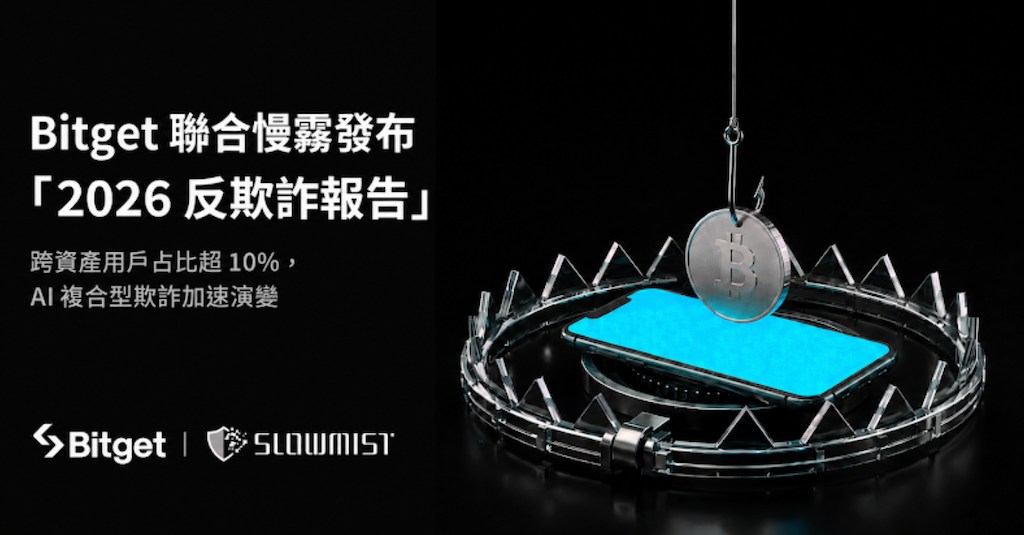
Bitget has released its 2026 Anti-Scam Month Report, a review of how fraud tactics evolved across digital assets and the wider multi-asset financial ecosystem from July 2025 to June 2026. Framed around the theme of “More Assets, Stronger Protection,” the report says scam operations are moving beyond single-platform, single-asset attacks as users spread activity across tokenized stocks, contracts for difference, staking products, wallets, AI investment tools and real-world assets.

Security figures from the past year
Based on data from Bitget’s security team, the company said its infrastructure blocked more than 150 million malicious requests between July 2025 and June 2026. It also identified more than 13,000 high-risk IP addresses, handled 18,135 user protection cases and helped recover roughly $32.3 million in assets linked to security incidents and scam activity.
Bitget said those figures show fraud remains a standing operational problem in the digital asset sector. It also said fast coordination among trading platforms, security research groups and users is critical if losses are to be reduced and recovery odds improved.
Multi-asset expansion is widening the attack surface
Bitget Research said user participation across multiple asset classes has accelerated. In mid-2025, the share of active users engaging with two or more asset categories was still below 1%. By May 2026, that figure had risen to more than 10%.
The report says investors are no longer limiting allocations to cryptocurrencies. They are branching into stock-linked products, CFDs, tokenized assets and other financial instruments. As the user journey becomes more complex, attackers are designing scams around that full path, combining social media, messaging apps, fake investment communities, phishing sites, malicious smart contracts and wallet approval traps.
AI is making scam campaigns cheaper and easier to scale
The report gives special weight to artificial intelligence as a driver of faster scam expansion. It points to deepfake videos, voice cloning, AI-generated investment advisers, fabricated financial personas and automated interaction tools as factors that are lowering fraud costs while raising believability.
In some cases described in the report, scammers used AI-generated videos to impersonate government officials, financial figures or corporate executives and steer victims to fake investment platforms. In others, scam groups built “investment communities” made up of dozens of fake identities, creating manufactured social proof that made victims think they were part of a real and active trading circle.
Bitget said future scams may not depend on brand-new attack methods. Instead, AI can make existing fraud models cheaper, faster, larger in scale and harder to detect.
Fraud is shifting toward staged operations
The report says modern scams often avoid asking for a transfer at the start. They move step by step, building trust first. A typical flow includes initial contact, trust-building, the introduction of an investment story, pressure to move assets or approve wallet access, and then theft followed by cross-chain fund movement.

Research cited from SlowMist says many successful scams do not rely only on technical weaknesses. They combine social engineering, impersonation, fake communities and malicious infrastructure. Victims are often pushed into the decisive action only after days or even weeks of interaction, whether that means signing a malicious transaction, approving a smart contract or transferring funds.
Wallet approvals and malicious contracts remain central risks
The report says wallets remain one of the most common targets in digital asset fraud. The main threats listed are wallet drainers, approval scams, malicious smart contracts and cross-chain phishing.
Approval scams carry a lingering risk, the report says. A user may grant a smart contract permission during what appears to be a normal interaction, and that permission can remain valid for weeks or months before being abused. Bitget advises users to review and revoke unnecessary token approvals on a regular basis and to verify contract addresses and transaction details before signing.
Gracy Chen calls security a shared responsibility
In the report’s foreword, Bitget CEO Gracy Chen said digital asset traders are increasingly interacting with tokenized assets, stock products, staking platforms, wallets and AI investment tools. As the number of entry points grows, the security environment is becoming more complex as well.
She said today’s security challenges differ from those of several years ago. Scam activity is now combining deepfakes, fake communities, impersonation campaigns, malicious smart contracts and AI-generated content to create highly convincing settings that can influence user decisions. As digital finance keeps evolving, she said, security needs to be treated as a shared responsibility backed by sustained vigilance, industry coordination and a long-term commitment to helping users spot risk before they become victims.
Cross-sector coordination and user guidance
Bitget said digital asset fraud frequently crosses platforms, blockchain networks and jurisdictions. A victim may be in one country, the scammer in another, while funds move across several chains and addresses within minutes.
That leaves any single platform unable to handle the full risk picture on its own, according to the report. Bitget said information sharing and rapid coordination among exchanges, security researchers, law enforcement agencies, regulators and users will be central to improving both protection and recovery efficiency.
The report also lists practical precautions for users: enable multi-factor authentication, use separate passwords, turn on anti-phishing codes, review login records regularly, check wallet approvals carefully, avoid signing unverifiable transactions and stay alert to investment offers built around high returns, time limits, exclusivity or heavy dependence on AI endorsements.
If users suspect a scam, the report says they should secure their accounts at once, revoke wallet approvals, preserve transaction and communication records, and contact relevant exchanges, service providers or authorities as quickly as possible. It adds that the first 24 hours after an asset theft are often the most important window for recovery efforts.
Bitget’s broader view on what comes next
Bitget said the digital asset industry is entering a new phase of multi-asset convergence. The combination of cryptocurrencies, tokenized assets, stocks, CFDs, real-world assets and AI investment tools is expanding access to financial markets, while also widening the surface available to scammers.
The report concludes that digital finance is likely to become more open, more cross-asset and more interconnected. Keeping that system secure, it says, will require progress in security technology, risk education and cross-institution coordination at a pace that matches the evolution of financial products themselves.
Report credits and company details
The full Bitget 2026 Anti-Scam Month Report was produced by Bitget Research.
Bitget, founded in 2018, is described in the source material as the world’s largest Universal Exchange, or UEX. The company says it serves more than 120 million users across over 200 countries and regions and offers copy trading and other trading solutions tied to Bitcoin, Ether and other cryptocurrencies.
The source also says Bitget Wallet is a non-custodial crypto wallet supporting more than 130 blockchain networks and millions of tokens. It offers multi-chain trading, staking, payments and direct access to more than 20,000 decentralized applications.
Bitget said it is also the official cryptocurrency partner of LALIGA in East Asia, Southeast Asia and Latin America. It added that it is working with UNICEF with a goal of supporting blockchain education for 1.1 million people by the end of 2027, and that it is the exclusive cryptocurrency exchange partner of MotoGP.
On Bitget Wallet, the source says the product serves more than 80 million users, supports more than 130 major public chains and millions of crypto assets, and includes a $300 million user protection fund.