
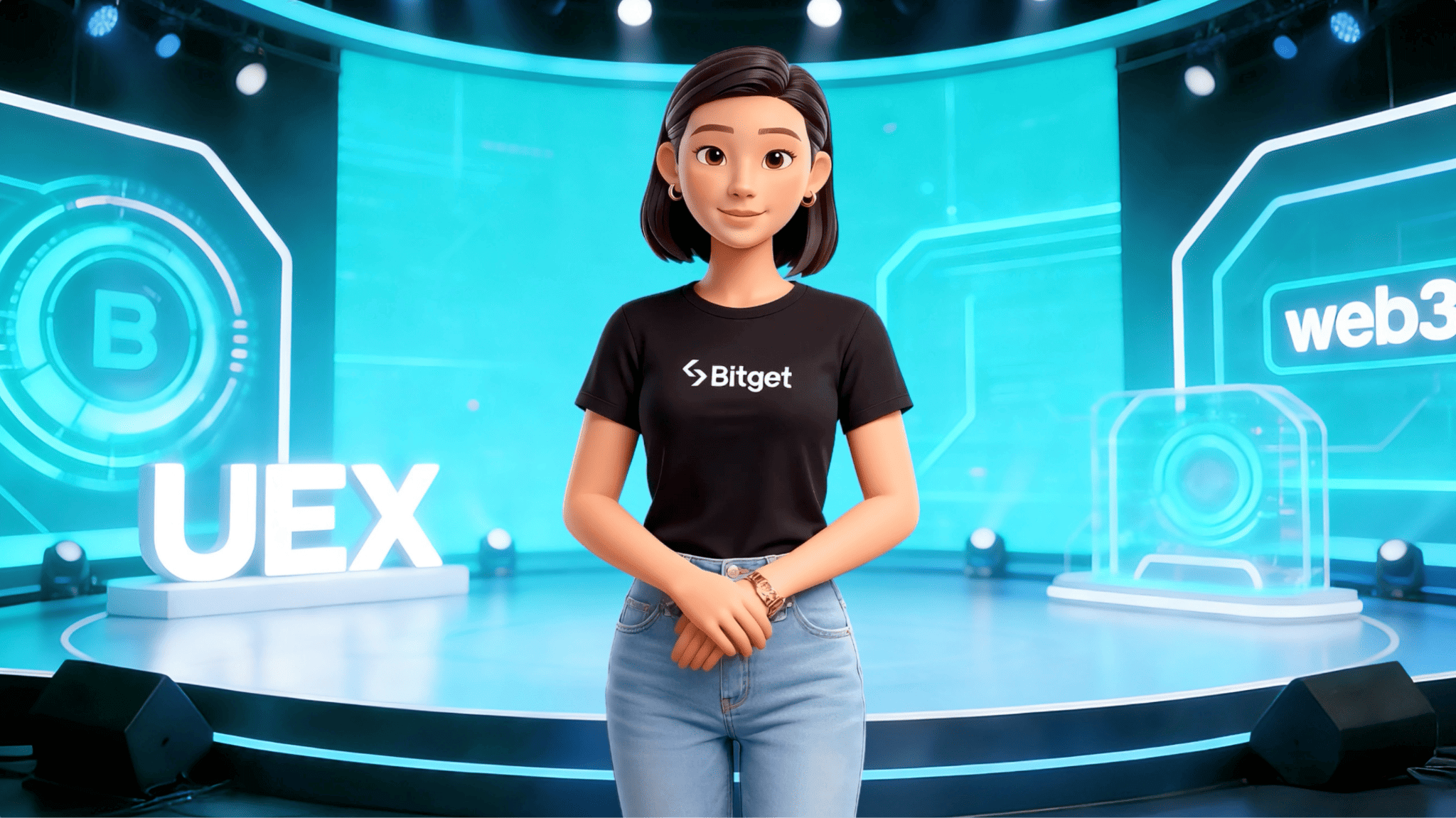
In a recent interview, Bitget CEO Gracy Chen laid out her core thesis for the 2026 crypto market: 'fusion' will define the year. As U.S. regulation clarifies, crypto is shifting from a 'speculation venue' to an institutional-grade 'settlement platform,' fundamentally reshaping how the industry operates.
Regulatory Clarity: From Wild West to Structured Market
Chen argued that the market is leaving the 'Wild West' phase behind—but volatility is not gone. What has changed is the driving force: short-term prices are now more influenced by macro signals than pure speculation. Bitget's Universal Exchange (UEX) exemplifies this trend by offering a single gateway for crypto, tokenized real-world assets (RWA), derivatives, and global markets. 'The pioneering spirit remains, but the infrastructure is maturing,' she said.
Three Key Tracks for 2026: On-Chain Finance, Tokenized Assets, AI-Assisted Decisions
Chen highlighted three areas to watch: First, the professionalization of on-chain finance—advanced derivatives, structured products, and yield strategies are evolving from niche tools into mainstream allocations with improved efficiency. Second, tokenized real-world assets are moving from concept to adoption, particularly equities, commodities, and fixed-income instruments. Third, the practical use of AI in decision-making: AI acts as 'rational infrastructure' that helps traders process complex data faster, without replacing human judgment. 'The industries that command attention this year are those reducing friction, accelerating settlement, offering clear pricing, and boosting capital efficiency,' she noted.
AI Agent Gracy AI: Helping Users Overcome Emotional Trading
Discussing the rise of 'action-capable' AI tools like Claude Code and OpenClaw, Chen said they are reshaping trading behavior. She observed that the biggest challenge for retail traders is not lack of information but emotion management—AI agents excel at following rules and maintaining discipline during volatile periods when humans tend to panic or overtrade. Bitget built its Agent Hub to provide standardized, secure API access for AI, enabling safe interaction with live markets under clear regulatory frameworks.
Gracy AI, the company's own assistant, targets practicality over full automation. It aims to function as a 'conversational crypto expert' that helps users slow down, think clearly, and make informed decisions. 'If AI can help people make decisions they truly understand, that's a big step forward,' Chen said.
Taiwan Market: Bitget Leverages Compliance and Security
Facing stricter regulation in Taiwan, Chen said Bitget maintains a consistent global approach: rigorous custody standards, transparent reserve proofs, and robust compliance measures. The exchange holds licenses in the UK, Australia, and El Salvador, overseen by local regulators. Chen described Taiwan users as 'curious, well-informed, and serious about both innovation and risk.' For asset safety—a top concern for local users—Bitget commits to maintaining adequate reserve ratios, publishing proofs regularly, and operating a protection fund. 'Trust, not hype, will define the next stage of crypto adoption,' she concluded.